Learn about Grizzly Bears, Black Bears, Polar Bears, gray wolves/eastern wolves/red wolves,timber wolves,
cougars/mountain lions/panthers/painters/pumas, bobcats, lynx, red and gray foxes, wolverines, martens, fishers, coyotes/eastern
coyotes/coywolves with pictures, videos, photos, facts, info and news.
Visitor Counter
Visitors Since Blog Created in March 2010
Click Below to:
Add Blog to Favorites
Coyotes-Wolves-Cougars.blogspot.com
Grizzly bears, black bears, wolves, coyotes, cougars/ mountain lions,bobcats, wolverines, lynx, foxes, fishers and martens are the suite of carnivores that originally inhabited North America after the Pleistocene extinctions.
This site invites research, commentary, point/counterpoint on that suite of native animals (predator and prey) that inhabited The Americas circa 1500-at the initial point of European exploration and subsequent colonization.
Landscape ecology, journal accounts of explorers and frontiersmen, genetic evaluations of museum animals, peer reviewed 20th and 21st century research on various aspects of our "Wild America" as well as subjective commentary from expert and layman alike. All of the above being revealed and discussed with the underlying goal of one day seeing our Continent rewilded.....Where big enough swaths of open space exist with connective corridors to other large forest, meadow, mountain, valley, prairie, desert and chaparral wildlands.....Thereby enabling all of our historic fauna, including man, to live in a sustainable and healthy environment. - Blogger Rick
Capital News Service
LANSING — Everybody knows that there aren’t any
cougars in Michigan. These big cats were hunted to
extinction in the state in the early 1900s and despite
34 recent sightings reported in the Upper Peninsula,
it’s safe to say that the cats aren’t back to stay yet.
Right?
According to the Department of Natural Resources (DNR),
that’s true.
Confirmed picture of a Puma in Michigan-source Michigan
Dept
of Natural Resources--2014;Mackinac County “They were found in most of Michigan at one time,” said DNR wildlife management specialist Kevin Swanson. “In the early 1900s they were being extirpated. The last cougar harvested in Michigan was in Newberry in 1906.”
Swanson said that the 34 confirmed sightings doesn’t mean
34 separate animals. According to the DNR, 23 of these
sightings were photos, eight were tracks, one was video and
animal waste and the final two were carcasses. The most
recent carcass, discovered in a snare Feb. 1 by conservation
officers four miles north of Iron Mountain in Breitung
Township in Dickinson County. The other was poached in
2013 by a hunter in Schoolcraft County.
The DNR says it plans to continue enforcing the legal
protection that the cougars are given by the Michigan
Endangered Species Act, which prohibits harming,
capturing or harassing cougars.
Some people, however, have a bone to pick with the
DNR about the status of the cougar in Michigan. One
of these people is wildlife biologist Patrick Rusz of
the Michigan Wildlife Conservancy in Bath.
“In 2000 I was given $5,000 to go to the UP and
disprove the rumor that there were cougars
living there,” said Rusz. “I found one in two days.”
Rusz says that he believes that cougars have been
in the state all along.
In 1907, one year after the DNR stated that the last
cougar was harvested in Michigan, the Sault St.
Marie Evening News reported on a cougar killed
in a wolf trap in Chippewa County,
In 1948, R.H. Manville, a taxonomist, reported
several sightings by “reliable people.”
In 1966, Francis Opolka, a DNR officer, observed
a cougar in Delta County. Plaster casts of the
animal’s tracks were verified by the University
of Michigan as “that of a large cat.”
In 1984, blood-covered bone fragments were
recovered from a cougar shot in Menominee
County. The sample was sent to Colorado State
University, where it was determined to have a
“positive identity to a mountain lion.”
These instances were recorded in “Milestones
of the History of Cougars in Michigan,” a
document by the Michigan Wildlife Conservancy.
If reputable sources, and even DNR officers,
continued seeing cougars, then why did the DNR
continue to state that they were extinct in the state,
even up to a February 2016 interview with the
Great Lakes Echo?
Simply put, Rusz says he believes that the DNR
denies the presence of the cougar in the state
for selfish reasons.
In the 1960s, the Florida DNR discovered a
population of panthers (cougars) living in the
wetlands in the southern half of the state.
The federal government gave it $50 million
with which to buy land and educate the public
to protect the animals, but the wetlands
bought by the Florida agency began to
restrict expansions on other projects such
as airports.
When the Michigan DNR asked for a similar
grant to investigate the cougars that people
were still seeing in the state, the feds said no.
“The cougar went from being a potential cash
cow to a financial albatross.” said Rusz.
From that point forward, Rusz says, the DNR
continued claiming that cougars were an
extirpated species. Cougar sighting were
debunked as escaped pets and the people
who reported them became drunken Yoopers.
It wasn’t until the digital age, when many
people started having camera phones and
trail cameras to catch these animals in action,
that the DNR changed its stance.
“The escaped pet theory wasn’t gonna fly
anymore. They needed a new excuse.
That’s when they started saying these
animals were transients,” Rusz said.
“The ability of the Internet to spread
erroneous information is mind-blowing.
I’m sure there are suits (officials) that
believe this cougar nonsense but the
higher ups are just maintaining the
charade,” he said.
“Ask your readers this question. According
to the DNR and the U.S. Fish and Wildlife
Service, there were no cougar sightings in
102 years. Not a single confirmation
between 1906 and 2008. Since 2008
they’ve confirmed 34. They’re telling
you that the state was worked over so
well by hunters and trappers that they
killed every animal,” Rusz said.
The Michigan Department of Natural Resources
released Thursday video footage of a male
cougar at a deer kill site in Mackinac County.
The sighting and footage are rare as Michigan
doesn't have an established cougar population
, DNR officials say. As of Thursday there have
been 28 confirmed cougar sightings in the
Upper Peninsula since 2008.
"What's interesting about this video is it's the
best footage we've ever come across from
a citizen," said Debbie Munson Badini,
spokeswoman for the DNR. "It's a neat
thing for the public to see. People appreciate
being able to see the wild being wild."
The 60-second clip posted to YouTube
Thursday shows the cougar repeatedly
returning to the site to eat a deer. The
video was provided by hunters from
Remus who discovered the deer kill
site. The hunters set up a trail cam
which captured the footage on Dec.
10, 2014 and Dec. 11, 2014.
The state doesn't have an established
cougar population, but the animal does
travel through the Upper Peninsula while
searching for a place to set up its territory.
Most are juvenile male cougars traveling
from the Dakotas, Munson Badini said.
"They travel hundreds and hundreds of
miles to find what they need," she said.
There have been no confirmed sightings
of cougars in the Lower Peninsula,
Munson Badini said.
As a Conservation Biologist here in Maine, my work focuses on carnivores and our relationship with them. In order for carnivores to survive and play their role effectively in the ecosystems of Maine, our communities need to be informed and knowledgeable about their ecology and value, and to understand and practice coexistence skills.
So, in addition to research and collaboration with fellow biologists here in Maine, I educate our communities throughout Maine about carnivores, and how we can coexist with them. I work toward this through creative outreach projects with artists, musicians, poets and puppeteers, and by presenting the powerpoint program, “Coyote~ America’s Songdog,” and other programs as well.
I work with Land Trusts who seek to initiate greater biodiversity on the land they have protected by incorporating carnivores into their goals. By partnering with organizations, schools, and universities I support their efforts in offering children and young people experiential learning opportunities and innovative educational initiatives.
I received my undergraduate degree in Wildlife Biology from the University of Montana, and my Masters in Natural Resources from the University of Vermont. My Masters work focused on conflicts regarding the use of natural resources at Cape Cod National Seashore, and the social psychology of human belief systems. Prior to pursuing my Wildlife Degree, I had earned a Masters in Education.
While living in Montana I participated in research projects concerning carnivores: The Grizzly Bear DNA Study in and around Glacier National Park, The Elk Calf Mortality Study (determining the carnivores that caused their deaths) in the Blackfoot Valley of Montana, and a Snowshoe Hare Study (in reference to an ongoing Lynx study) in Yellowstone National Park.
In addition to my field work in the West, I was employed by Redlodge Clearinghouse, a collaborative effort in the West that brings diverse groups of stakeholders together. Participants create projects that involve “thinking out of the box” in order to find solutions on behalf of land and wildlife protection, and the well being of the human community.
I continue to expand my work here in Maine by creating this Educational Network for all Maine citizens, teachers, parents, children, farmers, our legislators, and political leaders in order that Maine will stand out in the Nation as a leader in the protection of a rich biodiversity, but also as an example of the mutual respect we have for each other’s diverse perspectives as we work together “for the Way Life should be”. Geri Vistein
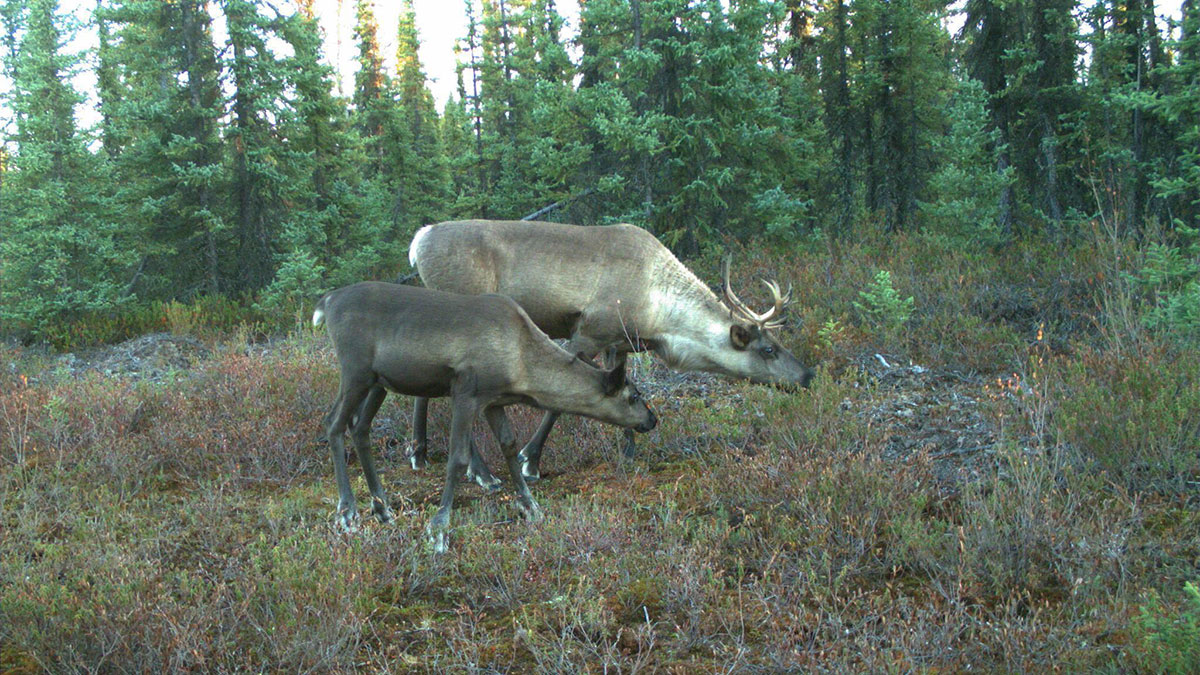
University of Alberta researchers have contributed to the province establishing the strongest plan in Canada to protect its endangered caribou from industry, wolves, and black bears.
The province is now conserving 1.8 million additional hectares for a total of 4.9 million hectares in a plan to protect woodland caribou from forestry and oil and gas development. Under Alberta’s Wildlife Act, the species is listed as “threatened,” meaning it’s likely to become at risk for extinction if current problems are not addressed. Stan Boutin, a population ecology professor and the Alberta Biodiversity Conservation Chair, is one of the researchers involved in provincial caribou conservation.
“This plan is an enormous advance forward,” Boutin said. “I am just so impressed by the breadth (the Alberta government) has included in it.”
In addition to expanding protected areas for caribou, the province is fencing off space to protect calves and yearlings from predation, an idea that originated in Boutin’s caribou conservation lab. Roughly 100 square kilometers will be fenced off, allowing females to raise their calves where they cannot be hunted by wolves and black bears. This will allow the province to rely less on culling wolves for caribou conservation — roughly 100 wolves were killed per year to help Alberta’s caribou between 2005 and 2012.
The new protections may not be enough to save the caribou, Boutin said. In the past, caribou avoided wolves by living in forests without enough other prey to attract predators. Alberta has two main caribou groups, the southern population in the Rocky Mountains and the boreal population in the north, and both have declined rapidly due to habitat loss caused by industrial development. Logging and fossil fuel extraction has pushed caribou habitats to overlap more with wolf territory, leading to a higher predation rate as well.
Wolf populations have been increasing as more moose and deer are able to thrive in these altered environments, and the higher number of wolves prey on caribou and their young. These factors will lead to caribou extinction if humans don’t intervene — and the government may be too late in tackling the problem, Boutin said.
“The whole situation in the last five to seven years was one of an impasse between industry and government groups,” he said. “(There was) a lot of talk on both sides about what to do, but no one doing anything. Complete inaction.”
The low-productivity forests that caribou once thrived in will need to be restored for caribou to survive in Alberta, but that process takes a long time. In the short term, solutions such as caribou rearing facilities are necessary for the current population’s survival, Boutin said.
In the future, Boutin will chair the province’s expert advisory panel to evaluate the success and implementation of the caribou conservation plan. U of A researchers will also be involved with monitoring the new caribou rearing facilities.
“We’re very keen on all the research that’s going to have to go into how these rearing facilities have helped the populations,” Boutin said. “There’s lots to be worked out as to the details and how the caribou respond in the system.”
More pressure may be put on the caribou as the climate changes in the future. Warmer temperatures will likely lead to higher deer populations, causing higher wolf populations and caribou predation rates. While the announcement of Alberta’s new caribou conservation plan is an important step, the public must continue pushing for action, Boutin said.
“We have to watch very carefully and see that this plan gets implemented in a timely manner,” he said. “There’s no time to waste.”
IF YOU JUST ENJOYED THE INTERVIEW WITH GERI, YOU WILL LOVE HER BOOK, I AM COYOTE...........HERE IS THE AMAZON.COM REVIEW:
I AmCoyote is three years old when she leaves her family in Algonquin Provincial Park in Ontario and embarks on a 500-mile odyssey eastward in search of a territory of her own and a mate to share it with.
Journeying by night through the dead of winter, she endures extreme cold, hunger, and a harrowing crossing of the St. Lawrence River in Montreal before her cries of loneliness are finally answered in the wilds of Maine. The mate she finds must gnaw off a paw to escape a trap. The first coyotes in the northern U.S., they raise pups (losing several), experience summer plenty, winter hardship, playfulness, and unmistakable love and grief. Blending science and imagination with magical results, this story tells how coyotes may have populated a land desperately in need of a keystone predator, and no one who reads it will doubt the value of their ecological role.
Told through the eyes of a coyote, this is a riveting story with mythic dimensions.
A work of creative nonfiction that adheres to the highest standards of wildlife biology.
With deep insights into wild canine behavior, penetrates the veil of “otherness” that separates us from the animals with whom we share the planet.
An appendix explores the history and current status of coyotes in North America. Native Americans considered them tricksters, messengers, and companions. Given the disappearance of wolves, they are even more critical to ecosystem health today. The author explains how, without coyotes, prey species are weakened by disease and parasites.
Geri Vistein speaks extensively about coyote-human interactions to a variety of audiences. She is a nationally recognized expert on the topic and maintains the website CoyoteLivesInMaine.com.
A QR code in the book takes readers to a hauntingly beautiful recording of coyote song.
Report finds Grand Canyon bison are native to region
Felicia Fonseca, Associated Press
Updated 5:26 am, Saturday, June 18, 2016
FLAGSTAFF, Ariz. (AP) — The effort to come up with a way to manage bison at Grand Canyon National Park has taken a turn back in time — thousands of years — to determine the massive animals' roots.
A new National Park Service report declares bison are native to the area and says they perhaps arrived sporadically in small, dispersed herds over the past 11,000 years. The designation means authorities can cull the beasts that have been damaging the landscape but not remove them entirely from the park.
This Aug. 26, 2010, file photo provided by the Kaibab National Forest shows bison in the national forest adjacent to the Grand Canyon in Northern Arizona. The hundreds of bison that roam the far northern reaches of Arizona are descendants of the massive animals brought to the region in the early 1900's as part of a crossbreeding operation. But a new report issued Thursday, June 16, 2016, by the National Park Service says that’s just a snapshot of bison history in the region. (Kaibab National Forest via AP, File)
The study released Thursday acknowledges the current herd descends from bison that were brought to northern Arizona in the early 1900s by a rancher who wanted to crossbreed them with cattle. But that's just a snapshot of the animal's history in the region, the report says.
Bison historically weren't a dominant part of the landscape. But they did appear in the area, which was the edge of their historic range, said Glenn Plumb, acting chief of science and resource management at the Grand Canyon and one of nine wildlife biologists who authored the report.
"All the evidence shows that northern Arizona was not a black hole for bison," he said. "It was part of the narrative; the habitat was suitable for them."
The study replaces an internal report meant to inform efforts to quickly reduce the burgeoning population from as many as 600 animals to between 80 and 200, and come up with a long-term strategy to manage the bison and have a huntable population outside the Grand Canyon.
The animals that can weigh 2,000 pounds or more are trampling vegetation, grazing in pristine meadows and polluting water sources in the park, officials say.
Environmental groups say the internal report and the new study are not grounded in science and marked a surprising change in the Grand Canyon's onetime classification of bison as nonnative.
Jeff Ruch,executive director of Public Employees for Environmental Responsibility, said the new report reaches an absurd conclusion that possible ancient sightings of bison in small numbers make the current herd native to the park.
"That is the leap that is hardest for everyone to swallow," he said Thursday. "This was a group of animals, imported, bred with cattle, part of the commercial enterprise and don't fit most people's idea of what native wildlife would be."
In 1906, a rancher brought dozens of bison to northern Arizona to crossbreed them with cattle. But the operation produced no male calves and was abandoned. The state now manages the animals.
The report points to various factors as evidence of the animals' previous existence in the region: a 2010 survey of bison in North America, bison remains recently discovered at a 3,000 year-old hunting site in southern Arizona, and oral stories from American Indian tribes.
According to a Hopi story, Ute tribal members bestowed a herd of bison as a gift during a and it is remembered through dances today. Paiute tribes have names for the buffalo, and one story recorded by explorer John Wesley Powell describes an encounter between a porcupine and buffalo, the report says.
Ruch contends the report reached what appears to be a predetermined management decision that up to 200 bison can be supported in the Grand Canyon. He contends the Park Service is aligning interests with the Arizona Game and Fish Department to appease hunters.
Hunting tags for bison are the most sought-after of the state's big game species on lands adjacent to the Grand Canyon. Arizona U.S. Sen. John McCain has said he wants state-licensed hunters to be able to participate in any effort to cull the population and be allowed to keep the meat.
Visitors can see bison on the drive to the Grand Canyon's North Rim, sometimes grazing near the park entrance gates. The animals have been spending more time within the Grand Canyon where they can't be hunted, but they rarely, if ever, go below the North Rim, wildlife officials say.
In recent years, the Park Service has focused on restoring and sustaining wild bison populations across the central and western United States. Plumb said state, federal and tribal officials envision a 215,000-acre area of northern Arizona where bison can roam free, including on 54,000 acres of the Grand Canyon.
Millions of bison once roamed the Great Plains, but the number has dwindled to around 500,000 in the U.S. Few bison herds roam freely in areas including Utah and Arizona, with the largest wild population in Yellowstone National Park.
Northern Ontario, Canad Wolfpack caught on trailcamera
Add Coyotes-Wolves-Cougars Link To Your Igoogle Homepage
A New Jersey Eastern Coyote unable to take a fawn
Blogger Rick
Strategizing at the WB
Let Rick and other readers know you're a fan of this blog...Become a Follower!
Making a Pitch at the WB
Two Massachusetts Eastern Coyotes at their den site
Eastern Wolf in Algonquin Provincial Park, Ontario, Canada
Gray Foxes(unlike Red Foxes) can climb trees--an advantage when pursued by Coyotes
Aldo Leopold--3 quotes from his SAN COUNTY ALMANAC
"We abuse land because we regard it as a commodity belonging to us. When we see land as a community to which we belong, we may begin to use it with love and respect."
Aldo Leopold
"A thing is right when it tends to preserve the integrity, stability and beauty of the biotic community. It is wrong when it tends otherwise."
Aldo Leopold
''To keep every cog and wheel is the first precaution of intelligent tinkering."
Wildlife Rendezvous
Like so many conscientious hunters and anglers come to realize, good habitat with our full suite of predators and prey make for healthy and productive living............Teddy Roosevelt depicted at a "WILDLIFE RENDEZVOUS"