Visitor Counter

hitwebcounter web counter
Visitors Since Blog Created in March 2010

Click Below to:

Add Blog to Favorites

Coyotes-Wolves-Cougars.blogspot.com

Grizzly bears, black bears, wolves, coyotes, cougars/ mountain lions,bobcats, wolverines, lynx, foxes, fishers and martens are the suite of carnivores that originally inhabited North America after the Pleistocene extinctions. This site invites research, commentary, point/counterpoint on that suite of native animals (predator and prey) that inhabited The Americas circa 1500-at the initial point of European exploration and subsequent colonization. Landscape ecology, journal accounts of explorers and frontiersmen, genetic evaluations of museum animals, peer reviewed 20th and 21st century research on various aspects of our "Wild America" as well as subjective commentary from expert and layman alike. All of the above being revealed and discussed with the underlying goal of one day seeing our Continent rewilded.....Where big enough swaths of open space exist with connective corridors to other large forest, meadow, mountain, valley, prairie, desert and chaparral wildlands.....Thereby enabling all of our historic fauna, including man, to live in a sustainable and healthy environment. - Blogger Rick

Subscribe via email to get updates

Enter your email address:

Receive New Posting Alerts

(A Maximum of One Alert Per Day)

Friday, November 25, 2016

"A decade before the celebrated mountain men entered the Northern Plains and Rockies, some dozen little-known trading forays were launched into the plains of the Southwest".................."In 1808–1809, with a party of twelve hunter-traders, Mississippi planter and hardware store owner Anthony Glass acted as a semi-official emissary of President Thomas Jefferson in probing the uncharted Texas lands of the Taovaya-Wichita and Comanche Indians"....... "Alone among the early southwestern traders, Glass kept a lively journal detailing his route and experiences with the Indians, with the landforms and wildlife of the region...............A.B. Hammond Professor of Western History at the U. of Montana and author of best selling books on the ecological history of the western USA , below is Dan's Flores reveal on the wildlife described by Glass during his trek into Texas

Journal of an 

Indian Trader

Anthony Glass and the 
Texas Trading Frontier, 
1790-1810

Edited by Dan L. Flores


"The Wild Horses of the early West
 were descendants of Andalusian stock,
 a line of animals
whose ancestry can be traced to the 
Barbary and Arabian hourses of 
northern Africa and the
Middle East".Small fleet and beautifully
 proportioned, these animals were
 ideally shaped by 
their desert evolution to compete as 
grazers with bison and pronghorn 
antelope on the
 prairies and plains of the southwest".....
"By 1800, they had reached a peak 
population of
 perhaps 2 million, most between the 
Rio Grande and Arkansas rivers, the
 center of their
range, apparently, west-central Texas"


Wolves and Pumas, the only predators of Wild Horses


"The Frenchmen who traversed East 
Texas in the 1680's saw no wild 
horses, but the
 de Leon and Teran expeditions of 
1689-91 brought more than a 
1000 horses and mules
 to the region, at least 200 of which 
were lost"


The Texas Cross Timbers


"Lewis & clark saw no wild
horses on the Northern Plains during their 1804-1806 
expedition".........""Pike however
frequently sighted bands along the ARkansas River in 
1806 and saw "immense herds"
 in South Texas in 1807".........."Freeman and Custis,
 whose 1806 expedition was
stopped about a week short of the Blackland Prairies, 
do not mention wild horses at
all in the woods and bottoms of Arkansas and Texas"


In green, historical distribution of Black Bears(note East
Texas gradient on left side of map)


"The Alabama-Coushattas(Indians) had been hunting 
wildlife for the market since
their arrival on the Red River; Sibley remarked in 1805
 that one family of them had taken
 118 black bears, while a single hunter had killed 400
 deer in 1804 and sold the hides for
50 cents each"


"Glass has his first encounter with a true prairie species; 
prairie chickens, a 
plump grouse of the humid, tall-grass prairies".........
.As late as 1850, there still were
500,000 of these birdes in the North Texas prairies".....
"Market hunting and habitat 
alteration by agriculture extirpated them completely"....
..."No attempt was made to
save them; the last flocks were seen near Marshall in
 1920"


Based largely on Vernon Bailey's zoological survey of 
1905, the eastward range of
 this species in Texas has long been fixed at about 98
 degrees west"....There has 
been some archaeological work, however, indicating
 that the prairie dog did once
range farther east"....Blackland clays would have been
 good habitat"........."Glass
therefore may provide us with a rare documentation 
for the existence of relict 
prairie dog colonies on the Blackland Prairie of the
 early 19th century"


"The crossings of Bois d' Arc Creek, a favorite beaver
 stream of the old French 
hunters, seems to be effected near Bonham"..."This
 first mention of great
numbers of bison and mustangs seems to refer to 
the country between Bonham 
and the Grayson County Line".......In his "Prehistoric
 Bison Populations of North
Central Texas, Mark Lynott uses archaeological 
evidence to argue that bison
populations were never large in the Prairie-Cross 
Timbers country, primarily
because the nutritional value of bluestem was less
 suited to bison needs
than the shorter grasses farther west, and that 
whitetail deer were always
the more important subsistence animal in the area"


"A surround of a bison herd began when two lines
 of (native) horsemen, about
a mile  distant from each other, advanced on 
either side of the herd and slowly
brought their ends together to encircle the 
animals"....."Whilst the poor affrighted
animals eddying about in a crowded and confused
 mass, hooking and climbing
upon each other"....."In this grand turmoil, a 
cloud of dust was soon raised, which 
in parts obscured the throng where the hunters 
were galloping their horses
around and driving the whizzing arrows or their
 long lances to the hearts of
 these noble animals"..."In this way, the grand
 hunt soon resolved itself into
a desperte battle; andin the space of fifteen
 minutes, resulted in the total
destruction of the whole herd"


Dan Flores is A. B. Hammond Professor
of Western History at the University of
Montana and the general editor of the
 Environmental History series at Texas A&M
University Press. He is the author or co-author
of seven books, including Journal of an Indian
 Trader: Anthony Glass and the Texas Trading 
Frontier, 1790-1810,published by Texas A&M
Press in 1985. Flores received his Ph.D. from
Texas A&;M and currently divides his time
 between Missoula, Montana, and Santa Fe.

"The journal is a fascinating running

 account of wilderness travel,

 negotiations with Indians, robberies by

 the Comanches and hunting adventures.

 It includes information on plants and

animals, Indian culture and attitudes,

 geographical features and political 

relations of the natives with Spaniards

 and Americans. . . . fascinating reading

 and at the same time an important

historical reference. It is superbly

 annotated, and the editor demonstrates 

a very perceptive understanding of the

 importance of Indian traders in

 promoting good Anglo-Indian relations.

 He also documents effectively the whole 

problem of Spanish-American relations

 on the vague borders of the provinces of

 New Mexico and Texas. This book

 deserves a place in every library 

concerned with the Indian trade and

 frontier History." --The Museum of

 the Fur Trade Quarterly


Thursday, November 24, 2016

Ecologist and Public Lands advocate George Wuerthner taking us out of "myth and fairy-tale" as it relates to what is true and and false about wildfires and salvage logging ---Is this type timber removal really preventative medicine as it relates to reducing the incidence of fire?


From: George Wuerthner gwuerthner@gmail.com
Date: November 24, 2016 at 2:23:27 PM EST


http://helenair.com/news/opinion/guest/logging-myths-fuel-legislation/article_4e7ccbd7-223b-53a5-80a4-43c02b2ed103.html


Guest column

Logging myths fuel legislation


The timber industry and its advocates continue to promote a number of myths designed to garner public support for increased logging. New legislation is proposed that would weaken environmental protections, reduce public review of U.S. Forest Service timber sales (called variously vegetation management, forest health restoration, fuels reduction, hazard tree reduction, salvage timber sale) and significantly increase money-losing logging on public lands.


Myth: Restoration of our forests is needed to re-create historic conditions.
Truth: There is growing debate about whether most forest ecosystems need any restoration. Nearly all higher-elevation mixed conifer and subalpine forests grew in dense stands that tended to burn at medium to long intervals (often at intervals of hundreds of years), with large patches of mixed to high mortality, so they are well within historic conditions.
Low-elevation ponderosa pine forests were considered different from the moister, higher-elevation forests and characterized as open and park-like, and burned by frequent low severity surface fires. However, new research concludes that many pine stands historically experienced occasional high severity stand replacement blazes and may not be significantly outside of their historic condition.


For instance, one recent review paper concluded: “current attempts to 'restore' forests to open, low-severity fire conditions may not align with historical reference conditions in most ponderosa pine and mixed-conifer forests of western North America.”
Myth: Logging reduces large wildfires.
Truth: Large wildfires burn under extreme weather conditions. Under extreme weather, wildfires burn through, over and around clearcuts, thinned forests and areas that have been prescribed burned. Such fires are “controlled” when the weather changes to more moderate conditions.
Logging may even increase fire spread and fire severity.


The conclusion of the Sierra Nevada report to Congress had this to say: "Timber harvest, through its effects on forest structure, local microclimate, and fuels accumulation, has increased fire severity more than any other recent human activity."
Another study done by fire ecologists at the Missoula Fire Lab concluded: "Even extensive fuel treatments may not reduce the amount of area burned over the long-term and furthermore, reduction of area burned may actually be an undesirable outcome.”

A new study soon to be published found that reviewed 1,500 wildfires between 1984 and 2014 found that actively managed forests had the highest level of fire severity. While those forests in protected areas burned, on average, had the lowest level of fire severity. In other words, the best way to reduce severe fires is to protect the land as wilderness, not “manage” it.
Myth: Thinning national forest lands will protect homes


Truth: One only needs to reduce the flammability within 100 feet of homes to protect them. Reducing fuels more than 100 feet beyond the home confers no additional protection. As one study concluded: “It may not be necessary or effective to treat fuels in adjacent areas in order to suppress fires before they reach homes; rather, it is the treatment of the fuels immediately proximate to the residences, and the degree to which the residential structures themselves can ignite that determine if the residences are vulnerable.”
Myth: Beetle outbreaks increase the chances of wildfire.
Truth: Any number of research studies has documented that beetle outbreaks have little effect or even reduces the chance of large wildfire for a period of years. Dead trees do not burn as well as live trees with flammable resins. For example, one study concluded: “we found no detectable increase in the occurrence of high-severity fires following MPB outbreaks. Dry conditions, rather than changes in fuels associated with outbreak, appear to be most limiting to the occurrence of severe fires in these forests.”
Myth: Dead trees are a sign of a forest health problem.
Truth: Dead trees are critical to healthy forest ecosystems. Some 250 scientists recently sent a letter to Congress affirming “snag forest habitat” are “ecological treasures comparable to old growth forests."


Unfortunately, as a result of logging and other forest management, we have a deficit of dead trees in our forest ecosystems. Episodic input of dead woods results from wildfire, beetles and disease. These natural processes help maintain forest ecosystem health.


George Wuerthner is an ecologist who has published 38 books, including "Wildfire: A Century of Failed Forest Policy."

Wednesday, November 23, 2016

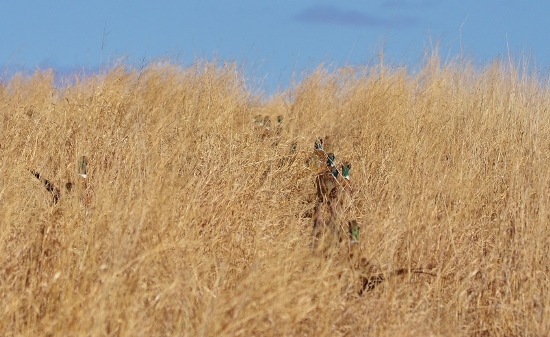
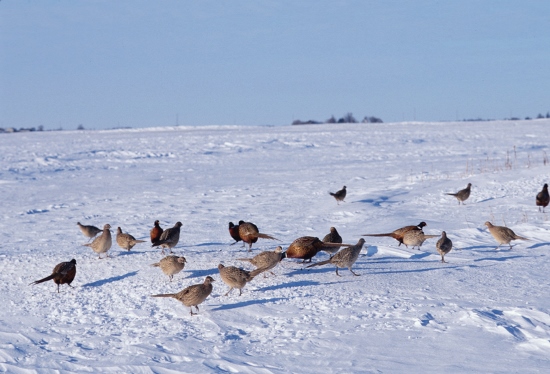
On this fine Thanksgiving Thursday, the hunting and conservation Organization, PHEASANTS FOREVER, are spot on and show intelligent insight in their acknowledgement that predators and prey, in this case Coyotes and Pheasants, have positively existed together for millennium in rough equilibrium,,,,,,,,,,,,,,Imbalances of any animal species has more to due with our disruption of their habitat than it has to do with the impacts of the predator suite existing in a given locale..................."The bottom line is while predator removal and exclusion methods can increase nesting success on small areas, these methods are too expensive for use on a landscape basis and do not significantly increase the number of nesting birds over the long term"........................ "Through the addition and management of habitat, we not only decrease the impact predators have on existing nests, but also increase the number of nests and population size in an area"..................... "Predators will continue to eat pheasants and their nests, but weather and habitat conditions will drive population fluctuations"

https://www.pheasantsforever.org/Habitat/Why-Habitat/Pheasant-Facts/Effects-of-Predators.aspx

EFFECTS OF PREDATORS

HABITAT MANAGEMENT DECREASES PREDATION


Few subjects generate as much concern and misunderstanding among pheasant hunters as predators and their impact on pheasant populations. Many over look that one of the best management practices to reduce predation rates of ring-necked pheasants is to increase wildlife habitat.
The best way to minimize the threat of predators? Make their job tougher with more upland habitat. Photo by PF Life Member Craig Armstrong
The best way to minimize the threat of predators? 
Make their job tougher with more upland habitat. 
Photo by PF Life Member Craig Armstrong

PHEASANT ECOLOGY: PREDATORS

No single predator gets more blame for pheasant predation than coyotes, but research over several decades has proven that coyotes focus their foraging on rodents and rabbits and do not take adult pheasants or nests as frequently as the other mammalian predators (red fox, striped skunk and raccoon). In addition, the larger home range and territorial nature of coyotes can actually result in lower populations of these other, more destructive predators. Predation accounts for three-fourths of unsuccessful nests, and nearly all of adult mortality (excluding hunting) is directly predator related.

Bottom line: Through the addition and management of habitat, we not only decrease the impact predators have on existing nests, but also increase the number of nests and population size in the area. This management comes at a fraction of the cost of other predator reduction methods. 

MORE HABITAT, LESS PREDATION, BEST OUTCOME

Less-expensive methods to improve game bird populations and nesting success exist. Experts have focused on the amount of habitat (composition of the landscape) and the arrangement (configuration) that increase nesting success by reducing the effectiveness of predators. Well-designed habitat projects can reduce predation by up to 80 percent.
A lack of quality cover can make pheasants susceptible to predators – of both aerial and ground variety.
A lack of quality cover can make pheasants susceptible 
to predators – of both aerial and ground variety.
Larger patches of nesting cover (more than 40 acres) have significantly higher rates of nest success than smaller sized patches. For example, in agricultural landscapes where the primary form of grassland habitat is road and drainage ditches, predator activity is concentrated on those smaller strips of cover. In landscapes having a greater component of grassland habitat, predator activity is diluted throughout the many patches of habitat. In addition to diluting predator activity, high grassland landscapes reduce the efficiency of predators.
Cover quality is also important. Dense blocks of undisturbed cover, such as Conservation Reserve Program acreage that is not mowed or grazed, are the most effective at reducing predation. Dense mixtures of grasses and forbs offering good residual cover after winter are highly selected by pheasant hens because they conceal nests from both avian and mammalian predators.

PREDATOR REMOVAL: A SMALL SCALE REMEDY

Early attempts to decrease the impact of predators on pheasant populations focused on reducing the overall number of predators, mainly through trapping. These efforts are effective for small areas but are dependent on three important factors.
  • Trapping efforts must reduce nest predator populations during the key period of recruitment—beginning prior to, and continuing throughout the entire pheasant nesting season (approximately 100 days). 
  • Trapping needs to extend beyond the boundaries of the controlled area. Most nest predators have large home ranges and if trapping efforts fail to account for this, predators from surrounding areas will still negatively impact nesting success within the controlled area. 
  • Most importantly, a successful removal program is a professional, full-time effort. The occasional removal of individual animals by hunters has very little impact on predator populations and trapping efforts that rely on bounties are destined to fail.
It is important to understand that sustained trapping efforts tend to stimulate reproduction by predators (compensating for artificially low densities) and create populations with proportionately more juveniles that wander more across the landscape thereby increasing the chances of encountering pheasants.

SUMMARY

While predator removal and exclusion methods can increase nesting success on small areas, these methods are too expensive for use on a landscape basis and do not significantly increase the number of nesting birds over the long term. Through the addition and management of habitat, we not only decrease the impact predators have on existing nests, but also increase the number of nests and population size in an area. Predators will continue to eat pheasants and their nests, but weather and habitat conditions will drive population fluctuations.

Tuesday, November 22, 2016

During the Whitetail Deer rut in the Fall, male deer "rubbing and scraping" facilitate breeding............. "Both of these behaviours serve as scent signposts for olfactory and visual communication to other deer of both sexes"............. "A lot of rubbing behavior takes place shortly after male antler velvet is dried and/or shed, but continues throughout the rutting period"............... "A rub is initially made by a buck rubbing his antlers and forehead (for scent deposition) on a shrub or small tree"............. "Once created, a rub may be used by several bucks or does".............. "Generally, bucks begin "making scrapes" several weeks after the first rubs appear"................ "This activity increases as the breeding season peaks and then declines throughout the remainder of the rutting period"............... "A scrape is made by a buck pawing a spot of ground, usually to bare soil, and rub-urinating in that soil".............. "A scrape is often associated with a low, overhanging branch which is often broken by the buck biting and/or pulling on the branch"............... "Scent from the forehead, preorbital gland or mouth is often deposited on the broken branch"............. "Much rubbing and scraping behavior is nocturnal".................."It’s probably too simplistic to think of rubbing and scraping as mere personal ads to attract the opposite sex".............. "Every deer that walks through a meadow or woodland where a rub and scrape has occurred smells the scrape and takes something from it"............"Whether it was a doe learning about a potential mate, or a buck learning about a potential rival, what takes place is a complicated language that we can only tenuously understand"..............Click on video below to see a full "rub and scrape" sequence taking place in the Massachusetts woods

http://r20.rs6.net/tn.jsp?f=001mFUxxXOfX7r3MYKAu3YbbfinVOn7KOANj8usie3l4BCKX3HOT7cq1YOD6n6FY-ZwcjbZaV5fNmJJckDWUvIvcB9ff8FoOcvzVqCai2dAmKfeG9ApAJVUUoqt7YhcdwaH9ATErIcaWV2hbnDU0VevCBzsDHf7EzfsRRr8vN782mRYTSZ-OiemRVTCO2THEwmwSSkz1YEqEO-mZiGD4aT5C6MquOM-tpas0QTrBZw9sZc=&c=i9vMPJko_FNmEao0faEMBiTDjW8kQSs9RrF7OcELZkX8HjBFyiLFVA==&ch=xQmACZv8fNTigvJx_RK4VwCW6lgn7rE5tMO5C4K5C4gkwRCAxUA6MA==

CLICK ON THIS LINK BELOW TO VIEW A BUCK MAKING A SCRAPE
https://youtu.be/s_TSWzmJA-8

The Whitetail Rut

Monday, November 21, 2016

Historically, Jaguarundis were thought to range from South America up into Arizona, New Mexico, Texas---and perhaps Colorado, Arkansas, Oklahoma and Louisiana................ .......Totally believable this is as in addition to thorny scrublands, jaguarundi's in Central and South America make homes in rainforests, prairie, deciduous forests and marshland.............Absent from the USA for a good 30 years, the U.S. Fish and Wildlife Service succumbed to intense environmental pressure to create a a Habitat Recovery plan for the species in 2014............Will it be put into action via translocation of animals from Mexico or will the "otter-looking" Jaguarundi have to sneak into our border states ahead of the planned Border Wall construction?..


(Is)The Endangered 

Jaguarundi  

Coming Back

 To Texas?

Its been almost 30 years since the rare jaguarundi was last spotted in Texas, but the U.S. Fish and Wildlife Service has plans to change that.
They hope to reintroduce the endangered feline to its native land: the Rio Grande Valley in Texas.


The ultimate goal is to establish a jaguarundi population of 500 by 2050 and get the species safely taken off the endangered list.
Jaguarundis are dark brown or brownish-red felines slightly larger than house cats.
According to the Center for Biological Diversity the jaguarundi has a long neck and tail, short legs, and a small flattened head. They're a little goofy looking — they look more like large weasels or otters than cats, according to the U.S. Fish and Wildlife Service.
What made the jaguarundi endangered in the first place
Habitat loss from increasing urbanization and agriculture expansion were primarily responsible for the disappearance of the jaguarundi from Texas. The population was especially vulnerable once border security between Texas and Mexico cut it off from the neighboring jaguarundi population in Mexico.
jaguarundiWikimedia Commons
jaguarundiWikimedia Commons/Alena HouškováScientists know very little about the jaguarundi. Its a shy species that quickly retreats into the underbrush when disturbed. The recovery plan includes improving techniques for tracking the cats and learning more about them so scientists are better equipped to protect them.
-------------------------------------------------------------------------------------------
http://www.wildearthguardians.org/site/News2?page=NewsArticle&id=9255


Jaguarundi--Rare, Beautiful Gulf Coast Cat--Receives Roadmap to Recovery 
Nearly four decades after it was listed as "endangered," imperiled cat finally has a recovery plan 
Washington, DC – The Gulf Coast jaguarundi, a rare cat native to Mexico and the thornscrub habitat of southern Texas, today received a long-overdue “recovery plan,” a document outlining necessary steps to bring the species back from the brink of extinction. The U. S. Fish and Wildlife Service (Service) published the plan late yesterday, the result of a settlement agreement with WildEarth Guardians. Despite listing the Gulf Coast jaguarundi as “endangered” under the Endangered Species Act in 1976, the Service failed to designate critical habitat or write a recovery plan for the critically imperiled cat. Guardians challenged the Service’s failure to produce a recovery plan specific to the species in 2009. If the recovery plan is funded and followed, the Service predicts the species could be removed from the list of imperiled species in 2050.


“This recovery plan is a long overdue and important step to safeguarding rapidly disappearing jaguarundi habitat,” said Taylor Jones, Endangered Species Advocate for WildEarth Guardians. “These beautiful and rare cats waited nearly forty years for a path to recovery. We call on the Service to now fully and effectively implement the recovery plan and prevent this species’ extinction.”

The Gulf Coast jaguarundi is a subspecies of jaguarundi that historically ranged from the Lower Rio Grande Valley in southern Texas into the eastern portion of Mexico in the States of Coahuila, Nuevo Leon, Tamaulipas, San Luis Potosi, and Veracruz. The last confirmed sighting of this subspecies in the U.S. was in April of 1986.  Most jaguarundi habitat in the U.S. is already lost to agriculture or urban development, including over 95% of thornscrub habitat in the Lower Rio Grande Valley. Jaguarundis need dense vegetation such as thornscrub to hunt prey, mainly small rodents, reptiles, and birds.  Preservation of remaining habitat will also help other rare species, including the imperiled ocelot, that share jaguarundi habitat.

Development along the U.S./Mexico border also poses threats to the jaguarundi and many other border species. Barriers along the border destroy and fragment habitat, reduce access to habitat and resources, including food and water, and isolate wildlife populations. Approximately 70 miles of  fence have been proposed in the Lower Rio Grande Valley, 56 miles of which are already constructed.


The recovery plan emphasizes identifying, protecting, restoring, and connecting potential habitat in southern Texas. The Service also intends to study the feasibility of reintroducing jaguarundi in Texas, as well as learn more about these elusive cats through population and habitat surveys.

Reproduction and Offspring: After a gestation of approximately 70-75 days, females produce a litter of 1-4 kittens. Like cougars and lions, newborns are spotted, and the spots soon disappear. They begin to take solid foods around the age of 6 weeks, and attain sexual maturity between 24-36 months.
Social System and Communication: Jaguarundis are known to be solitary or travel and forage in pairs. They have a wide variety of vocalizations, with 13 distinct calls having been documented.
Hunting and Diet: Their primary diet is quite varied and is comprised of small rodents, rabbits, armadillos, opossums, quail, wild turkey, reptiles, frogs, fish and domestic poultry. They have also been recorded eating fish stranded in puddles.
----------------------------------------------------------------------------------------------------------
https://www.google.com/url?sa=t&rct=j&q=&esrc=s&source=web&cd=2&cad=rja&uact=8&ved=0ahUKEwjVvoGYnrvQAhVB1mMKHaeGDioQFggmMAE&url=http%3A%2F%2Fonlinelibrary.wiley.com%2Fdoi%2F10.1111%2Fmam.12051%2Fabstract&usg=AFQjCNGSaUV-0wsjjX-fvfscF8UjeoaURw&sig2=CdJgr1le2U3MMnYxpUgqEg

Ecology and status of the jaguarundi Puma yagouaroundi: a synthesis of existing knowledge

Authors

  • First published: 


  • Survey information from the northern limit of the jaguarundi's range, for example, including broad parts of southern Texas, USA, and northern Mexico, is still lacking; this makes purported observations difficult to confirm and a matter of continuing debate. In extreme south Texas and northern Tamaulipas, Mexico, thornscrub habitats have historically been considered the northernmost limit of the species' geographical range (Goodwyn 1970, Tewes & Everett1986, Caso 1994). 


  • Although recent unconfirmed sightings exist from the vicinity of Laguna Atascosa Wildlife Refuge, Texas, the last confirmed jaguarundi in the USA appears to have been a road-killed individual near Brownsville, Texas in April 1986 (Grassman & Tewes 2004). Based on reliable observations (i.e. those for which the observer was considered knowledgeable and the context was considered credible) collected between 1970 and 1982, Everett (1983) and Tewes and Everett (1986) suggested that the jaguarundi may have recently ranged north and west from south Texas across the southern Edwards Plateau, and north along the entire coastal plain of east Texas. Its current existence in this region, its occurrence in the Pecos region of Texas and northern Coahuila, Mexico, and whether or not it occurs or has occurred in parts of southern Arizona, USA and Sonora, Mexico, remains unresolved (Little 1938, Brown & Lopez-Gonzalez 1999, Grigione et al. 2007, 2009, Giordano et al. 2011), and physical evidence is lacking (Fig. 1). Despite the ambiguity, new, confirmed jaguarundi records from additional areas of Mexico, including the first from Mexico's central highlands (1324 m; Charre-Medellin et al. 2012), have occurred recently.