Visitor Counter

hitwebcounter web counter
Visitors Since Blog Created in March 2010

Click Below to:

Add Blog to Favorites

Coyotes-Wolves-Cougars.blogspot.com

Grizzly bears, black bears, wolves, coyotes, cougars/ mountain lions,bobcats, wolverines, lynx, foxes, fishers and martens are the suite of carnivores that originally inhabited North America after the Pleistocene extinctions. This site invites research, commentary, point/counterpoint on that suite of native animals (predator and prey) that inhabited The Americas circa 1500-at the initial point of European exploration and subsequent colonization. Landscape ecology, journal accounts of explorers and frontiersmen, genetic evaluations of museum animals, peer reviewed 20th and 21st century research on various aspects of our "Wild America" as well as subjective commentary from expert and layman alike. All of the above being revealed and discussed with the underlying goal of one day seeing our Continent rewilded.....Where big enough swaths of open space exist with connective corridors to other large forest, meadow, mountain, valley, prairie, desert and chaparral wildlands.....Thereby enabling all of our historic fauna, including man, to live in a sustainable and healthy environment. - Blogger Rick

Subscribe via email to get updates

Enter your email address:

Receive New Posting Alerts

(A Maximum of One Alert Per Day)

Sunday, July 14, 2019

"Coyotes occupy the role of top predator in the Pioneer Valley in western Massachusetts and likely have a negative impact on the local distributions of both red and gray foxes"..........However, the ability of the Gray Fox to climb trees likely allows for a greater population than that of Red foxes in this sympatric canid system................"Coyotes own local distribution in this region seem to be driven by prey availability"

https://www.eaglehill.us/NENAonline/articles/NENA-26-2/16-Fuller.shtml


Wild Canid Distribution and Co-existence in a Natural–Urban Matrix of the Pioneer Valley of Western Massachusetts
Eric G. LeFlore1, Todd K. Fuller1,*, John T. Finn1, Stephen DeStefano2, and John F. Organ3

Abstract - Although development and urbanization are typically believed to have negative impacts on carnivoran species, some species can successfully navigate an urban matrix. Sympatric carnivorans compete for limited resources in urban areas, likely with system- speci c impacts to their distributions and activity patterns.


 We used automatically triggered wildlife cameras to assess the local distribution and co-existence of Canis latrans (Coyote), Vulpes vulpes (Red Fox), and Urocyon cinereoargenteus (Gray Fox) across the Pioneer Valley, MA, in relation to different levels of human development. We placed cameras at 79 locations in forested, altered, and urban land-use areas from September to November 2012 and accumulated 1670 trap nights. We determined site characteristics and detection rates for 12 other wildlife species for each camera location to develop a generalized linear model for the local distribution of each focal canid species across the study area.

Eastern Coyote


We also compared diel activity patterns among Coyotes, Red Foxes, and Gray Foxes, and calculated coef cients of overlap between each pair. The local distribution of Coyotes was positively associated with the detection rates of their prey and not associated with detection rates of sympatric carnivoran species.

Red Fox


 Red Foxes and Gray Foxes had negative relationships with the detection rate of Coyotes, and none of the 3 canid species showed a positive correlation with increased levels of urbanization. There was a high degree of temporal overlap in diel activity patterns and limited spatial overlap of our focal species, which suggests that any competition avoidance across our study area occurred at the spatial level. 

Gray Fox


Coyotes ll the role of top predator in the Pioneer Valley, and likely have a negative impact on the local distributions of smaller canids, while their own local distributions seem to be driven by prey availability. 

Friday, July 12, 2019

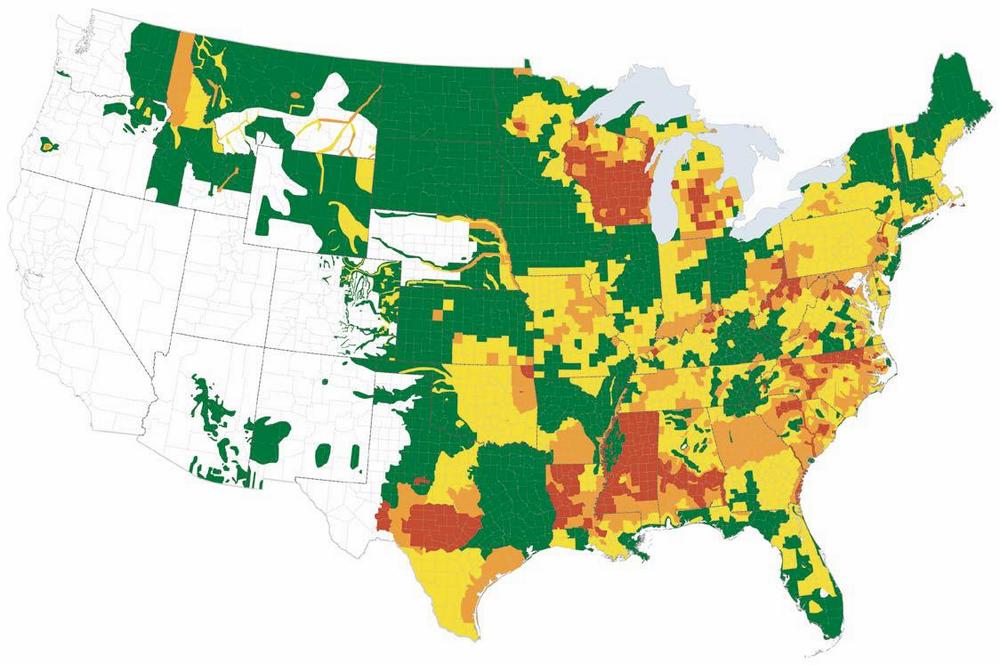
"Population increases of white-tailed deer, combined with burgeoning plant invasions, raise concerns for native plant diversity and forest regeneration"............HISTORICALLY, PRIOR TO EUROPEAN COLONIZATION, THE NORTHEASTERN USA HAD A DEER DENSITY OF 6-12 PER SQUARE MILE..........TODAY, A GREAT SWATCH OF THIS LAND AREA HAS DOUBLE, TRIPLE AND EVEN 4 TO 5 TIMES AS MANY DEER PER SQUARE MILE........"A 2017 Study across 23 sites in the northeastern USA. revealed that native deer reduced plant community diversity, lowering native plant richness and abundance, and benefited certain invasive, alien, non-native plants"............"By altering the balance of native plants in favor of a higher fraction of invasive plants, deer change forest plant ecology"..........."In this way, invasive plants could have a bigger influence on the forest ecosystem and leave fewer opportunities for native animals who depend on the native plants"............."Such changes in plant community structures also have long-term impacts on forest regeneration"...........Bottom line, bring back top apex carnivores--Eastern Wolves and Pumas to tap down the deer populations!

https://phys.org/news/2017-10-deer-native-forests.html

Deer prefer native plants leaving lasting damage on forests

The findings were published in the open access, online journal AoB Plants. The study pooled data from previous studies conducted at 23 sites across the northeastern U.S.


"Overall, deer reduce community diversity, lowering native plant richness and abundance and benefiting certain , showing that deer have a pervasive impact on forest understory plant communities across broad swaths of the eastern U.S.," said Kristine Averill, a research associate in Cornell's Section of Soil and Crop Sciences and lead author of the study.
By altering the balance of  in favor of a higher fraction of invasive plants, deer change forest plant ecology. In this way, invasive plants could have a bigger influence on the forest ecosystem and leave fewer opportunities for native animals who depend on the native plants. Such changes in plant community structures also have long-term impacts on forest regeneration, Averill said.

Here is a map released by Quality Deer Management Association in 2008 depicting whitetail deer density in the United States. The northern part of the West Virginia area has one of the higher whitetail deer densities.
http://forum.gon.com/showthread.php?t=294575
*The legend for the map is as follows: (Deer per square mile)*
  • White = Rare, absent, or urban area with unknown populations.
  • Green = Less than 15
  • Yellow = 15 to 30
  • Tan or Brown = 30 to 45
  • Dark Brown = Greater than 45
HISTORICALLY, PRIOR TO EUROPEAN COLONIZATION, THE  NORTHEASTERN USA
HAD A DEER DENSITY OF 6-12 PER SQUARE MILE..........TODAY, A GREAT SWATCH OF THIS LAND AREA HAS DOUBLE, TRIPLE AND EVEN 4 TO 5 TIMES AS MANY DEER PER
SQUARE MILE-----


In the study, Averill and colleagues analyzed raw data from previous research. The data came from sites that each had multiple pairs of fenced and unfenced plots, where deer were mostly excluded from fenced plots. "We compared the  where deer were excluded against the communities where they had access," Averill said.


The researchers were surprised to find that the diversity of  - the total number of  - and the total abundance (or land cover) of invasive plants stayed the same in areas where deer grazed and where they were excluded. Since deer find some invasive species unappetizing in favor of more palatable plants, deer indirectly promote the success of these invasives, Averill said.
"The study results suggest we should try to maintain lower deer densities through hunting and fencing if the goals are to support more native plants and foster reduced relative abundance of introduced ," Averill said.
More information: Kristine M Averill et al, A regional assessment of white-tailed deer effects on plant invasion, AoB PLANTS (2017). DOI: 10.1093/aobpla/plx047

Thursday, July 11, 2019

"Colorado Parks and Wildlife is working to confirm two possible gray wolf sightings in Jackson and Grand counties in northern Colorado"...........The last wild breeding wolves were extirpated from the state in the 1940's.........Biologists are speculating that this "radio-collared" Wolf treked down from the Yellowstone-Teton range in the Greater Yellowstone range of Wyoming


Jackson County, Colorado Gray Wolf sighting from this past weekend,
July 6-7, 2019

 Two possible wolf sightings in Jackson, Grand counties, Colorado

Associated Press; 7/9/19

Colorado Parks and Wildlife is working to confirm two possible gray wolf sightings in Jackson and Grand counties in northern Colorado.
View image on TwitterView image on TwitterView image on Twitter
You may have seen our wolf sighting tweet earlier this evening.

We accidentally shared the wrong wolf sighting photo. Here are the correct ones from over the weekend. (note the tracking collar)

As we continue to get more information we will share it.
The Coloradoan reports that someone sent the agency a photo that might show a radio-collared wolf near Walden in Jackson County.
Biologists are trying to confirm another recent sighting just to the south in Grand County.
On Tuesday, Gov. Jared Polis tweeted video of the possible wolf sighting.
Gray wolves were native to Colorado but were hunted to near extinction by the 1940s.
Spokeswoman Rebecca Ferrell says the Jackson County animal might have wandered from nearby Wyoming, one of several states where the wolf has been reintroduced.
The last confirmed Colorado wolf sightings were near Walden in 2015.
In all, there are about 6,000 gray wolves in the Northern Rockies, Pacific Northwest and Western Great Lakes.

Wednesday, July 10, 2019

Esteemed nature writer and long time resident of the wildest region of the lower 48 states, THE YAAK of northern Montana, Rick Bass makes his case to re-route a proposed hiking trail that under existing plans, cuts into the heart of the territory that the remaining 25 Grizzly Bears call home in the wild Yaak

CLICK ON LINK TO READ ENTIRE INTERVIEW WITH RICK BASS
http://r20.rs6.net/tn.jsp?f=001qOK1AnMJ1ftrFupu4BidxcVK6aQNogon66okHri5KR3EqJtbwYtSwcWShNpkuRNsj-EYypLZ5K4XaWOZqgQwXp_DmJDd_cQFNc93MSpO34gZ6pGVPT8iGJiIr09UXEbh1TtivQViDAmSEOJwf4Ym9Bt-IA41cxccJvXI-9JKmQ-P2ibQ2WNh53CAYxK7Fm3g8UG6-QaB4iHgMfPREuOlRZcYehuN39b04lFpIeO9cG5DnrZ-iR0VUjZKTDVOn-5R&c=jdJ2gMyE2KadRPiVTBNirzdyVb0vz-PAH9WOTvmf88Yz7utadtLjZg==&ch=-9NMayGEIol8fRsv7jAMcT_sXe8mwppUCmcS6lLPfAi8ZlhiSqKx8g==

Ruckus Over A National Hiking Trail: A MoJo Interview With Writer And Conservationist Rick Bass

SHOULD THE PACIFIC NORTHWEST TRAIL BE RE-ROUTED IN THE YAAK VALLEY TO INSURE HABITAT FOR AN IMPERILED POPULATION OF GRIZZLIES REMAINS PROTECTED?


Mountain Journal; 6/25/19


Rick Bass: Isolated populations of any imperiled animal disappear at higher rates than populations connected to others of their kind. The Yaak population of 25 Grizzly Bears is in trouble. We feel that even one more summer of the northern hiking route poses an unacceptable risk for the Yaak’s last grizzlies and continues also to put hikers and bears in the same space at the same time in a way that’s not good for other parties


The wild Yaak, a fortress of rare wildness set within an expanding sea of human domination, but can it last? Photo courtesy Rick Bass


Tuesday, July 9, 2019

Ecologist John Laundre, the co-author of the landmark LANDSCAPE OF FEAR PREDATOR AND PREY PARADIGM is back with us today opining on the need for all of us----- bird and animal watchers, hikers, photographers, campers,,,,,,as well as hunters----to have an equal say on how Wildlife in the USA is managed..........Enjoy the read!

John Laundré
Born and raised in the Midwest Professor John Laundré received bachelors and masters degrees, and PhD from Idaho State. He has worked for over 30 years in large mammal predator-prey ecology in the western U.S. and northern Mexico, with experience in the ecology of cougars, wolves, coyotes, bobcats, deer, elk, bison, and bighorn sheep. His 17yr study of cougar ecology and behavior is one of the longest running to-date. John is the originator of the critical concept of “the landscape of fear” of between predators and prey.

With more than 15 published scientific articles, he is also the author of ‘Phantoms of the Prairie: The Return of Cougars to the Midwest’ of the phenomenon of cougars moving back into the Great Plains. He is assistant professor at Western Oregon University, and current board member of the Cougar Rewilding Foundation. John continues to be very active on all things cougar.


Another Hunter myth: Americans are losing touch with nature

Hunters are worried. They are wringing their hands. They predicting dire things for wildlife in the United States. All this concern comes from the most recent national survey of outdoor activity of Americans by the U.S. Fish and Wildlife Service. In this 2016 report, the item that has hunters concerned is the continue decline in the number of us the age 16 years and older that hunt.  After a brief respite in the previous 2011 report, showing hunter numbers increasing, the 2016 report reinforces the continual decline in hunters over the last 20 years.  Starting in 1996, this once every 5-year survey has shown the percent of us that hunt dropping from 7% to a current 4.5%.


An important thing to note in this decline is that it is not because hunters’ numbers are growing slower that the total number of us but it is an actual numerical decline. In 1996, 13.9 million of us hunted. That is now down to only 11.4 million, or 2.5 million fewer of us hunt. That is an 18.4% decline since 1996. Most significantly, there are increasingly fewer young people becoming hunters. Over the 20 years, hunters between 16 and 24 years old declined from 2.1 to 1.2 million, a 42.9% drop. They went from 15% to 11% of all hunters. They also represent a smaller percentage of the total number of their age class in the general population, dropping from 7.5% to 3.3%. Lastly, the hunting population is aging rapidly. In 1996 only 38% of hunters were older than 45 years. That now has risen to 60%. That is what has the hunters worried. Based on these numbers, hunters are sounding the obvious alarm that fewer of us are going out to try and kill animals.

Why are they worried? First there is the obvious financial concerns. Hunters point out, ad nauseum, to the billions of dollars ($26.2 in 2016) they spend in support of wildlife through hunting them. This ranges from guns and clothes to licenses, of which the latter is the primarily support of their hunting agencies. Their math is simple, fewer hunters, fewer dollars in support of wildlife. What will happen to those poor animals if there are fewer people spending money trying to kill them?


However, more importantly, besides there being less support for the hunting indu$try, they rollout the time worn myth that hunters know best about wildlife. This myth is based on the idea that because they, rather than the other, now, 95.5% of us, supposedly spend more time “out there” allegedly observing, learning about wildlife, they are more knowledgeable about how nature works. Isn’t this why they control the management of wildlife in America through their hunting agencies? Isn’t that why they enact laws stating that hunting should be the principle if not the only, way wildlife, at least some of it, should be managed? Their logic is simple, fewer hunters, fewer knowledgeable people being concerned with wildlife. What will happen to the poor animals if there are fewer people knowledgeable about how to kill them?

What they are inferring with this myth is that fewer hunters mean Americans are losing touch with the natural world. We are becoming more urbanized, less sensitive, less knowledgeable of nature. A knowledge, they seem to contend, is only obtainable through hunting. Because of this, they lament, with this decline in hunters, who is going to show the concern over the management of wildlife, over their survival?


But are we? Does the loss of hunters mean we are becoming less sensitive, less concerned about wildlife? Are we losing the knowledge necessary to “manage” wildlife?

Unfortunately, hunters and the rest of us who listen to them, fail to look at the other statistics presented in these periodic surveys of outdoor activity. There is another section in these reports covering what is called “wildlife watching”. It seems that there indeed are people out there that actually go to watch wildlife without the intention of killing them! How many of them are there? Do they support wildlife with their spending? Do they learn about wildlife? Could they be knowledgeable enough to have a say in how wildlife is managed? Should they have a say?
The answer to the first questions is: there are a lot more wildlife watchers than hunters! The 2016 survey reports that 86.0 million of us watch wildlife.  This represents 33.7% of the U.S. population 16 years and older and is 7.5 times more than there are hunters! This includes young people. In 2016, there were 7.1 million wildlife watchers between 16 and 24 years old. That is 5.6 times more young people watching wildlife than hunting them! 


Also, looking at the trends in wildlife watching, the number of participants is not decreasing but increasing! In 1996, there were 62.9 million wildlife watchers. This means there are now 23.1 million more of them in 2016.  This is a 36.9% growth, which is faster than the overall population growth of 26.4%. As for the 16 to 24-year old wildlife watchers, their numbers have increased by 49.4% over the last 20 years. This is compared to a 34.1% increase of this age group for the general public.  

Overall, wildlife watchers are increasing in number, especially in adding young individuals. So, yes, it is a myth that there are fewer Americans interested in wildlife, there are more! It is just that they are more interested in observing them through binoculars rather than through a rifle scope.
Do they support wildlife with their spending? Again, here is an often-ignored comparison when hunters brag about their financial contributions to wildlife. In 2016, wildlife watchers spend $75.9 billion in pursuit of their activities, which is 2.6 times more than they spent in 1996. It is also almost three times more than spent by hunters. This money goes directly toward supporting parks and wildlife areas thru fees. It goes to local, state, and federal agencies dedicated to protecting wildlife through taxes generated. So, I wouldn’t be too concerned that fewer hunters are paying to kill wildlife as they are amply being replaced by those willing to pay to watch them…alive.


Are they spending enough time to learn something about them? Again, in 2016, wildlife watchers spent an average 16 days in the field, exactly the same amount of time as hunters. They observe wildlife. They take notes. They exchange information. They take tours where guides instruct them on all aspects of not only the animals they are watching, but on the communities, the ecosystems in which they live. So, I wouldn’t be too concerned that there are fewer hunters going afield to learn how to kill animals. They are amply being replaced by people learning not just about the animals but how nature works.

This is why I conclude that the hunters’ contention that we Americans are becoming less attached, less attuned to nature is indeed a myth. According to the numbers, there are more, not less, of us, especially the young, getting out in nature. Only, rather than going there with the objective of killing animals, more of us want to observe them alive! The binoculars are replacing the rifle. We are increasingly learning more about the total natural history of animals rather than just how to find them/grow them to kill them. Contrary to the concern of the hunters, more, not fewer, Americans are increasingly becoming knowledgeable about nature.


Now the last question: Should they have a say in how wildlife are managed?
The hunter generated myth that you only learn about wildlife if you intend to kill it has to itself die. Hunters do not know best and hunting should not be the dominant goal of how wildlife are managed. The openly proclaimed consequence of that strategy is managing for more game in the bag. Nature should not be managed just as the personal slaughterhouse of the 4.5% of us that hunt. A much larger percent of us want to see animals alive and pay considerably more for that opportunity.  And our voices should be heard regarding the management, better, the conservation of wildlife in this country. 

 So yes, they should have a say, a major say in how wildlife are managed…but they don’t.
Despite 20 years of data showing greater participation and monetary contributions by wildlife watchers, state game agencies, regardless of what they call themselves, remain hunter agencies whose goal is to grow more game for hunters to kill. This has to change. We all own the wildlife and we all should have a say in how they are conserved. However, wildlife watchers are still placated, marginalized, even ridiculed.  Agencies may dialog with us, pretend to listen to us but in the end…ignore us.

The only way things will change is if we, the other 95.5% demand that wildlife are managed, not just for the gun but also for the binoculars. To do this, we the 95.5% should demand that these agencies be primarily funded by reinvesting a small portion of the general funds wildlife watching generates, not mainly by the self-serving license fees of hunters. Only then will these agencies stop being quasi-private hunting clubs and be truly responsive to all of the citizens of a state. Only then will the conservation of wildlife, not the management of hunting them, be the dominate role of wildlife agencies. Our numbers are growing and our voices need to be heard.

Sunday, June 23, 2019

Five years after the American Revolutionary War ended in 1783, pioneers from Massachusetts set out to create the first American City in what was known as the NORTHWEST TERRITORY, what would eventually become the States of Ohio, Michigan, Indiana, Illinois and Wisconsin................Marietta, Ohio was that first city outpost(1788) located in southeastern Ohio on the banks of the Ohio River..............By the close of the Civil War(1865), 80% of Ohio's woodlands had been cut down with Wolves, Pumas, Black Bears, Bobcats, Elk, Bison, Whitetail Deer, Fishers, Martens, Foxes and Passenger Pigons extirpated from the State................In 1751, two years prior to the outbreak of THE FRENCH & INDIAN WAR between England and France, the first American to chronicle his exploration through the Ohio territory, Christopher Gist stated: "I went to the south, westward down the little Miamee River or Creek, where I had fine traveling thro rich land and beautiful meadows, in which I could sometimes see forty or fifty buffaloes feeding at once"................."In 1779, Reverand David Zeisberger commented: "The Muskingum River(means) Elk's Eye, so called because of the numbers of elk that formerly fed on its banks, these animals being found there even at the present time".................At the outbreak of the War of 1812 between the USA and England, Isham Morgan wrote: "In the early times of Cuyohoga County(present day Cleveland), there were bears, wolves, deer, a few elks, wild turkeys, coons, porcupines, opposums, squirrels, wild ducks, geese and pigeons innumerable"..............."They too have nearly all left"............"In 1834, housewife Livvat Boke wrote: "Right up to our doorsill reaches the huge, somber and vaulted forest"..........."There are no openings to break up the overshadowy wolf-haunted woodland"................"The sunlight cannot get through the arches of the murmuring leaves"..............."Through the grayish shadow and down the pathways in the forest men walk, continually in a kind of midday gloom"


https://ocvn.osu.edu/news/ohios-wild-history-frontier-fauna-1750-present

Ohio's Wild History - Frontier Fauna 1750 to Present


MARCH 3, 2013

Marietta, Ohio, the site of the first
City in ohio, settled, 1788(On the border
of Ohio and West Virginia, on the banks
of the Ohio River


"I . . . went to the south westward down the little Miamee River or Creek, where I had fine traveling thro rich land and beautiful meadows, in which I could sometimes see forty or fifty buffaloes feeding at once. . ." Christopher Gist, 1751

The Miami River --site of some of the last
Bison to roam Ohio


Centuries ago, Native Americans dubbed the winding river that met the Allegheny and flowed into the wild ancestral hunting grounds the "Ohio" meaning "beautiful." Many of the early explorers, travelers and settlers who followed the Ohio River into the wilderness that would later become the state of Ohio agreed with the Native Americans' sentiment, and offered their own accounts of the scenic beauty, natural diversity and abundance of wildlife they encountered.
Along their treks through Ohio's array of familiar and foreign landscapes-from impossibly dense forests to wide-open prairies, mucky bogs and swamps to broad river valleys-these adventurers were awestruck by enormous flocks of passenger pigeons darkening the sky, delighted by colorful Carolina parakeets shining like gems in the treetops, and mesmerized by dusky prairie chickens leaping above the tall grass during their courtship dances. They were impressed by the huge fish and the plentiful deer, beaver, elk and bison, not to mention the bears, wolves and panthers.
For the Native Americans and newcomers, alike, Ohio's indigenous animals furnished meat, fur, hides and oil that were essential to frontier survival and commerce. Frontier Ohio's blend of habitats, where the primeval forest of the east mingled with patches of grassland that foretold of the vast prairies to the west, created a rich environment for big game. The wealth of rivers and streams framed by the great freshwater lake and the beautiful river provided even more natural treasure. The Muskingum River teemed with monster muskellunge, many of which weighed in at 40 pounds, and an amazing assortment of freshwater mussels that were commonly on the menu at meals prepared by both Native Americans and pioneers.
"The Muskingum (means) Elk's Eye, so called because of the numbers of elk that formerly fed on its banks, these animals being found there even at the present time..."
Rev. David Zeisberger, History of the North American Indians, 1779


Muskingum river in blue over the yellow highlight on map


The humble pigeon was also an important food source from pre-settlement times, and for generations after Ohio's statehood. The enormous flocks provided easy pickings with a rifle or arrow while on the wing, and once the birds roosted, hundreds could be scooped out of the trees. In 1806, pioneer ornithologist Alexander Wilson described a flock of more than two billion passenger pigeons passing over head for several hours in a formation estimated at one mile wide and 240 miles long. Well into the 19th century, Buckeye Lake remained a prime roosting spot for astronomical numbers of passenger pigeons.
Predators also thrived on the frontier. The evening chorus of howling wolves often intimidated isolated settlers, but their livestock had more to fear from the hungry wolf at the door. Cougars, also known on the frontier as panthers, would typically avoid humans if unprovoked, but could attack viciously if their young were threatened. Some areas were thick with rattlesnakes, which could prove deadly to the unwary who failed to heed their warning. Despite the natural hazards on the frontier, though, humans faced far greater danger from each other than from any of the wild beasts of the forest.
"...Right up to our doorsill reaches the huge, somber and vaulted forest. There are no openings to break up the overshadowy wolf-haunted woodland...The sunlight cannot get through the arches of the murmuring leaves. Through the grayish shadow and down the pathways in the forest men walk, continually in a kind of midday gloom..."
Livvat Boke, memoirs from 1834 after her emigration from Germany to Mercer County

Mercer County on Ohio Map


In contrast to life's daily hardships and perils, tales of close calls with wildlife made for amusing campfire entertainment on the frontier. Circuit riding preacher Reverend Joseph Badger recalled in his 1803 memoir that just before nightfall, he was traveling unarmed along the Grand River when he encountered a huge bear. "Supposing the brute would run, as several had done which I had met before, I slapped my hands and halloed at him. But instead of running, he raised his hair on end, and snapped his teeth violently... To run away was impossible, in a pathless wood, thick with rush and fallen old timber. I concluded to resort to a tree, if I could find one...I soon got hold of a limb large enough to bear me, and at this instant the evil beast came to the tree with a violent snuffling and snapping...I then ascended about forty feet, as near the top of the tree as I thought was safe; found a convenient place to sit on a limb, and tied myself with a large bandana to the tree, so as not to fall if I fell into a drowse...". At dawn, the bear finally gave up and lumbered away. Badger concludes his hair-raising story on a light note, "My horse standing at the tree without moving a foot from the place I left him, and in no way frightened by the approach and management of the bear, seemed peculiarly Providential. This was the only time I was disturbed in camping out many times..."
"In the early times of Cuyohoga County, there were bears, wolves, deer a few elks, wild turkeys, coons porcupines, opposums, squirrels, wild ducks, geese and pigeons innumerable. They too have nearly all left..."
Isham Morgam, recollections of 1812-1813


Cuyohoga County, where the city of Cleveland is located


Another traveler treed by wolves used music to soothe the savage beasts. Joseph Barker, an early settler at Marietta, relayed a story in his 1795 journal of a neighbor who cleverly survived an encounter with wolves.
"A man by the name of Bagley, fiddler, coming from Wolf Creek towards spring one cold, snowy frozen afternoon, was attacked by a large gang of wolves who drove him up a tree, where he had to sit and play the fiddle for them until they saw fit to leave him the next day."
Not only did early explorers describe the living animals they saw, they also encountered baffling evidence of extinct prehistoric wildlife. In 1775, adventurer Nicholas Cresswell noted in his journal that his party came upon enormous bones and a tusk in a salt lick. The local Indians believed the bones to be the remnant of a white buffalo that died by drinking salt water, but Cresswell had seen an elephant tusk from Africa, and was convinced that the creature was somehow related to the elephant. Apparently, Cresswell was unaware of earlier mastodon finds in the colonies, and remained perplexed, "...Their neither is nor ever was any elephants in North or South America, that I can learn, or any quadruped one tenth part as large as these was..."
As Ohio's frontier days came to a close, the impenetrable woods of the Great Black Swamp of northwest Ohio became a last refuge for elk, wolves and lynx. The 1,500 square mile tract of enormous trees standing in perpetually muddy ground, dotted with limestone outcrops and sand ridges, was the last area of Ohio to be settled. Even as the newly completed canals were shuttling passengers and goods from one end of the state to the other, this remote corner of wilderness stayed suspended in time.
In the span of a few generations, though, settlement, agriculture, loss of habitat and over-hunting took a heavy toll on Ohio's native wildlife. The last buffalo in Ohio was shot in 1803 near the present site of Vesuvius Furnace in Lawrence County. Bounties offered for panther scalps were discontinued in 1818, and the big cats were believed to be eradicated from the state in 1838. Beaver disappeared by 1830, and by 1850, black bear, elk, gray wolf and bobcat were considered extirpated from Ohio, although they continued to live in some neighboring states.
"I am of the opinion that deer are plentier in this country that horned cattle are in New England. However, this state of things will not last long; for whenever a country begins to be settled, the native inhabitants must either flee or perish outright..."
Colonel John May, Marietta, 1788
By the time the state celebrated its 80th birthday in 1883, 83 percent of Ohio's original forest had been cleared. White tailed deer sought cover elsewhere, and by 1904 were no longer found in Ohio. Bald eagles used to nest by the hundreds on the shores of Grand Lake St. Marys before 1900, but were rarely seen decades later. Prairie chickens lost too much of their habitat, and were extirpated from the state by 1900. In 1900, the last wild passenger pigeon in Ohio was killed, and the entire species became extinct in 1914 when the last captive passenger pigeon died at the Cincinnati Zoo. The exotic-looking Carolina parakeet, the only native parrot in eastern North America, had become quite rare by the early 1800s. The last record of a sighting in Ohio was a small flock flying over the new capital square in Columbus in 1862, and the species was considered extinct after the death of the last captive Carolina parakeet at the Cincinnati Zoo in 1918.
A few of these species are gone forever, but a number of Ohio's native wildlife species that had become extirpated from the state are finding their way back. Beaver first reappeared in 1936 in Ashtabula County, and their numbers have increased steadily statewide. One of the most remarkable comeback stories is the white-tailed deer, which was first restocked in Scioto County in 1936. Subsequent reforestation efforts around the state by the Division of Forestry have increased Ohio's forest cover to more than 30 percent, and enabled the deer to thrive. Through careful nurturing by the Division of Wildlife, the magnificent bald eagle is once again an Ohio resident, with more than 120 nests along Lake Erie, the Ohio River and several of Ohio's inland state park lakes, including Grand Lake St. Marys.
In Scioto and Adams counties, Ohio's largest contiguous tract of forest encompassing Shawnee State Park and State Forest rimmed by Nature Conservancy lands now hosts a small resident population of black bear. The Shawnee hills also provide plenty of seclusion for the elusive bobcat, which is seen from time to time by observant wildlife watchers.
Thanks to the stewardship of more than 164,000 acres of state park lands and waters and additional public lands that remain largely undeveloped, coupled with reintroduction efforts and habitat improvements, modern Ohioans can catch a glimpse of many of the wild creatures that graced the untamed Ohio frontier.
- Jean Backs, Editor
References
Foster, Emily, Editor, The Ohio Frontier - An Anthology of Early Writings, The University Press of Kentucky, 1996.
Lafferty, Michael, Editor, Ohio's Natural Heritage, The Ohio Academy of Science, 1979.
Zeisberger, David, History of the North American Indians, Ohio Historical Society, 1910