
Mountain Beavers, Canada's elusive 'living fossil' can't take the heat
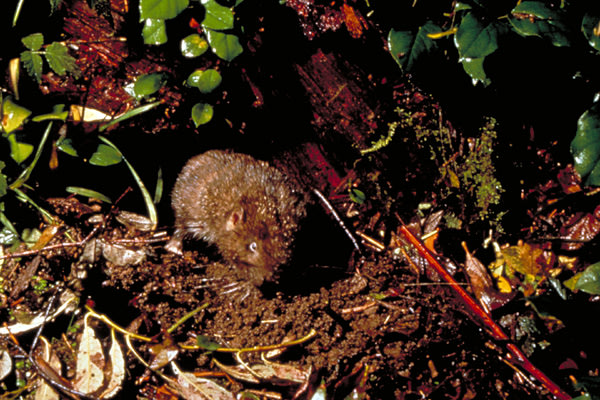 The Mountain Beaver, Canada's "living fossil"
Although most residents there probably have never seen one before, the mountain slopes outside of Vancouver are home to the world's most primitive species of rodent. Being the last in a line dating back over 25 million years and having several physical characteristics that are only seen now in fossil specimens, has earned the Mountain Beaver the nickname 'Living Fossil'.
Their exact numbers are unknown, however, a 1999 study that put them on the federal government's Species at Risk list found 634 occupied nests during their survey of southern BC, on the east side of the Cascade Mountains.

According to one of the authors, logging is the biggest threat to the mountain beaver, since the heavy equipment compacts the earth, making it difficult for them to dig their dens.Urban expansion takes its toll as well, by encroaching on the beaver's habitat and introducing dogs and cats into the area, which would see the docile animals as easy prey.
Also, being such a primitive species, these creatures have a hard time regulating their body temperatures, and are extremely sensitive to heat and drought. They begin to suffer from hyperthermia if the temperature rises above 28 degrees Celsius and can die if they're exposed to temperatures above 32 degrees Celsius for more than a few hours. They originally lived all across North America, but ended up in the cooler Pacific Northwest forests as the climate gradually warmed up from the last ice age.
No comments:
Post a Comment