
Wolf Protections, Panel Says
Unsettled Science
Behind Proposal
to Lift Gray Wolf
Protections, Panel
Says
By Megan Gannon, News Editor | February 07
, 2014 04:04pm ET
, 2014 04:04pm ET
 |
 The gray wolf (Canis lupus) The gray wolf (Canis lupus)Credit: Kramer, Gary | U.S. Fish and Wildlife Service |
The drawn-out battle over the fate of gray wolves
in the United States continues.
An independent panel of experts said Friday (Feb. 7)
that there is wide disagreement about some of the
science the Fish and Wildlife Service used to make
its case for ousting gray wolves from the Endangered
Species list. The review could hinder the FWS
proposal to lift federal protections for the animals
throughout much of the United States.
that there is wide disagreement about some of the
science the Fish and Wildlife Service used to make
its case for ousting gray wolves from the Endangered
Species list. The review could hinder the FWS
proposal to lift federal protections for the animals
throughout much of the United States.
"It was a very clean process and we got a unanimous
result," said Steven Courtney, one of the scientists
charged with setting up the independent panel at
the National Center for Ecological Analysis and
Synthesis (NCEAS) at the University of California,
Santa Barbara. [In Photos: The Fight Over Gray
Wolves' Endangered Status]
result," said Steven Courtney, one of the scientists
charged with setting up the independent panel at
the National Center for Ecological Analysis and
Synthesis (NCEAS) at the University of California,
Santa Barbara. [In Photos: The Fight Over Gray
Wolves' Endangered Status]
The panel was not taksed with deciding whether
or not the gray wolf should be removed from the
Endangered Species list. Rather, they were
charged with determining whether the FWS
service's recommendation to do so was
supported by the best available science,
explained Frank Davis, director of the NCEAS.
or not the gray wolf should be removed from the
Endangered Species list. Rather, they were
charged with determining whether the FWS
service's recommendation to do so was
supported by the best available science,
explained Frank Davis, director of the NCEAS.
The experts' main complaint was that the FWS
proposal relied too heavily on a 2012 study
(published in the FWS's own journal North
American Fauna), which determined wolves
that once occupied the eastern part of the
country were likely a genetically
distinct species (Canis lycaon) from the
gray wolves in question (Canis lupis). If this
were the case, the FWS would not be
responsible for ensuring the gray wolf's
recovery in the eastern United States.
proposal relied too heavily on a 2012 study
(published in the FWS's own journal North
American Fauna), which determined wolves
that once occupied the eastern part of the
country were likely a genetically
distinct species (Canis lycaon) from the
gray wolves in question (Canis lupis). If this
were the case, the FWS would not be
responsible for ensuring the gray wolf's
recovery in the eastern United States.
But scientists on the panel said the results
of the 2012 study are not universally accepted
or settled. The group decided that FWS officials
"had interpreted the science that they used fairly,
but there has been a lot of new science on the
question of wolf genetics, and that science
needs to be brought into that discussion,"
Davis told Live Science.
of the 2012 study are not universally accepted
or settled. The group decided that FWS officials
"had interpreted the science that they used fairly,
but there has been a lot of new science on the
question of wolf genetics, and that science
needs to be brought into that discussion,"
Davis told Live Science.
The FWS has now reopened its public
comment period on the proposal, which
it hopes to make a decision on by the end
of the year.
comment period on the proposal, which
it hopes to make a decision on by the end
of the year.
The NCEAS was brought in to lead the
independent review of the proposal after
the FWS was criticized for meddling with
it's own peer review panel (i.e., removing
scientists who had publicly spoken out
against the proposal). The panel's results
can be read in full on the FWS's website.
independent review of the proposal after
the FWS was criticized for meddling with
it's own peer review panel (i.e., removing
scientists who had publicly spoken out
against the proposal). The panel's results
can be read in full on the FWS's website.
Wolves once lived across much of the
continental United States, but by the
mid-20th century, hunting had nearly
driven the creatures to extinction.
Conservation efforts and federal protections
helped the animals make a comeback, and
now there are more than 5,000 gray wolves
in the Lower 48.
continental United States, but by the
mid-20th century, hunting had nearly
driven the creatures to extinction.
Conservation efforts and federal protections
helped the animals make a comeback, and
now there are more than 5,000 gray wolves
in the Lower 48.
In light of their recovery, wolves were recently
stripped of their federal protections in states
in the northern Rockies and Great Lakes
region, where several state wildlife
management agencies have established
wolf-hunting seasons.
stripped of their federal protections in states
in the northern Rockies and Great Lakes
region, where several state wildlife
management agencies have established
wolf-hunting seasons.
Some scientists and conservationists have
expressed fear that taking gray wolves off
the list for the entire United States is premature
, and would keep them from recolonizing other
parts of their former habitat, like Colorado and
Utah.
expressed fear that taking gray wolves off
the list for the entire United States is premature
, and would keep them from recolonizing other
parts of their former habitat, like Colorado and
Utah.
Under the FWS proposal, a subspecies
population of about 83 Mexican wolves in
New Mexico and Arizona would keep their
Endangered Species protections.
population of about 83 Mexican wolves in
New Mexico and Arizona would keep their
Endangered Species protections.
Follow Megan Gannon on Twitter and
Google+. Follow us @livescience,
Facebook & Google+. Original
article on Live Science
Google+. Follow us @livescience,
Facebook & Google+. Original
article on Live Science
-----------------------------------------------------------------------------------------------------------
-----------------------------------------------------------------------------------------------------------
SMITHSONIAN INSTITUTION.
UNITED STATES NATIONAL
MUSEUM.
THE EXTERMINATION OF
THE AMERICAN BISON.
BY
WILLIAM T. HORNADAY,
Superintendent of the National
Zoological Park.
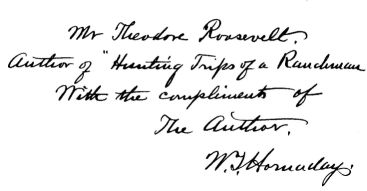
Inscription
[Pg 366]
From the Report of the
National Museum, 1886-’87,
pages 369-548, and plates I-XXII.
WASHINGTON
GOVERNMENT PRINTING
OFFICE.
1889.
The earliest discovery of the bison in Eastern North
America, or indeed anywhere north of Coronado’s
route, was made somewhere near Washington,
District of Columbia, in 1612, by an English navigator
named Samuel Argoll,[3] and narrated as follows:
America, or indeed anywhere north of Coronado’s
route, was made somewhere near Washington,
District of Columbia, in 1612, by an English navigator
named Samuel Argoll,[3] and narrated as follows:
“As soon as I had unladen this corne, I set my
men to the felling of Timber, for the building of
a Frigat, which I had left half finished at Point
Comfort, the 19. of March: and returned myself
with the ship into Pembrook [Potomac] River,
and so discovered to the head of it, which is
about 65 leagues into the Land, and navigable
for any ship. And then marching into the Countrie,
I found great store of Cattle as big as Kine, of
which the Indians that were my guides killed a
couple, which we found to be very good and
wholesome meate, and are very easie to be
killed, in regard they are heavy, slow, and
not so wild as other beasts of the wildernesse.”
men to the felling of Timber, for the building of
a Frigat, which I had left half finished at Point
Comfort, the 19. of March: and returned myself
with the ship into Pembrook [Potomac] River,
and so discovered to the head of it, which is
about 65 leagues into the Land, and navigable
for any ship. And then marching into the Countrie,
I found great store of Cattle as big as Kine, of
which the Indians that were my guides killed a
couple, which we found to be very good and
wholesome meate, and are very easie to be
killed, in regard they are heavy, slow, and
not so wild as other beasts of the wildernesse.”

It is to be regretted that the narrative of the explorer affords
no clew to the precise locality of this interesting discovery,
but since it is doubtful that the mariner journeyed very far
on foot from the head of navigation of the Potomac, it seems
highly probable that the first American bison seen by
Europeans, other than the Spaniards, was found within
15 miles, or even less, of the capital of the United States,
and possibly within the District of Columbia itself.
The first meeting of the white man with the buffalo on the
northern boundary of that animal’s habitat occurred in
1679, when Father Hennepin[Pg 376] ascended the
St. Lawrence to the great lakes, and finally penetrated
the great wilderness as far as western Illinois.
northern boundary of that animal’s habitat occurred in
1679, when Father Hennepin[Pg 376] ascended the
St. Lawrence to the great lakes, and finally penetrated
the great wilderness as far as western Illinois.
The next meeting with the buffalo on the Atlantic slope
was in October, 1729, by a party of surveyors under
Col. William Byrd, who were engaged in surveying
the boundary between North Carolina and Virginia.
was in October, 1729, by a party of surveyors under
Col. William Byrd, who were engaged in surveying
the boundary between North Carolina and Virginia.
As the party journeyed up from the coast, marking
the line which now constitutes the interstate boundary,
three buffaloes were seen on Sugar-Tree Creek,
but none of them were killed.
the line which now constitutes the interstate boundary,
three buffaloes were seen on Sugar-Tree Creek,
but none of them were killed.
On the return journey, in November, a bull buffalo
was killed on Sugar-Tree Creek, which is in Halifax
County, Virginia, within 5 miles of Big Buffalo Creek;
longitude 78° 40' W., and 155 miles from the coast]
“It was found all alone, tho’ Buffaloes Seldom are.”
The meat is spoken of as “a Rarity,” not met at all
on the expedition up. The animal was found in thick
woods, which were thus feelingly described: “The
woods were thick great Part of this Day’s Journey,
so that we were forced to scuffle hard to advance 7
miles, being equal in fatigue to double that distance
of Clear and Open Ground.” One of the creeks
which the party crossed was christened Buffalo
Creek, and “so named from the frequent tokens
we discovered of that American Behemoth.”
was killed on Sugar-Tree Creek, which is in Halifax
County, Virginia, within 5 miles of Big Buffalo Creek;
longitude 78° 40' W., and 155 miles from the coast]
“It was found all alone, tho’ Buffaloes Seldom are.”
The meat is spoken of as “a Rarity,” not met at all
on the expedition up. The animal was found in thick
woods, which were thus feelingly described: “The
woods were thick great Part of this Day’s Journey,
so that we were forced to scuffle hard to advance 7
miles, being equal in fatigue to double that distance
of Clear and Open Ground.” One of the creeks
which the party crossed was christened Buffalo
Creek, and “so named from the frequent tokens
we discovered of that American Behemoth.”

In October, 1733, on another surveying expedition,
Colonel Byrd’s party had the good fortune to kill another
buffalo near Sugar-Tree Creek, which incident is thus
described: “We pursued our journey thro’ uneven and
perplext woods, and in the thickest of them had the Fortune
to knock down a Young Buffalo 2 years old. Providence
threw this vast animal in our way very Seasonably, just
as our provisions began to fail us. And it was the more
welcome, too, because it was change of dyet, which of
all Varietys, next to that of Bed-fellows, is the most
agreeable. We had lived upon Venison and Bear till
our stomachs loath’d them almost as much as the
Hebrews of old did their Quails. Our Butchers were
so unhandy at their Business that we grew very lank
before we cou’d get our Dinner. But when it came,
we found it equal in goodness to the best Beef. T
hey made it the longer because they kept Sucking
the Water out of the Guts in imitation of the Catauba
Indians, upon the belief that it is a great Cordial,
and will even make them drunk, or at least very Gay.
” A little later a solitary bull buffalo was found, but
spared] the earliest instance of the kind on record,
and which had few successors to keep it company.
The range of the American bison extended over
about one-third of the entire continent of North
America. Starting almost at tide-water [Pg 377]
on the Atlantic coast, it extended westward through
a vast tract of dense forest, across the Alleghany
Mountain system to the prairies along the
Mississippi, and southward to the Delta of that
great stream. Although the great plains country
of the West was the natural home of the species,
where it flourished most abundantly, it also
wandered south across Texas to the burning
plains of northeastern Mexico, westward across
the Rocky Mountains into New Mexico, Utah,
and Idaho, and northward across a vast treeless
waste to the bleak and inhospitable shores of the
Great Slave Lake itself.
about one-third of the entire continent of North
America. Starting almost at tide-water [Pg 377]
on the Atlantic coast, it extended westward through
a vast tract of dense forest, across the Alleghany
Mountain system to the prairies along the
Mississippi, and southward to the Delta of that
great stream. Although the great plains country
of the West was the natural home of the species,
where it flourished most abundantly, it also
wandered south across Texas to the burning
plains of northeastern Mexico, westward across
the Rocky Mountains into New Mexico, Utah,
and Idaho, and northward across a vast treeless
waste to the bleak and inhospitable shores of the
Great Slave Lake itself.
It is more than probable that had the bison
remained unmolested by man and uninfluenced
by him, he would eventually have crossed the Sierra
Nevadas and the Coast Range and taken up his
abode in the fertile valleys of the Pacific slope.
remained unmolested by man and uninfluenced
by him, he would eventually have crossed the Sierra
Nevadas and the Coast Range and taken up his
abode in the fertile valleys of the Pacific slope.

Had the bison remained for a few more centuries in
undisturbed possession of his range, and with liberty to
roam at will over the North American continent, it is almost
certain that several distinctly recognizable varieties would
have been produced. The buffalo of the hot regions in the
extreme south would have become a short-haired animal
like the gaur of India and the African buffalo. The individuals
inhabiting the extreme north, in the vicinity of Great Slave
Lake, for example, would have developed still longer hair,
and taken on more of the dense hairyness of the musk ox
. In the “wood” or “mountain buffalo” we already have a
distinct foreshadowing of the changes which would have
taken place in the individuals which made their permanent
residence upon rugged mountains.
It would be an easy matter to fill a volume with facts relating
to the geographical distribution of Bison americanus and
the dates of its occurrence and disappearance in the
multitude of different localities embraced within the
immense area it once inhabited.
to the geographical distribution of Bison americanus and
the dates of its occurrence and disappearance in the
multitude of different localities embraced within the
immense area it once inhabited.
While it is inexpedient to include here all the facts that
might be recorded with reference to the discovery,
existence, and ultimate extinction[Pg 378] of the bison
in the various portions of its former habitat, it is yet
worth while to sketch briefly the extreme limits of its
range. In doing this, our starting point will be the
Atlantic slope east of the Alleghanies.
might be recorded with reference to the discovery,
existence, and ultimate extinction[Pg 378] of the bison
in the various portions of its former habitat, it is yet
worth while to sketch briefly the extreme limits of its
range. In doing this, our starting point will be the
Atlantic slope east of the Alleghanies.
DISTRICT OF COLUMBIA.—There is no indisputable
evidence that the bison ever inhabited this precise
locality, but it is probable that it did. In 1612 Captain
Argoll sailed up the “Pembrook River” to the head of
navigation (Mr. Allen believes this was the James
River, and not the Potomac) and marched inland a
few miles, where he discovered buffaloes, some o
f which were killed by his Indian guides. If this river
was the Potomac, and most authorities believe that
it was, the buffaloes seen by Captain Argoll might
easily have been in what is now the District of
Columbia.
evidence that the bison ever inhabited this precise
locality, but it is probable that it did. In 1612 Captain
Argoll sailed up the “Pembrook River” to the head of
navigation (Mr. Allen believes this was the James
River, and not the Potomac) and marched inland a
few miles, where he discovered buffaloes, some o
f which were killed by his Indian guides. If this river
was the Potomac, and most authorities believe that
it was, the buffaloes seen by Captain Argoll might
easily have been in what is now the District of
Columbia.
Admitting the existence of a reasonable doubt as to
the identity of the Pembrook River of Captain Argoll,
there is yet another bit of history which fairly
establishes the fact that in the early part of the
seventeenth century buffaloes inhabited the banks
of the Potomac between this city and the lower falls
. In 1624 an English fur trader named Henry Fleet
came hither to trade with the Anacostian Indians,
who then inhabited the present site of the city of
Washington, and with the tribes of the Upper Potomac.
the identity of the Pembrook River of Captain Argoll,
there is yet another bit of history which fairly
establishes the fact that in the early part of the
seventeenth century buffaloes inhabited the banks
of the Potomac between this city and the lower falls
. In 1624 an English fur trader named Henry Fleet
came hither to trade with the Anacostian Indians,
who then inhabited the present site of the city of
Washington, and with the tribes of the Upper Potomac.

In his journal (discovered a few years since in
the Lambeth Library, London) Fleet gave a quaint
description of the city’s site as it then appeared.
The following is from the explorer’s journal: “
Monday, the 25th June, we set sail for the town
of Tohoga, where we came to an anchor 2 leagues
short of the falls. * * * This place, without question,
is the most pleasant and healthful place in all this
country, and most convenient for habitation, the
air temperate in summer and not violent in winter.
It aboundeth with all manner of fish. The Indians
in one night commonly will catch thirty sturgeons
in a place where the river is not above 12 fathoms
broad, and as for deer, buffaloes, bears, turkeys,
the woods do swarm with them. * * * The 27th of
June I manned my shallop and went up with the flood,
the tide rising about 4 feet at this place. We had not
rowed above 3 miles, but we might hear the falls to
roar about 6 miles distant.”[
MARYLAND.—There is no evidence that the bison
ever inhabited Maryland, except what has already
been adduced with reference to the District of Columbia.
If either of the references quoted(above regarding
D.C.) may be taken as conclusive proof, and I see
no reason for disputing either, then the fact that
the bison once ranged northward from Virginia
into Maryland is fairly established. There is reason
to expect that fossil remains of Bison americanus will
yet be found both in Maryland and the District of
Columbia, and I venture to predict that this will yet occur.
ever inhabited Maryland, except what has already
been adduced with reference to the District of Columbia.
If either of the references quoted(above regarding
D.C.) may be taken as conclusive proof, and I see
no reason for disputing either, then the fact that
the bison once ranged northward from Virginia
into Maryland is fairly established. There is reason
to expect that fossil remains of Bison americanus will
yet be found both in Maryland and the District of
Columbia, and I venture to predict that this will yet occur.
VIRGINIA.—Of the numerous references to the
occurrence of the bison in Virginia, it is sufficient
to allude to Col. William Byrd’s meetings [Pg 379]
with buffaloes in 1620, while surveying the southern
boundary of the State, about 155 miles from the coast
, as already quoted; the references to the discovery
of buffaloes on the eastern side of the Virginia mountains,
quoted by Mr. Allen from Salmon’s “Present State of
Virginia,” page 14 (London, 1737), and the capture and
domestication of buffaloes in 1701 by the Huguenot
settlers at Manikintown, which was situated on the
James River, about 14 miles above Richmond.
Apparently, buffaloes were more numerous
in Virginia than in any other of the Atlantic States.
occurrence of the bison in Virginia, it is sufficient
to allude to Col. William Byrd’s meetings [Pg 379]
with buffaloes in 1620, while surveying the southern
boundary of the State, about 155 miles from the coast
, as already quoted; the references to the discovery
of buffaloes on the eastern side of the Virginia mountains,
quoted by Mr. Allen from Salmon’s “Present State of
Virginia,” page 14 (London, 1737), and the capture and
domestication of buffaloes in 1701 by the Huguenot
settlers at Manikintown, which was situated on the
James River, about 14 miles above Richmond.
Apparently, buffaloes were more numerous
in Virginia than in any other of the Atlantic States.

NORTH CAROLINA.—Colonel Byrd’s discoveries
along the interstate boundary between Virginia and
North Carolina fixes the presence of the bison in the
northern part of the latter State at the date of the survey.
The following letter to Prof. G. Brown Goode, dated
Birdsnest post-office, Va., August 6, 1888, from Mr.
C. R. Moore, furnishes reliable evidence of the
presence of the buffalo at another point in North
Carolina: “In the winter of 1857 I was staying
for the night at the house of an old gentleman
named Houston. I should judge he was seventy
then. He lived near Buffalo Ford, on the Catawba
River, about 4 miles from Statesville, N. C. I asked
him how the ford got its name. He told me that his
grandfather told him that when he was a boy the
buffalo crossed there, and that when the rocks
in the river were bare they would eat the moss
that grew upon them.” The point indicated is
in longitude 81° west and the date not far from
1750.
SOUTH CAROLINA.—Professor Allen cites numerous
authorities, whose observations furnish abundant
evidence of the existence of the buffalo in South Carolina
during the first half of the eighteenth century. From these
it is quite evident that in the northwestern half of the State
buffaloes were once fairly numerous. Keating declares,
on the authority of Colhoun, “and we know that some
of those who first settled the Abbeville district in South
Carolina, in 1756, found the buffalo there.” This
appears to be the only definite locality in which the
presence of the species was recorded.
authorities, whose observations furnish abundant
evidence of the existence of the buffalo in South Carolina
during the first half of the eighteenth century. From these
it is quite evident that in the northwestern half of the State
buffaloes were once fairly numerous. Keating declares,
on the authority of Colhoun, “and we know that some
of those who first settled the Abbeville district in South
Carolina, in 1756, found the buffalo there.” This
appears to be the only definite locality in which the
presence of the species was recorded.
GEORGIA.—The extreme southeastern limit of the
buffalo in the United States was found on the coast
of Georgia, near the mouth of the Altamaha River,
opposite St. Simon’s Island. Mr. Francis Moore,
in his “Voyage to Georgia,” made in 1736 and
reported upon in 1744, makes the following
observation: “The island [St. Simon’s] abounds
with deer and rabbits. There are no buffalo in it,
though there are large herds upon the main.”
Elsewhere in the same document (p. 122)
reference is made to buffalo-hunting by
Indians on the main-land near Darien.
buffalo in the United States was found on the coast
of Georgia, near the mouth of the Altamaha River,
opposite St. Simon’s Island. Mr. Francis Moore,
in his “Voyage to Georgia,” made in 1736 and
reported upon in 1744, makes the following
observation: “The island [St. Simon’s] abounds
with deer and rabbits. There are no buffalo in it,
though there are large herds upon the main.”
Elsewhere in the same document (p. 122)
reference is made to buffalo-hunting by
Indians on the main-land near Darien.
In James E. Oglethorpe’s enumeration
(A. D. 1733) of the wild beasts of Georgia
and South Carolina he mentions “deer,
elks, bears, wolves, and buffaloes.”[Pg 380]
(A. D. 1733) of the wild beasts of Georgia
and South Carolina he mentions “deer,
elks, bears, wolves, and buffaloes.”[Pg 380]

Up to the time of Moore’s voyage to Georgia the interior
was almost wholly unexplored, and it is almost certain
that had not the “large herds of buffalo on the
main-land” existed within a distance of 20 or 30
miles or less from the coast, the colonists would
have had no knowledge of them; nor would the
Indians have taken to the war-path against the
whites at Darien “under pretense of hunting buffalo.”
ALABAMA.—Having established the existence of the
bison in northwestern Georgia almost as far down as
the center of the State, and in Mississippi down to the
neighborhood of the coast, it was naturally expected that
a search of historical records would reveal evidence tha
t the bison once inhabited the northern half of Alabama.
A most careful search through all the records bearing
upon the early history and exploration of Alabama, to be
found in the Library of Congress, failed to discover the
slightest reference to the existence of the species in that
State, or even to the use of buffalo skins by any of the
Alabama Indians. While it is possible that such a hiatus
really existed, in this instance its existence would be
wholly unaccountable. I believe that the buffalo once
inhabited the northern half of Alabama, even though
history fails to record it.
bison in northwestern Georgia almost as far down as
the center of the State, and in Mississippi down to the
neighborhood of the coast, it was naturally expected that
a search of historical records would reveal evidence tha
t the bison once inhabited the northern half of Alabama.
A most careful search through all the records bearing
upon the early history and exploration of Alabama, to be
found in the Library of Congress, failed to discover the
slightest reference to the existence of the species in that
State, or even to the use of buffalo skins by any of the
Alabama Indians. While it is possible that such a hiatus
really existed, in this instance its existence would be
wholly unaccountable. I believe that the buffalo once
inhabited the northern half of Alabama, even though
history fails to record it.
LOUISIANA AND MISSISSIPPI.—At the beginning
of the eighteenth century, buffaloes were plentiful
in southern Mississippi and Louisiana, not only
down to the coast itself, from Bay St. Louis to Biloxi,
but even in the very Delta of the Mississippi, as the
following record shows. In a “Memoir addressed to
Count de Pontchartrain,” December 10, 1697, the
author, M. de Remonville, describes the country
around the mouth of the Mississippi, now the State
of Louisiana, and further says:
of the eighteenth century, buffaloes were plentiful
in southern Mississippi and Louisiana, not only
down to the coast itself, from Bay St. Louis to Biloxi,
but even in the very Delta of the Mississippi, as the
following record shows. In a “Memoir addressed to
Count de Pontchartrain,” December 10, 1697, the
author, M. de Remonville, describes the country
around the mouth of the Mississippi, now the State
of Louisiana, and further says:
“A great abundance of wild cattle are also found
there, which might be domesticated by rearing
up the young calves.” Whether these animals
were buffaloes might be considered an open
question but for the following additional
information, which affords positive evidence:
“The trade in furs and peltry would be immensely
valuable and exceedingly profitable. We could
also draw from thence a great quantity of
buffalo hides every year, as the plains are
filled with the animals.”
there, which might be domesticated by rearing
up the young calves.” Whether these animals
were buffaloes might be considered an open
question but for the following additional
information, which affords positive evidence:
“The trade in furs and peltry would be immensely
valuable and exceedingly profitable. We could
also draw from thence a great quantity of
buffalo hides every year, as the plains are
filled with the animals.”

In the same volume, page 47, in a document entitled
“Annals of Louisiana from 1698 to 1722, by M. Penicaut”
(1698), the author records the presence of the buffalo on
the Gulf coast on the banks of the Bay St. Louis, as follows
: “The next day we left Pea Island, and passed through
the Little Rigolets, which led into the sea about three
leagues from the Bay of St. Louis. We encamped at
the entrance of the bay, near a fountain of water that
flows from the hills, and which was called at this
time Belle Fountain. We hunted during several days
upon the coast of this bay, and filled our boats with
the meat of the deer, buffaloes, and other wild game
which we had killed, and carried it to the fort (Biloxi).”
[Pg 381]
The occurrence of the buffalo at Natchez is recorded,
and also (p. 115) at the mouth of Red River, as follows:
“We ascended the Mississippi to Pass Manchac,
where we killed fifteen buffaloes. The next day we
landed again, and killed eight more buffaloes and
as many deer.”
and also (p. 115) at the mouth of Red River, as follows:
“We ascended the Mississippi to Pass Manchac,
where we killed fifteen buffaloes. The next day we
landed again, and killed eight more buffaloes and
as many deer.”
The presence of the buffalo in the Delta of the Mississippi
was observed and recorded by D’Iberville in 1699.
According to Claiborne, the Choctaws have an
interesting tradition in regard to the disappearance
of the buffalo from Mississippi. It relates that during
the early part of the eighteenth century a great
drought occurred, which was particularly severe
in the prairie region. For three years not a drop of
rain fell. The Nowubee and Tombigbee Rivers dried
up and the forests perished. The elk and buffalo,
which up to that time had been numerous, all
migrated to the country beyond the Mississippi,
and never returned.
was observed and recorded by D’Iberville in 1699.
According to Claiborne, the Choctaws have an
interesting tradition in regard to the disappearance
of the buffalo from Mississippi. It relates that during
the early part of the eighteenth century a great
drought occurred, which was particularly severe
in the prairie region. For three years not a drop of
rain fell. The Nowubee and Tombigbee Rivers dried
up and the forests perished. The elk and buffalo,
which up to that time had been numerous, all
migrated to the country beyond the Mississippi,
and never returned.
OHIO.—The southern shore of Lake Erie forms
part of the northern boundary of the bison’s
range in the eastern United States. La Hontan
explored Lake Erie in 1687 and thus describes
its southern shore: “I can not express what
quantities of Deer and Turkeys are to be found
in these Woods, and in the vast Meads that lye
upon the South side of the Lake. At the bottom
of the Lake we find beeves upon the Banks of
two pleasant Rivers that disembogue into it,
without Cataracts or Rapid Currents.” It thus
appears that the southern shore of Lake Erie
forms part of the northern boundary of the
buffalo’s range in the eastern United States.
part of the northern boundary of the bison’s
range in the eastern United States. La Hontan
explored Lake Erie in 1687 and thus describes
its southern shore: “I can not express what
quantities of Deer and Turkeys are to be found
in these Woods, and in the vast Meads that lye
upon the South side of the Lake. At the bottom
of the Lake we find beeves upon the Banks of
two pleasant Rivers that disembogue into it,
without Cataracts or Rapid Currents.” It thus
appears that the southern shore of Lake Erie
forms part of the northern boundary of the
buffalo’s range in the eastern United States.

NEW YORK.—In regard to the presence
of the bison in any portion of the State of
New York, Professor Allen considers the
evidence as fairly conclusive that it once
existed in western New York, not only in
the vicinity of the eastern end of Lake Erie,
where now stands the city of Buffalo, at
the mouth of a large creek of the same
name, but also on the shore of Lake
Ontario, probably in Orleans County. In
his monograph [Pg 386]of “The American
Bisons,” page 107, he gives the following
testimony and conclusions on this point:
“The occurrence of a stream in western New
York, called Buffalo Creek, which empties into
the eastern end of Lake Erie, is commonly
viewed as traditional evidence of its occurrence
at this point, but positive testimony to this effect
has thus far escaped me. “This locality, if it actually
came so far eastward, must have formed the
eastern limit of its range along the lakes. I have
found only highly questionable allusions to the
occurrence of buffaloes along the southern shore
of Lake Ontario.
York, called Buffalo Creek, which empties into
the eastern end of Lake Erie, is commonly
viewed as traditional evidence of its occurrence
at this point, but positive testimony to this effect
has thus far escaped me. “This locality, if it actually
came so far eastward, must have formed the
eastern limit of its range along the lakes. I have
found only highly questionable allusions to the
occurrence of buffaloes along the southern shore
of Lake Ontario.
Keating, on the authority of Colhoun, however,
has cited a passage from Morton’s “New
English Canaan” as proof of their former
existence in the neighborhood of this lake.
Morton’s statement is based on Indian reports,
and the context gives sufficient evidence of the
general vagueness of his knowledge of the
region of which he was speaking. The passage,
printed in 1637 is as follows: They [the Indians]
have also made descriptions of great heards of well
growne beasts that live about the parts of this lake
[Erocoise] such as the Christian world (untill this
discovery) hath not bin made acquainted with. These
Beasts are of the bignesse of a Cowe, their flesh
being very good foode, their hides good lether,
their fleeces very usefull, being a kinde of wolle
as fine almost as the wolle of the Beaver, and the
Salvages doe make garments thereof. It is tenne yeares
since first the relation of these things came to the eares
of the English.’ The ‘beast’ to which allusion is here made
[says Professor Allen] is unquestionably the buffalo, but
the locality of Lake ‘Erocoise’ is not so easily settled.
Colhoun regards it, and probably correctly, as identical
with Lake Ontario. * * * The extreme northeastern limit
of the former range of the buffalo seems to have been,
as above stated, in western New York, near the eastern
end of Lake Erie. That it probably ranged thus far there
is fair evidence.”
has cited a passage from Morton’s “New
English Canaan” as proof of their former
existence in the neighborhood of this lake.
Morton’s statement is based on Indian reports,
and the context gives sufficient evidence of the
general vagueness of his knowledge of the
region of which he was speaking. The passage,
printed in 1637 is as follows: They [the Indians]
have also made descriptions of great heards of well
growne beasts that live about the parts of this lake
[Erocoise] such as the Christian world (untill this
discovery) hath not bin made acquainted with. These
Beasts are of the bignesse of a Cowe, their flesh
being very good foode, their hides good lether,
their fleeces very usefull, being a kinde of wolle
as fine almost as the wolle of the Beaver, and the
Salvages doe make garments thereof. It is tenne yeares
since first the relation of these things came to the eares
of the English.’ The ‘beast’ to which allusion is here made
[says Professor Allen] is unquestionably the buffalo, but
the locality of Lake ‘Erocoise’ is not so easily settled.
Colhoun regards it, and probably correctly, as identical
with Lake Ontario. * * * The extreme northeastern limit
of the former range of the buffalo seems to have been,
as above stated, in western New York, near the eastern
end of Lake Erie. That it probably ranged thus far there
is fair evidence.”
PENNSYLVANIA.—From the eastern end of Lake
Erie the boundary of the bison’s habitat extends
south into western Pennsylvania, to a marsh
called Buffalo Swamp on a map published by
Peter Kalm in 1771. Professor Allen says it “is
indicated as situated between the Alleghany
River and the West Branch of the Susquehanna,
near the heads of the Licking and Toby’s Creeks
(apparently the streams now called Oil Creek and
Clarion Creek).” In this region there were at one time t
housands of buffaloes. While there is not at hand any
positive evidence that the buffalo ever inhabited the
southwestern portion of Pennsylvania, its presence
in the locality mentioned above, and in West Virginia
generally, on the south, furnishes sufficient reason for
extending the boundary so as to include the
southwestern portion of the State and connect with
our starting point, the District of Columbia.
Erie the boundary of the bison’s habitat extends
south into western Pennsylvania, to a marsh
called Buffalo Swamp on a map published by
Peter Kalm in 1771. Professor Allen says it “is
indicated as situated between the Alleghany
River and the West Branch of the Susquehanna,
near the heads of the Licking and Toby’s Creeks
(apparently the streams now called Oil Creek and
Clarion Creek).” In this region there were at one time t
housands of buffaloes. While there is not at hand any
positive evidence that the buffalo ever inhabited the
southwestern portion of Pennsylvania, its presence
in the locality mentioned above, and in West Virginia
generally, on the south, furnishes sufficient reason for
extending the boundary so as to include the
southwestern portion of the State and connect with
our starting point, the District of Columbia.
------------------------------------------------------------------------------------------------------------
.
The name buffalo derives from the hide which was called buffe after it's color when tanned. The thick hides were important for shields and armor in Europe, a critical military resource in that period. Supplies in Africa and Asia were insecure and vulnerable so the North American source was sought aggressively, being the chief reason for French, Portuguese, Spanish, and English interest in North America.
ReplyDeleteAccording to accounts I have read, the Portuguese on the St Lawrence River first traded with the Indians for buffalo hides from about 1500. The French on the St Lawrence then took over a monopoly in the trade for buffalo hides after about mid century and expanded the trade southward.
The Spaniard Pedro Menendez complained of the southern infringements by the French to King Phillip ll. He angrily reported, " In 1565 and for some years previous, buffalo-skins were brought down the Potomac River and there carried along shore in canoes to the French about the Gulf of St Lawrence. During two years 6000 skins were thus obtained. "
Dave..............I too have read this quote from Menendez in Farley Mowat's SEA OF SLAUGHTER book..........The Bison were indeed in the East,,,,,,,,,,as was the Gray Wolf,,,,,,,,,,,,and the Eastern Wolf
ReplyDelete