
Wisconsin's elk herd growing, vulnerable
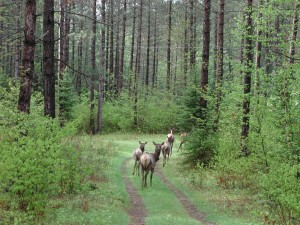
In this 2004 file photo provided by the Wisconsin Department of Natural resources, some elk are seen traveling a forest road in the Chequamegon National Forest near Clam Lake, Wis. The growth of the new elk herd that was started in northern Wisconsin about a decade ago has stalled, in part because wolves are killing more calves and young bulls and car crashes are killing cows.
CLAM LAKE, Wis. -- Wisconsin's elk herd, which spends most of its time in forest surrounding Clam Lake in Ashland County, is known to provide a thrill for tourists during September -- the peak bugling season.
During that time, the bulls are calling harems together for mating.
Matt McKay, assistant elk biologist for the Department of Natural Resources in Clam Lake, told a group of private landowners the first elk bugles were heard this year on Aug. 24, the earliest bugles have been heard since 2000.
"But the peak of bugling was around September 10 to 20, and the best times to hear bugling are in the early morning after sunrise and late evening prior to sunset," McKay said.People who want to get a glimpse of the large animals - or still try to get an earful - can drive 500 miles north from Madison, then slowly cruise four or five miles East, South or West, particularly along Highway 77.
Elk were native to Wisconsin and common in southern Wisconsin until the 1840s.
Native Americans used elk for food and their fur for trade and blankets. Early settlers saw the elk as abundant and, with no restrictions on hunting, elk soon disappeared.
By the 1880s, officials say, elk were considered to have been extirpated from the state.
The legislature introduced a proposal in the 1980s to study the possibility of reintroducing elk.
Then, in May 1995, Wisconsin released 25 elk, obtained from Michigan with help of the Rocky Mountain Elk Foundation, into a three-acre acclimation pen.
Following quarantine to be sure the animals were healthy, elk were released on May 17, 1995 to the Wisconsin landscape. From 1995 to '99, UW-Stevens Point researchers monitored the herd.
Now, after 16 years, the herd numbers about 168 animals.
The greatest the herd's population has been was in the past spring, when officials estimated the herd at 176 following calving season.
DNR biologists were able to find and put radio collars on 22 calves, but McKay anticipates as many as 35 calves were born overall.
Elk breed from about 3 years of age to 15, and have a calf every year or every other year.Calves are normally born in late May and early June and weigh about 35 pounds . Of the 22 new calves, McKay said he believes about half have died. Last year, the heard grew at 16 percent - which officials consider ideal - but the year prior there was no growth.
The loss so far this year, McKay said, was due to predators, including bears and wolves, and one was due to accidental drowning. He said a few were born underweight and did not survive.
McKay said following birth, calves are vulnerable to bears for the first eight weeks, but after that they can outrun them. However, wolves can catch and kill calves more easily, he said.
The DNR monitors the herd with radio collars that are put on the animals, usually by live trapping during the winter. Currently 89 elk are wearing radio collars.The DNR drives around the countryside each Monday to record signals from the radio collars, and that indicates how many elk are still alive and gives a location so they know what type of habitat the elk are using.
If an elk dies or is killed by predators, the collar gives off a special signal. Biologists can then find the animal and determine cause of death. Predators and vehicles are the biggest causes of death for Wisconsin's elk.
Of the 173 known dead elk over the years, 62 were killed by wolves; 27 by vehicles; 25 by bears; 11 deaths were undetermined; seven died due to parasites; seven died from complications at birth;, six by drowning; three from accidents unrelated to humans; and two were killed by dogs. Three elk were illegally killed by hunters, mistaking them for deer, and each hunter turned himself in.
By monitoring the radio collars, McKay said researchers know elk currently have a home range of about 95 square miles. The range extends east toward Glidden and west toward Hayward.
The DNR and Rocky Mountain Elk Foundation have worked together to improve and preserve open land for elk in order to provide habitat for the future. Some of the work has included open grasslands and clearcuts to regenerate aspen, which is a preferred food of elk.
The goal is to have 140 elk around Clam Lake and, once the herd reaches 200 animals, a very limited hunting season on bulls could be held. A lottery drawing would be held for permits and the sale of permits would help fund management of elk.
Sometime in the future the DNR hopes to bring in more elk and release them around the Black River Falls area.
During that time, the bulls are calling harems together for mating.
Matt McKay, assistant elk biologist for the Department of Natural Resources in Clam Lake, told a group of private landowners the first elk bugles were heard this year on Aug. 24, the earliest bugles have been heard since 2000.
"But the peak of bugling was around September 10 to 20, and the best times to hear bugling are in the early morning after sunrise and late evening prior to sunset," McKay said.People who want to get a glimpse of the large animals - or still try to get an earful - can drive 500 miles north from Madison, then slowly cruise four or five miles East, South or West, particularly along Highway 77.
Elk were native to Wisconsin and common in southern Wisconsin until the 1840s.
Native Americans used elk for food and their fur for trade and blankets. Early settlers saw the elk as abundant and, with no restrictions on hunting, elk soon disappeared.
By the 1880s, officials say, elk were considered to have been extirpated from the state.
The legislature introduced a proposal in the 1980s to study the possibility of reintroducing elk.
Then, in May 1995, Wisconsin released 25 elk, obtained from Michigan with help of the Rocky Mountain Elk Foundation, into a three-acre acclimation pen.
Following quarantine to be sure the animals were healthy, elk were released on May 17, 1995 to the Wisconsin landscape. From 1995 to '99, UW-Stevens Point researchers monitored the herd.
Now, after 16 years, the herd numbers about 168 animals.
The greatest the herd's population has been was in the past spring, when officials estimated the herd at 176 following calving season.
DNR biologists were able to find and put radio collars on 22 calves, but McKay anticipates as many as 35 calves were born overall.
Elk breed from about 3 years of age to 15, and have a calf every year or every other year.Calves are normally born in late May and early June and weigh about 35 pounds . Of the 22 new calves, McKay said he believes about half have died. Last year, the heard grew at 16 percent - which officials consider ideal - but the year prior there was no growth.
The loss so far this year, McKay said, was due to predators, including bears and wolves, and one was due to accidental drowning. He said a few were born underweight and did not survive.
McKay said following birth, calves are vulnerable to bears for the first eight weeks, but after that they can outrun them. However, wolves can catch and kill calves more easily, he said.
The DNR monitors the herd with radio collars that are put on the animals, usually by live trapping during the winter. Currently 89 elk are wearing radio collars.The DNR drives around the countryside each Monday to record signals from the radio collars, and that indicates how many elk are still alive and gives a location so they know what type of habitat the elk are using.
If an elk dies or is killed by predators, the collar gives off a special signal. Biologists can then find the animal and determine cause of death. Predators and vehicles are the biggest causes of death for Wisconsin's elk.
Of the 173 known dead elk over the years, 62 were killed by wolves; 27 by vehicles; 25 by bears; 11 deaths were undetermined; seven died due to parasites; seven died from complications at birth;, six by drowning; three from accidents unrelated to humans; and two were killed by dogs. Three elk were illegally killed by hunters, mistaking them for deer, and each hunter turned himself in.
By monitoring the radio collars, McKay said researchers know elk currently have a home range of about 95 square miles. The range extends east toward Glidden and west toward Hayward.
The DNR and Rocky Mountain Elk Foundation have worked together to improve and preserve open land for elk in order to provide habitat for the future. Some of the work has included open grasslands and clearcuts to regenerate aspen, which is a preferred food of elk.
The goal is to have 140 elk around Clam Lake and, once the herd reaches 200 animals, a very limited hunting season on bulls could be held. A lottery drawing would be held for permits and the sale of permits would help fund management of elk.
Sometime in the future the DNR hopes to bring in more elk and release them around the Black River Falls area.


 Posts
Posts








No comments:
Post a Comment