Visitor Counter

hitwebcounter web counter
Visitors Since Blog Created in March 2010

Click Below to:

Add Blog to Favorites

Coyotes-Wolves-Cougars.blogspot.com

Grizzly bears, black bears, wolves, coyotes, cougars/ mountain lions,bobcats, wolverines, lynx, foxes, fishers and martens are the suite of carnivores that originally inhabited North America after the Pleistocene extinctions. This site invites research, commentary, point/counterpoint on that suite of native animals (predator and prey) that inhabited The Americas circa 1500-at the initial point of European exploration and subsequent colonization. Landscape ecology, journal accounts of explorers and frontiersmen, genetic evaluations of museum animals, peer reviewed 20th and 21st century research on various aspects of our "Wild America" as well as subjective commentary from expert and layman alike. All of the above being revealed and discussed with the underlying goal of one day seeing our Continent rewilded.....Where big enough swaths of open space exist with connective corridors to other large forest, meadow, mountain, valley, prairie, desert and chaparral wildlands.....Thereby enabling all of our historic fauna, including man, to live in a sustainable and healthy environment. - Blogger Rick

Subscribe via email to get updates

Enter your email address:

Receive New Posting Alerts

(A Maximum of One Alert Per Day)

Wednesday, January 6, 2016

So just like all of us who live in Southern California are being blessed with much needed days of rain, so are all of us blog readers getting a 2nd consecutive day of Ecologist Cristina Eisenberg" trophic carnivore insights:..........Her recent blog on Climate Change and what type impact it could have on large carnivores is eye opening and hypothesizes the following:: "A"generalist species with a high reproductive rate, high dispersal, and a diverse, flexible diet can adapt more easily than a species with a low reproductive rate, low dispersal, and a restricted diet".........."Large carnivore species vulnerable to climate change share some key traits".............. "These bellwethers are solitary individuals that have a low reproductive rate, high intra-species competition, and a Northern Hemisphere distribution".............. "On the other hand, species relatively impervious to global warming, such as the wolf and coyote, have a high reproductive rate, broad diet, and can thrive in diverse habitat from deserts to mountains"........ "Similarly, the cougar and jaguar, which have broad dietary and habitat needs, don't face serious climate-related threats"......."While the grizzly bear's low reproductive rate limits its resiliency, its diverse diet will enable it to adapt to climate change"........... "If it continues to be protected,(questionable with looming Federal delisting on the horizon) it faces low extinction risk by 2100"..........(On the other hand), "given its low reproductive rate and strict habitat and food needs, the lynx has low resiliency and high extinction risk by 2100"...............(Similarly), "the rapidly diminishing global extent of year-round snow, even in mountainous regions, and the wolverine's low resiliency as a species, it has high extinction risk by 2100"..................."Due to its low reproductive rate and dependence on ice (which is shrinking fast worldwide), the polar bear has low resiliency and high extinction risk by 2100."................. "If we continue to do business-as-usual, which includes hunting and trapping, some species, such as the wolverine and polar bear, are more doomed than others"............. "Yet we have the scientific knowledge to conserve at-risk carnivores using responsible management that gives them time to adapt and room to roam"............ "The remaining question is, do we have the wisdom and maturity as a society to do so?"

http://www.huffingtonpost.com/cristina-eisenberg/are-large-carnivores-doom_b_8881890.html

Are Large Carnivores Doomed by Climate Change?


JAGUAR CAT
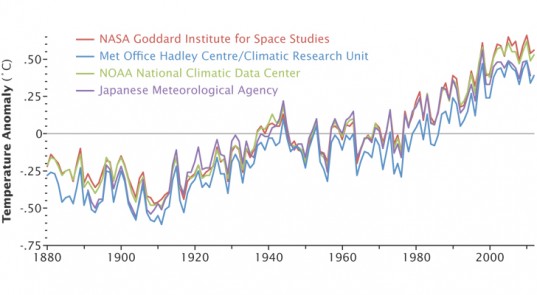
The world is getting warmer, creating an extinction threat for many species. According to NASA, since 1880 the Earth's global temperature has risen by nearly one degree Celsius. However, not all species are equally affected by climate change. And as wildlife biologists such as Aldo Leopold discovered nearly a century ago, not all species are equally important ecologically. Large carnivores play a lead role in maintaining resilient, biodiverse ecosystems because they control their prey, which indirectly improves habitat for other species. Today, some of these ecologically powerful carnivores are highly vulnerable to climate change.
2015-12-27-1451252765-4591713-nasaglobalwarmingreport537x295.jpg

Global Warming Since 1880, Courtesy NASA


In our rapidly warming world, species have two choices: they can adapt or go extinct. A species' natural history determines its ability to adapt--and its extinction risk. This means that a "generalist" species with a high reproductive rate, high dispersal, and a diverse, flexible diet can adapt more easily than a species with a low reproductive rate, low dispersal, and a restricted diet.
Additionally, how we manage wildlife contributes to extinction. Hunting and trapping (called "take") puts additive pressure on species already facing survival challenges due to climate change. According to ecologist Scott Creel, the rapid worldwide decline of large carnivores that are hunted and trapped is of high concern because of the negative consequences this has on ecosystem structure and function.
Large carnivore species vulnerable to climate change share some key traits. These bellwethers are solitary individuals that have a low reproductive rate, high intra-species competition, and a Northern Hemisphere distribution. On the other hand, species relatively impervious to global warming, such as the wolf and coyote, have a high reproductive rate, broad diet, and can thrive in diverse habitat from deserts to mountains. Similarly, the cougar and jaguar, which have broad dietary and habitat needs, don't face serious climate-related threats.
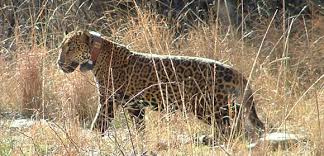
2015-12-27-1451251457-4461768-MachoB.jpg
Jaguar (Panthera onca), Photo Courtesy AZFG


Here I present an overview of some of the carnivore species for whom climate change presents a significant challenge. I look at their extinction risk by the year 2100, the typical benchmark used to gauge global warming impacts.
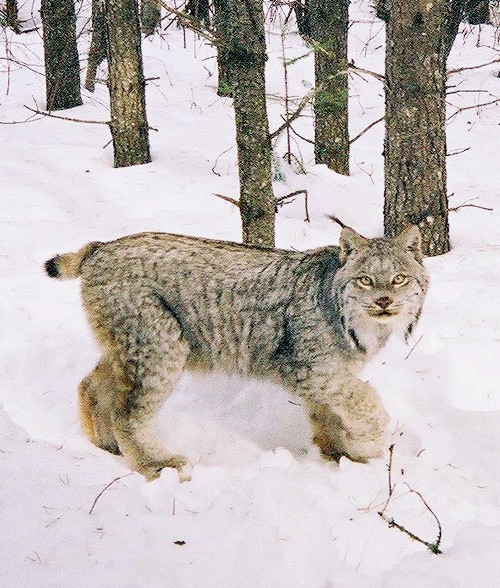
2015-12-27-1451249645-7809130-Lynx_timothy_catton_USDA.jpg
Lynx (Lynx canadensis), Photo Courtesy USDA


The lynx, an obligate carnivore (meaning it can only derive nutrition from meat) whose numbers are low globally, must have young forest with diverse structure for hunting and mature forest for denning. It can adequately nourish itself only by eating snowshoe hare--its primary prey--and often starves to death when it switches prey. Snow and dispersal improve its hunting success. Given its low reproductive rate and strict habitat and food needs, the lynx has low resiliency and high extinction risk by 2100.
2015-12-27-1451250330-446410-Wolverine_Copeland.jpg
Wolverine (Gulo gulo), Photo by Jeff Copeland
The wolverine, a wide-ranging obligate carnivore that has experienced historical and recent widespread declines, primarily scavenges the meat of dead animals and opportunistically hunts small mammals and hooved animals. It needs year-round snow for denning and has a low tolerance for heat. Given the rapidly diminishing global extent of year-round snow, even in mountainous regions, and the wolverine's low resiliency as a species, it has high extinction risk by 2100.
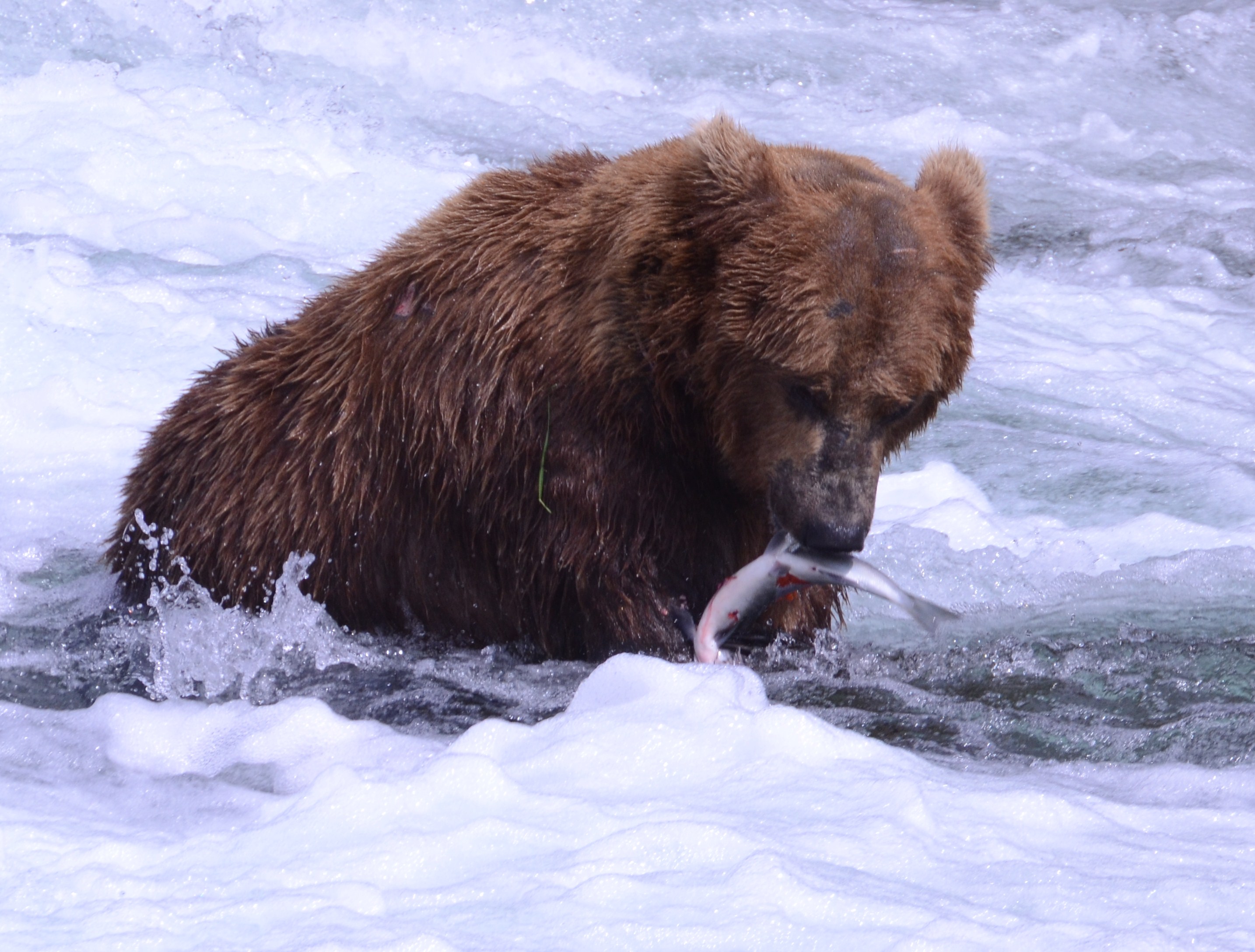
2015-12-27-1451250608-7123548-TCW_Eisenberg_Katmai_Grizzly.jpg


Grizzly Bear (Ursus arctos), Photo by Cristina Eisenberg


The grizzly bear, a wide-ranging omnivore whose population has been increasing in areas where it is protected, can eat over 270 different foods. However, this species needs high protein (e.g., pine nuts) at critical times, such as prior to hibernation. Global warming is negatively impacting availability of key foods. While the grizzly bear's low reproductive rate limits its resiliency, its diverse diet will enable it to adapt to climate change. If it continues to be protected, it faces low extinction risk by 2100.
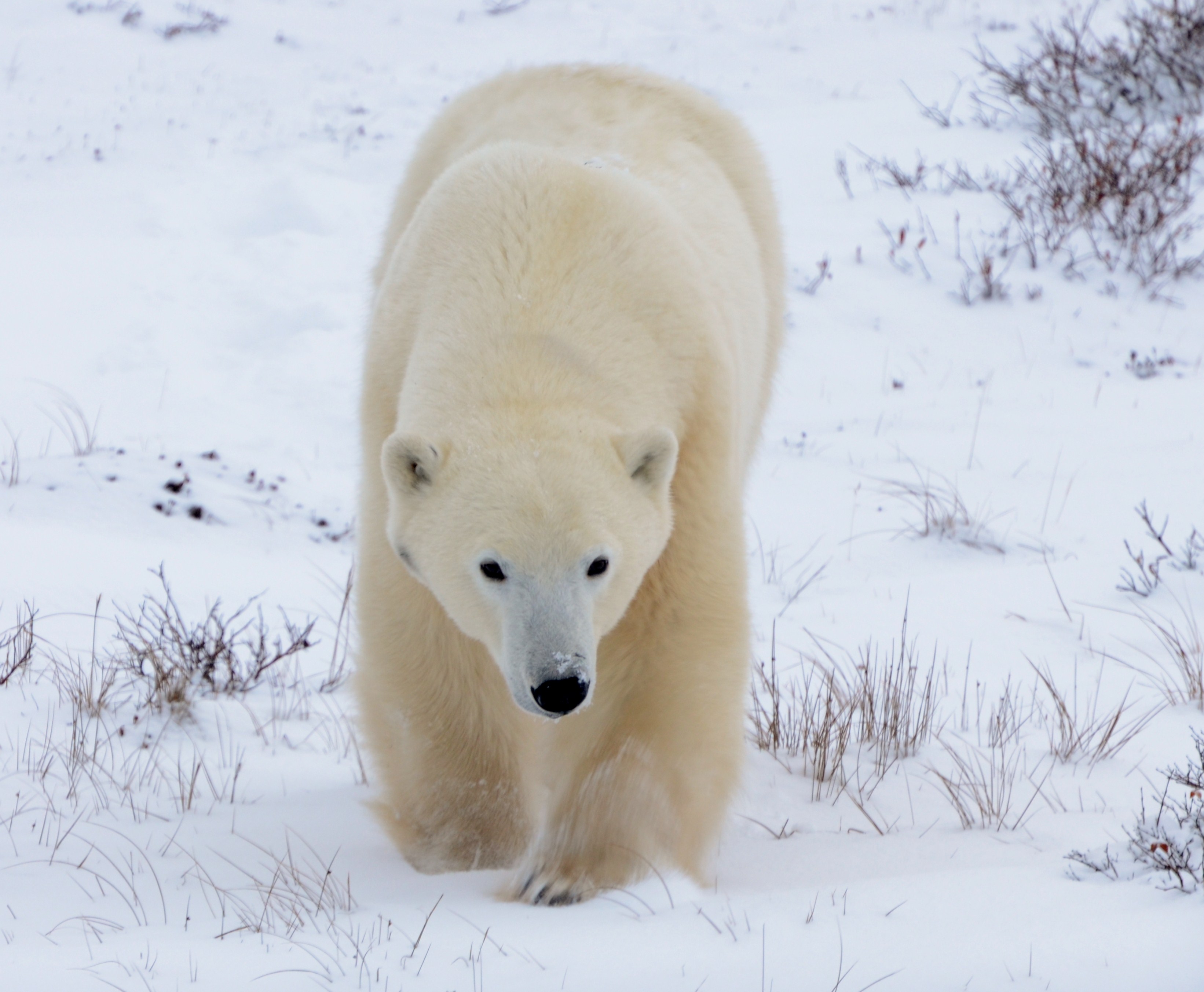
2015-12-27-1451252281-3471100-Predator.JPG


Polar Bear (U. maritimus), Photo by Cristina Eisenberg


The polar bear, an obligate carnivore in rapid decline globally, has strict habitat and food needs and a low tolerance for heat. This polar marine species' primary prey is the ringed seal, which it can kill effectively only on ice. Additionally, it requires a high-fat diet that only seal meat can provide. Due to its low reproductive rate and dependence on ice (which is shrinking fast worldwide), the polar bear has low resiliency and high extinction risk by 2100.
What can we do to improve their future? While it goes without saying that we should do all we can to reduce our carbon footprint, the positive impacts of such action will take centuries to manifest fully. That's not fast enough to save species like the polar bear that face immediate extinction.
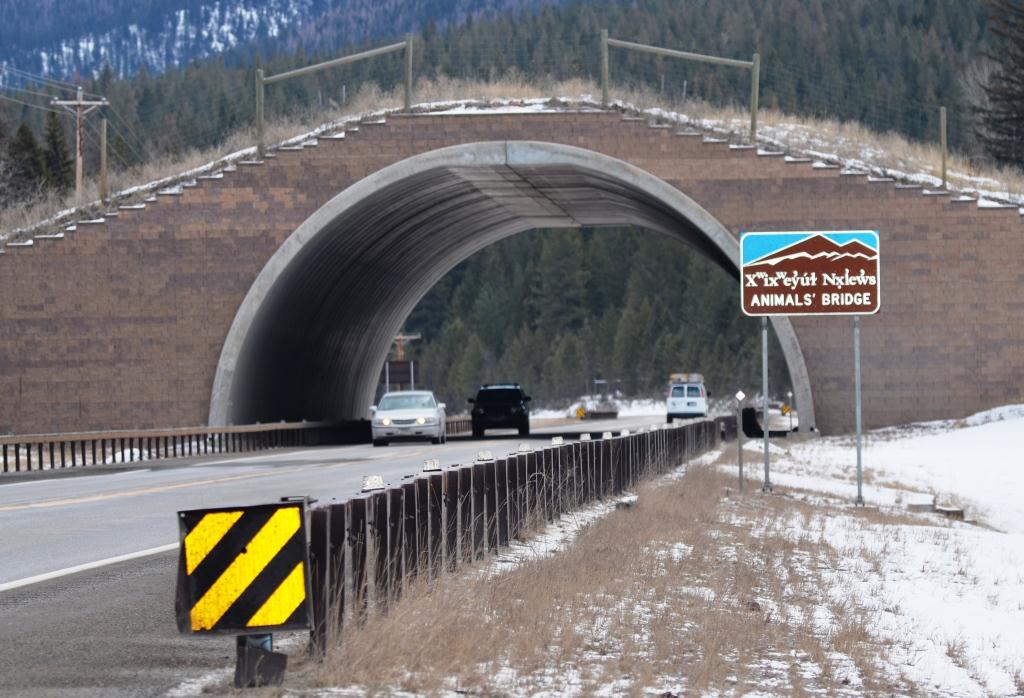
There are more direct actions we can take. First, we can cease hunting and trapping these animals. By eliminating their take, we can buy them precious time to adapt to climate change. Second, we can improve their habitat. Reducing or eliminating timber harvest and snowmobile use in sensitive lynx denning sites can help increase their reproductive success. Third, we can maintain permeable landscapes that allow dispersal via crossing structures (overpasses, underpasses) on busy highways. Finally, assisted migration (e.g., translocating wolverines from lower-elevation mountains, such as the Northern Rocky Mountains, to higher-elevation mountains, such as the Southern Rocky Mountains) can help.
2015-12-27-1451253294-6748035-Animals_Bridge.jpg

Animals' Bridge Wildlife Overpass, Flathead Reservation, Montana, Photo by Cristina Eisenberg


So are large carnivores doomed by climate change? It depends. If we continue to do business-as-usual, which includes hunting and trapping, some species, such as the wolverine and polar bear, are more doomed than others. Yet we have the scientific knowledge to conserve at-risk carnivores using responsible management that gives them time to adapt and room to roam. The remaining question is, do we have the wisdom and maturity as a society to do so?
* * *
Learn more about carnivore conservation by reading The Carnivore Way: Coexisting with and Conserving North America's Predators, and The Wolf's Tooth: Keystone Predators, Trophic Cascades., and Biodiversity by Dr. Cristina Eisenberg. Learn more about large carnivore ecology by joining Cristina afield on her Earthwatch field research expedition, Tracking Fire and Wolves through the Canadian Rockies.

Tuesday, January 5, 2016

Back with us to start the New Year off with rewilding "food for thought" is Ecologist Cristina Eisenberg and her recent Post regarding Puma/Human coexistence...............Cristina postulates the following: "Cougars usually exhibit neutral behavior around us(humans)"............. "Sometimes they're curious about us"............... "On very rare occasions they see us as prey"............. "And occasionally they use us for protection from other predators--called human shielding".........."Recovering cougar populations raise questions about balancing this species' ecological needs with ours"............ "As human and cougar populations continue to expand and cougar habitat becomes increasingly fragmented, what limits should be placed on human activity in the urban-wildland interface?"......... And how do we best manage this stealth predator?".........

http://www.huffingtonpost.com/cristina-eisenberg/cougar-lessons-in-coexist_b_8907808.html


COUGAR LESSONS IN COEXISTENCE
Cristina Eisenberg
Ecologist, author


A growing North American cougar population
 has inspired scientists
 to take a close look at the risk this species 
presents to humans. In his
 2011 analysis of 343 North American 
aggressive cougar encounters,
 David Mattson found that only 29
 resulted in fatal human attacks. 
Young cougars in poor physical condition
 were more likely to
 threaten humans, but adult cougars
 were more likely to kill us. 
Yet compelling as such analyses may
 be, they fail to capture the
 breadth of cougar-human relationships.


Overt examples of coexistence between our species are uncommon, because of the cougar's elusiveness. Yet occasionally a legendary animal comes along who provides such an example. In Banff National Park in response to Frances Frost's 2001 death by cougar attack while cross-country skiing, managers radio-collared twelve cougars to study their behavior relative to humans. They had to chase one up five Douglas-fir trees before successfully collaring him. Subsequently dubbed Doug, this 150-pound tom proceeded to teach everyone astonishing lessons about coexistence.


2016-01-03-1451844753-6729012-TCW_8.2_Doug_the_Cougar.jpg
Doug the Cougar, photo by John Marriott

Collar data quickly showed Doug's propensity to hunt near human development. Sometimes he'd kill deer in one of the park picnic areas. These takedowns probably seemed a good idea under cover of darkness, but once the sun came up, Doug found himself amid lots of human activity. Still he continued to hunt in the area.

Managers and the public grew fond of Doug, who never threatened humans. His collar data showed that while in the park backcountry, which had low human activity, he became more diurnal. Banff human-wildlife conflict specialist Steve Michel uses Doug as an example of an animal who learned behavior (e.g., hunting at night) to coexist with humans. Doug eventually died at the ripe age of fourteen, when he fell through the ice while chasing an elk, leaving an untarnished reputation.
My most remarkable cougar lesson occurred one autumn while working in Glacier National Park's North Fork Valley. My field crew and I were staying in a house owned by The Nature Conservancy, just outside the park. The secluded cedar home stood in a large meadow, surrounded by a thick lodgepole forest. The house had no phone or electricity.

We'd just finished a ten-mile day of data collection on my wolf project. I dropped off my hot, hungry crew at the house, leaving them on the porch, and went home to for a rare night with my family. When I returned the next morning, they filled me in on what had happened.

Shortly after I left, a wolf had darted across the meadow. A few seconds later, my crew heard animal screams coming from the forest edge, about fifty yards away--an animal dying. Thirty seconds after that they heard growling and other primal sounds--branches breaking, a battle.

All at once, a cougar exploded out of the forest and headed directly toward them at a full run. It came within ten feet, so close they could see that it was a female. Ears flattened, lips drawn back to expose her sharp teeth, she snarled but didn't make eye contact. They went inside. The house's expansive windows enabled them to watch the cougar safely and take photographs.
2016-01-03-1451845651-1018816-IMG_8768.JPG


North Fork Cougar, Eisenberg
Project
Photo


Angry was the operative word for that animal. She circled the house, staying very close, but not looking at them. She seemed well-muscled and large for a female, but a bit lean. Fresh welts rose on one of her flanks, but her flesh was unbroken. My crew perceived no threat from her, just intense anger. She circled the house for ten minutes, and then left.
The next morning, all seemed peaceful when I picked up my crew and we left for the field.

 Upon returning that afternoon, we went into the woods to investigate. Just inside the forest, we found a white-tailed deer carcass surrounded by the dinner-plate-sized tracks of a very large grizzly bear and the smaller tracks of her cub. A welter of cougar tracks mixed with grizzly tracks indicated a skirmish. The bears had worked over the deer, but we could still see its broken neck and torn throat.
Every kill site tells a story. We determined that the grizzly, on the prowl for calories and protein prior to hibernation, had attempted to steal the cougar's kill. This had resulted in an intense battle, during which the grizzly had prevailed. The cougar had bolted out of the woods and run toward the perceived safety of humans--a tired field crew unlacing their boots on the porch. The savvy creature knew a grizzly with a cub wouldn't pursue her toward humans. She'd continued to circle the house long after the crew had gone inside, until she sensed it safe to leave. As for the wolf, we speculated that it had just been passing through, checking out the action.

These stories illustrate the spectrum of cougar relations with humans. Cougars usually exhibit neutral behavior around us, as was the case with Doug. Sometimes they're curious about us. On very rare occasions they see us as prey. And occasionally they use us for protection from other predators--called human shielding.

Recovering cougar populations raise questions about balancing this species' ecological needs with ours. As human and cougar populations continue to expand and cougar habitat becomes increasingly fragmented, what limits should be placed on human activity in the urban-wildland interface? And how do we best manage this stealth predator? Questions from the media after fatal cougar attacks demonstrate that cougar restoration isn't as simple as just wanting them back. Lessons like the ones above reveal astonishing intra-species relationships and that we still have much to learn from this powerful animal.

Learn more about carnivore conservation by reading Cristina's books: The Carnivore Way: Coexisting with and Conserving North America's Predators, and The Wolf's Tooth: Keystone Predators, Trophic Cascades., and Biodiversity by Dr. Cristina Eisenberg. Learn more about large carnivore ecology by joining Cristina afield on her Earthwatch field research expedition, Tracking Fire and Wolves through the Canadian Rockies.

Monday, January 4, 2016

PREDATOR DEFENSE Executive Director Brooks Fahy shared this Post from Maine writer Val Philbrick who opines on what he sees as the lunacy/ profit driven frenzy/ utter disregard for science paradigm that propels the Maine Dept. of Inland Fisheries and Wildlife and their so-called "wildlife management paradigm-----"We are killing these animals for their own good as they cannot survive as a species unless we cull them out from time to time".................... "How all of these creatures survived for all these eons without our intervention is beyond me"................ "After all, this is the myth of the hunter conservationist as mother nature is all her wisdom cannot do as good a job managing these species as the hunter and trapper who “protects” them from themselves and saves us all".................. "The general population, of course, who prefers to live and let live with regards to wildlife is just too stupid to figure all this out".................. "Not only that, we need to be protected from rabies and that alone is enough justification to kill all these animals every year".................... "However, don’t lose too much sleep over this as these animals will be here long after we have worn out our welcome as a species"................ "Maybe we can all pile into a spaceship and just move to another planet".............. "It’s not nice to fool Mother Nature"


The Myth of Hunting Conservation


Current Maine Department of Inland Fisheries and Wildlife policy promotes a culture of death and exploitation of animals for profit…
 By guest blogger Val Philbrick

The dwindling population of moose is this state is hunted by permit only due, in part, to a tick infestation of that population with higher temperatures due to global warming as the suggested culprit. Don’t laugh as the migration of lobsters northward and the movement of less than desirable species of fish and crabs into the Gulf of Maine have been well-documented. Bears are hunted in this state with bait and dogs. Maine is the only enlightened state in the union that still allows the public to trap bears with ever-tightening cable foot restraints. The MDIFW wisely advises hunters to place traps a “reasonable distance apart”, which gives animals plenty of room to flail about in a bloody mess and attack each other in a panic when trapped in close proximity, but not to worry because the MDIFW assures us that all animals, including bears, don’t really get upset when restrained as they just lie down, kind of ho hum-like, and wait for a hunter to come by and dispatch them. 


Beaver traps must be placed at least four feet apart, except when they are pulled underwater in a drowning set.The hunting season of small non-game animals and game birds in Maine for ruffed grouse, bobwhite quail, and pheasant is from Oct. 1 to Dec. 31, with the reported importation of quail into the state last fall. Who knew that we were running out of quail? What if we just left them alone for a while and let them replenish their population? Perish the thought as fewer hunting licenses will be sold. We can’t have that as it might diminish the million of dollars earned by the MDIFW every year. Nothing is going to mess with this cash cow, baby, not to mention the paid advertisements supporting hunting blogs, columns, websites, and the MDIFW online store. Oh, and by the way, how much of that MDIFW revenue actually finds its way into the state coffers? Just asking…

The hunting season for rabbits is Oct.1 to March 31; the gray squirrel, raccoon, skunk, and opossum is Oct. 1 to Dec. 31. Red squirrels can be hunted all at times during the year for reasons unknown to the public, as can porcupine, woodchucks, and coyotes. Does anyone know why red squirrels are such a menace to society that they can be shot at all times during the year as opposed to gray squirrels? How about a squirrel baffle around your bird feeder? Or better yet, grab your shotgun and go out into your backyard and shoot one or two of those pesky squirrels first thing in the morning. Your neighbor will love you for it as some stray shots fly into his yard or better yet, through his house and he has to call the authorities to protect himself and his property from you. 

And while you are at it, don’t forget to kill a woodchuck or two as they don’t deserve to live either.Has anyone eaten a porcupine lately? Be sure to remove the quills before making a porcupine pie. Chewing those quills can be tough on tooth enamel, not to mention flossing the remnants out of your teeth. And lastly, we all know how dangerous skunks can be to the human population with that awful smell.The hunting season for fox is Oct. 20 to Feb. 28; for bobcat, it is Dec. 1 to Feb. 14. Who would want to kill any of these animals unless to stuff them and mount them over a fireplace? These animals are killed for no other reason than to get a little target practice and watch them die. Of course, we all know that coyotes are varmints that need to be strangled in controversial neck snares day and night during the year. Did you say that you sell the pelts? How about going out and getting a real job? 

The coyote is a very successful species that has thrived in close association with mankind for years and there is nothing we can do to stop them, despite Maine’s coyote bounty hunting program.The much-maligned crow is hunted in Maine in a split season from Feb. 1 to March 31 and again on Aug. 1 to Sept. 30; the scoundrel that he is ruining all these farmer’s crops even before and after the growing season. Wild turkeys are actually shot and killed for human consumption. Now, that is a surprise as turkeys and other game birds are not just shot for target practice as their meat is actually eaten by someone other than animal scavengers.   Lynx are spared from hunting because they are an endangered species but as soon as they rebound, if they ever do, they will be fair game again. 

There is no “open season” on caribou in Maine. Has anybody seen a caribou lately? If I am not mistaken, I think we reportedly killed them off about 80 years ago in this state.A past episode of North Woods Law summed it up perfectly, when an elderly gentlemen tape records the sounds of wounded crows so that their calls of distress will lure the woodchucks and other small nuisance critters out of their dens so he can kill them too. In any other situation, this would be considered animal cruelty, but under the guise of hunting, it’s all perfectly legal.You realize, of course, that we are killing these animals for their own good as they cannot survive as a species unless we cull them out from time to time. 

How all of these creatures survived for all these eons without our intervention is beyond me. After all, this is the myth of the hunter conservationist as mother nature is all her wisdom cannot do as good a job managing these species as the hunter and trapper who “protects” them from themselves and saves us all. The general population, of course, who prefers to live and let live with regards to wildlife is just too stupid to figure all this out. Not only that, we need to be protected from rabies and that alone is enough justification to kill all these animals every year. However, don’t lose too much sleep over this as these animals will be here long after we have worn out our welcome as a species. Maybe we can all pile into a spaceship and just move to another planet. It’s not nice to fool Mother Nature…

Sunday, January 3, 2016

New Hampshire Fish & Game in conjunction with The U. Of New Hampshire(headed up by Jon Litvaitis) has completed their multi-year Bobcat Study, determining the distribution and abundance ot this carnivore as well as determining how they are responding and dealing with increased human populations, habitat alteration and highway density..............From the mid 1980's to when there were only an estimated 125 Bobcats in the Granite State, a ban on hunting and trapping along with an increase in the Wild Turkey population has Bobcats numbering somewhere beteween 800 and 1200, with biologists feeling that 1400 of the "cats" could ultimately carve a living within state boundaries..............Interesting that there are a minimum of Bobcat roadkills in the Granite state with the hypothesis being that Bobcats either stay clear of the roadways or are using sewer culverts to traverse their territories which tend to be some 30 square kilometers(11.583 sq. miles)...........Nonetheless,this recent Study has determined that the "Cats" are not roaming far and wide with their genetic diversity being hampered by Interstate 89, Interstate 91, Interstate 93, and State Highway 101.................... The highways are inhibiting bobcats from traveling to mate with bobcats that are more genetically dissimilar..........Another observation is that in the southern portion of the state where there are more roads, the Bobcats seem to be getting adapted to living closer to humans, taking rabbits, squirrels and Turkeys that utilize homeowner birdfeeders

. at: http://colsa.unh.edu/aes/article/bobcatsandroads


Bobcat in the Backyard: NH Wildcat Responding to Detrimental Effects of Roads
Bobcats may be turning to hunting squirrels and wild turkeys in residential backyards to avoid high-traffic roads.
A female bobcat and her kitten cross a New Hampshire road.
May 26, 2015
New Hampshire’s bobcats are responding to the detrimental effects of roads – including possibly hunting in residential areas – as they continue to rebound and re-colonize in areas of the state with dense road networks and substantial traffic volumes, according to new research funded by the New Hampshire Agricultural Experiment Station at the University of New Hampshire.
The research was conducted by John Litvaitis, Gregory Reed, Rory Carroll, Marian Litvaitis, Jeffrey Tash, Tyler Mahard, and Derek Broman, all with the UNH Department of Natural Resources and the Environment, and Catherine Callahan and Mark Ellingwood with the New Hampshire Department of Fish and Game. The results are presented in the journal Environmental Management in the article “Bobcats (Lynx rufus) as a Model Organism to Investigate the Effects of Roads on Wide-Ranging Carnivores.”
“An obvious effect of roads is the loss of habitat by the road itself. But the effects of roads extend well beyond. Traffic noise, for example, alerts animals several hundred feet beyond the road. That noise causes some animals, including bobcats, to avoid roads. But in more developed regions of the state, it isn’t possible for bobcats to avoid crossing roads as they move through home ranges that are 10-square miles or more,” said John Litvaitis, professor of wildlife ecology at UNH.
New Hampshire’s bobcat population has rebounded since the wildcat was protected from hunting in 1989. UNH researchers estimate there is the potential for as many as 1,400 bobcats in the state.
The genetic clusters of bobcats in the study area. Researchers
identified four genetic clusters: Vermont/Massachusetts
(gray circle), southwestern New Hampshire (dark gray square),
eastern New Hampshire (black diamond), and central New
Hampshire (white triangle). The blue arrows indicate potential
dispersal routes.
UNH researchers looked at New Hampshire Fish and Game Department data on the deaths of bobcats from bobcat-vehicle collisions from 2008 to 2013 in six southeastern counties in New Hampshire. In addition, they used data from live bobcats outfitted with GPS collars in the same area. Predominately active at night, bobcats are most at risk for being hit by vehicles between 6 p.m. and 6 a.m. even though that time of day has a lighter traffic volume.
The researchers found that bobcats are particularly at risk of being hit by cars in areas with state and interstate highways, which have higher traffic volumes. Bobcats that make repeated crossings of high-volume roads have a greater chance of being struck by a car and killed. The collision research also suggests that some regions may function as demographic sinks – places where juvenile bobcats find suitable habitats but do not survive long enough to reproduce due to vehicle collisions.
However, despite the risks, bobcat road deaths are relatively modest and not likely having a substantial influence on New Hampshire’s growing bobcat population, the researchers found. They theorize that New Hampshire’s bobcats living in the southeastern area where high-traffic roads are more prevalent may be using underpasses and culverts to avoid crossing highways.
In addition, bobcats may be turning to hunting in residential backyards. Bobcats prey on small animals such as squirrels, rabbits, wild birds, and chickens.
“A number of residents in southeastern New Hampshire observed and photographed bobcats capturing prey in backyards, especially gray squirrels and wild turkeys that were attracted to bird feeders. In addition to enhancing winter survival of bobcats that have difficulty capturing prey during periods of deep snow, the concentrated prey associated with suburban settlements in winter may result in less frequent road crossings by bobcats,” the researchers said in the journal article.
“One resident reported that a juvenile bobcat spent several weeks underneath a porch from which it made regular forays to attack squirrels foraging at a nearby bird feeder. Thus, the availability of such prey may at least partially ameliorate the negative effects associated with an abundance of roads in developed areas,” they said. 
Researchers identified four genetically distinct bobcat populations, and said high-traffic roads are serving as major barriers for bobcat movement. By looking at the genetic makeup of bobcats, researchers found that the genetic diversity of New Hampshire’s bobcats is being hampered by roadways, in particular Interstate 89, Interstate 91, Interstate 93, and State Highway 101. The highways are inhibiting bobcats from traveling to mate with bobcats that are more genetically dissimilar.


In evaluating the movements of bobcats outfitted with GPS tracking, researchers found bobcats prefer forests, shrub and scrub areas, wetlands, more rugged and steeper sloped areas with southern-facing slopes, and areas closer to streams. The southern areas of the state with low elevations are considered highly suitable habitats for bobcats.
To learn more about UNH’s bobcat research, visit Understanding Bobcats in the Granite State: A Cooperative Project Led by the University of New Hampshire and the New Hampshire Fish and Game Department at http://mlitvaitis.unh.edu/Research/BobcatWeb/bobcats.htm.
Founded in 1887, the NH Agricultural Experiment Station at the UNH College of Life Sciences and Agriculture is UNH’s original research center and an elemental component of New Hampshire's land-grant university heritage and mission. We steward federal and state funding, including support from the USDA National Institute of Food and Agriculture, to provide unbiased and objective research concerning diverse aspects of sustainable agriculture and foods, aquaculture, forest management, and related wildlife, natural resources and rural community topics. We maintain the Woodman and Kingman agronomy and horticultural farms, the Macfarlane Greenhouses, the Fairchild Dairy Teaching and Research Center, and the Organic Dairy Research Farm. Additional properties also provide forage, forests and woodlands in direct support to research, teaching, and outreach.
Lori Wright, NH Agricultural Experiment Station
- See more at: http://colsa.unh.edu/aes/article/bobcatsandroads#sthash.oK4UWcue.dpuf


Saturday, January 2, 2016

Should the USFW press the "GO" button to delist Grizzlies in the Greater Yellowstone, "one of the biggest problems(the bears will face) is the lack of regulatory controls on their mortality".....The erudite and staunch Grizzly Bear advocate Louisa Wilcox ushers in 2016 with this warning: .... "With the lowest reproductive rate of any mammal in North America, grizzly bears cannot sustain many deaths, especially among adults(and females)"........."What will happen after ESA protections are removed and grizzly bear mortalities exceed prescribed levels?"............... "The post-delisting plans do not compel ANY response"............. "State laws don't limit but rather promote killing grizzly bears"...................In fact, "Wyoming and Idaho plan to prevent grizzly bears from occupying certain parts of the states".............. "In Idaho, bears would not be welcome in southern parts of the Centennial Mountains, a key ecological corridor that could connect the long-isolated Yellowstone population to other grizzly bears in the Northern Rockies"................. "Wyoming's plan takes aim at bears that wander into unoccupied but suitable habitat in the Wind River and Wyoming Mountains by proposing levels of sport hunting and other removals that would guarantee local extirpation".................. "And Wyoming is expected to further ramp up removals of grizzly bears from the Upper Green River area to appease local politically well-connected ranchers"................Even with the protection of the Endangered Species Act, 2015, "has been a record-breaking year for bear deaths, with 59 grizzly bears known to be dead, and another 30+ more that we don't know about, but which the government estimates probably happened"......... "This totals over 90 bears, or in excess of 12% of the population"...........With all of this information so stark and available for digestion by the Feds, is the Obama Administration simply going to look the other way, put their head in the sand (as is their tendency) and let another critical piece of biological diversity go down the drain?......


 Delisting the Grizzly: a Recipe For More Bear Deaths, CounterPunch, .

CounterPunch
JANUARY 1, 2016


In Yellowstone, the New Year may ring in a grizzly bear hunt for the first time in 40 years. The US Fish and Wildlife Service (FWS) has announced the release in January of a new proposal to remove endangered species protections for Yellowstone's grizzly bears. Removal of protections is known as "delisting." Whether or not delisting is appropriate depends in part on the strength and responsiveness of systems to manage grizzly bears after federal protections are stripped.

With the plans that are already in place, we can paint a fairly clear picture of what the bear's world will look like without the safety net of the Endangered Species Act (ESA). That picture looks grim.  After protections are removed, the bear's fate will be decided by the states of Wyoming, Idaho and Montana, which will have full authority over management. The FWS will look over the states' shoulders for the first five years after delisting, but the agency has fiercely maintained that even if problems arise, it will not relist the population.


More Dead Bears
This arrangement is a recipe for disaster because of the states' devotion to the ethos of domination and death, and because of their related animosity towards large carnivores, which are seen as competitors for big game, the "cash cow" of state game agencies (link). Despite some laudatory language about co-existence with grizzly bears, the state grizzly bear management plans lack any binding commitments to do anything other than hunt bears. There is no safety net for grizzly bears in state plans.

The same is true of the post-delisting Conservation Strategy (CS), which directs how bears and bear habitat will be monitored in parks and on national forest lands. Although the original 2007 CS is being updated, the contents will almost certainly stay much the same. It is a handshake agreement among agencies and, as the FWS admits, the CS cannot compel any agency to do anything (link). Everything is voluntary.

One of the biggest problems is the lack of regulatory controls on grizzly bear mortality once delisting has occurred. With the lowest reproductive rate of any mammal in North America, grizzly bears cannot sustain many deaths, especially among adults. Most grizzlies die because people kill them, so controlling the rates at which we kill these animals is crucial.

In fact, the ESA has been vital to reducing rates of human-caused grizzly bear mortality. Under the ESA, killing grizzly bears is prohibited except in self-defense situations. Hunting is banned. And poachers have been successfully  prosecuted under the Act, with some paying hefty fines.


What will happen after ESA protections are removed and grizzly bear mortalities exceed prescribed levels? The post-delisting plans do not compel ANY response. State laws don't limit but rather promote killing grizzly bears.

The FWS has recently claimed that state-sponsored hunting of grizzlies could be stopped after delisting if the population was reduced from the current estimated 717 bears to around 600 (link)., But these claims are hardly comforting given that there are no prospective commitments to limit killing from any other cause. So far, the FWS has not proposed a cap on total mortality that would, at least in theory, lead to meaningful remedial action.

Lost Habitat Protections
After delisting, Wyoming and Idaho plan to prevent grizzly bears from occupying certain parts of the states. In Idaho, bears would not be welcome in southern parts of the Centennial Mountains, a key ecological corridor that could connect the long-isolated Yellowstone population to other grizzly bears in the Northern Rockies. Wyoming's plan takes aim at bears that wander into unoccupied but suitable habitat in the Wind River and Wyoming Mountains by proposing levels of sport hunting and other removals that would guarantee local extirpation. And Wyoming is expected to further ramp up removals of grizzly bears from the Upper Green River area to appease local politically well-connected ranchers.

Even if the states were inclined to do more for grizzly bears after delisting, they lack most of the relevant authority. According to the federal government, in the Greater Yellowstone, over 40% of habitat currently occupied by grizzlies lies outside the antiquated Primary Conservation Area (PCA). After delisting, no habitat protections would apply in these extensive areas excluded from the PCA. Moreover, most of this is federally-administered public lands over which the states have no direct control.


And these lands have become increasingly important to grizzly bears that are scrambling to adapt to human-driven losses of key foods: whitebark pine, cutthroat trout, and elk. Given these changes, Chuck Schwartz, former leader of the Interagency Grizzly Bear Study Team projected in 2006 that carrying capacity would decline for grizzly bears in the GYE. He stated: "To ensure there is adequate numbers of healthy individuals and hence a healthy population likely will require a larger area than currently defined by the recovery zone (or PCA). Protecting these lands before they are drastically altered by human impacts is important to ensure the long term conservation of the bears (link)".

Schwartz's argument for a safety net for vulnerable public lands outside the PCA has yet to be heeded. According to Forest Service documents, more than 75% of occupied national forest lands outside the PCA are open to road building, despite reams of evidence that roads increase grizzly bear mortality by increasing levels of human activity (link).

Political Masters Unleashed
Given the ethos of the states, and the influence of ranchers and hunters, claims that the states would exercise caution after delisting sound facile. The states and the FWS also maintain that the post-delisting system is "adaptive" to changing circumstances, as if this were supposed to be reassuring. Past behaviors would suggest that the states will merely use "adaptive management" as cover for essentially anything they want.

We can predict what will happen without the curbing effects of the ESA as pressure mounts from the politically well-connected few who want to kill more bears. The states are likely to unabashedly react to conflicts not with compassion but with firepower. Grizzly bears should expect anything but a safety net from the states.

Even though the states may be somewhat cautious during the first five years of federal oversight that follows delisting, there is every reason to believe that, over time, state management will reverse the gains made over the last 40 years of endangered species protections.


This is especially likely given the crisis that Yellowstone grizzly bears are facing now. During the past decade we have seen mounting numbers of grizzly bear deaths related to the collapse of important foods and rising conflicts organized around bears compensating by seeking more meat, especially from cows and the remains of hunter-killed elk. Indeed, this has been a record-breaking year for bear deaths, with 59 grizzly bears known to be dead, and another 30+ more that we don't know about, but which the government estimates probably happened. This totals over 90 bears, or in excess of 12% of the population. And this with the federal safety net.

Not Enough Money   
Money problems promise to exacerbate the situation. The Conservation Strategy states that $3.7 million will be needed each year to implement post-delisting activities, including monitoring grizzly bear numbers and habitat, and on-going sanitation of human facilities. Yet, funding for agencies such as the Forest Service has been tanking, with support for management of wildlife habitat taking the hardest hit. By contrast, fire management and related extractive uses such as logging now get the lion's share of funding. The Bridger Teton National Forest budget has declined by 30% (link), and the future is not likely to bring improvements.

State wildlife management agencies are in no better shape.
Because the CS stipulates only voluntary compliance, government agencies cannot be required to spend any money for activities needed to sustain the population—much less money that they don't have. So, we can expect more aging dumpsters that are far from bear-proof, even fewer field personnel (who are endangered species already), and less commitment to nonlethal reductions of grizzly-human conflicts.

Yes, there are many in state and federal agencies who have good intentions when it comes to fostering co-existence between grizzly bears and humans; good intentions that have been expressed in various documents focused on a post-delisting world. But the road to extinction is paved with good intentions. The ESA requires more.


We Still Need ESA Protections
The adequacy of post-delisting regulations was at the center of the last debate over a previous move by the FWS to delist Yellowstone grizzlies, which they temporarily succeeded in doing during 2007-2008. In fact one of the major reasons that grizzly bears were relisted by court order in 2009 was the fact that all post-delisting conservation measures were voluntary. Yet so far the agencies have changed nothing.

The ESA represents the conscience of the broader public when it comes to grizzly bears and other imperiled species. By contrast, our state wildlife management agencies in the Northern Rockies represent the views of a politically influential minority whose interests focus on extractive uses of the natural world. State wildlife managers do not want to adopt binding restrictions because anything of this sort would put them at odds with their hunter constituency and their politically powerful masters in the energy and agriculture industries.

State wildlife management does not have to be this way. Other states, including Arkansas, Missouri, Minnesota, and California, have reformed their wildlife management systems–broadening their financial base beyond hunting and fishing license fees and expanding their constituencies to include more people who appreciate wildlife primarily or even solely for intrinsic reasons. By contrast, the Northern Rockies states remain in the Dark Ages.

Look, for example, at Wyoming's approach to wolf management. State politicians designated 90% of the state as a free-fire zone within which any and all wolves could be killed at any time, for any reason. Not surprisingly, the FWS signed off on Wyoming's approach although, fortunately, a federal judge restored federal protections for wolves in 2014.

The ESA is still needed to curb the excesses of state wildlife managers in the Northern Rockies. The ESA is vital to protect, not only grizzly bears and their ecosystems, but also the broader public interest. With mounting threats and more bears dying than ever before, Yellowstone's grizzlies still need the federal safety net.

Louisa Willcox is a longtime grizzly bear activist and founder of Grizzly Times. She lives in Montana.

Friday, January 1, 2016

In the early 1800's "there were an estimated 50,000 black bears in what was to become the state of Arkansas"................ "Biologists estimate that pre-settlement Arkansas was covered in almost 100% forest except for the extreme northwestern corner".......... "This population estimate projects one bear per square mile across the entire state"......... "Before 1923, Arkansas was without an official tagline and was unofficially known as “The Bear State"........... "Some experts believe the nutrient rich oak hickory forests of the Ozarks, Ouachitas and Gulf Coastal plains made some of the most pristine bear habitat on earth"............ "Correspondingly, bear populations in Arkansas were estimated to be one of the largest in North America"........... When early explorers arrived the Arkansas black bear reigned supreme as the top carnivore, living off of the fat of the land"...............And just like everywhere else in America, land clearing and carnivore persecution left "the Bear State" with only some 40 bruins by 1940...........The State Game Commission stepped up large In 1958 to begin to bring the Black Bear back to regrowing forests in the Ozarks and Ouachita ranges".............."Bears from Minnesota and Canada were traded for bass and wild turkey from Arkansas"............. "Over the course of the next 10 years approximately 254 of the Bears were released in three known sites in the Ozark and Ouachita range"................. "The Ozark releases were in northern Franklin county in the Black Mountain area (White Rock) and at Piney Creek in Johnson county"......... "In the Ouachitas bears were released in the Muddy Creek area"...............And the result of this fine effort has Arkansas now with a thriving Black Bear population of some 4500..


https://www.google.com/url?sa=t&rct=j&q=&esrc=s&source=web&cd=4&cad=rja&uact=8&ved=0ahUKEwjThLTztIrKAhUB-WMKHRHrA6gQFggzMAM&url=http%3A%2F%2Farbear.org%2Feducation%2Fthe-greatest-restoration&usg=AFQjCNFkG06nNRcVIFCCq0O5kIcrOfW8cw

The Greatest Restoration

A Tale of the Arkansas Black Bear


Black Bear hunt in Arkansas-circa 1890


rct=j&sa=t&url=http://www.freeweekly.com/2015/12/30/arkansas-the-bear-state/&ct=ga&cd=CAEYAioRNjY1MTczMjY3MzU4NDU0MzYyGjAzMWJmZmM1MjYxMzc1ZGE6Y29tOmVuOlVT&usg=AFQjCNEl3IHNexSM8FL11Eak13fFQz6sHg


Arkansas: The Bear State

By Amanda Bancroft | December 30, 2015

Courtesy Photo Black bears are solitary animals, but even so, the carrying capacity of any given habitat may be good enough to support several bears in a couple square miles.
Courtesy Photo
Black bears are solitary animals, but even so, the carrying capacity of any given habitat may be good enough to support several bears in a couple square miles.
Before Arkansas was known as “The Natural State,” it was informally referred to as “The Bear State” because we had so many black bears (Ursus americanus). But by the 1930’s, bear populations were reduced so dramatically from habitat loss and overhunting that there were less than 50 black bears in the state. Yet black bear conservation and recovery in Arkansas has been a model for conservation.
Bears are omnivores and eat a variety of foods, but mostly plants like berries, nuts, fruits and seeds. They also eat fish, honey, bird’s eggs, dead animals, insects, grains and grasses. This helps them store up enough fat reserves to last through the winter. If you see claw marks on a rotting log, it could indicate that a black bear was searching for grubs. But if there are no distinct signs of a bear, it could mean that a pileated woodpecker has been pecking into the dead tree and weakened it enough for it to fall.
Black bears are solitary animals, but even so, the carrying capacity of any given habitat may be good enough to support several bears in a couple square miles. In the summer, males wander to find females, so a male’s home range is generally larger for this reason. After mating, the fertilized egg won’t start growing until late fall when females begin hibernation – but black bears are not true hibernators: their body temperature only drops a little, and they are easily disturbed from sleep despite not having to drink, eat or excrete wastes for up to six months!
A female’s body may reabsorb the fertilized eggs if she lives in a poor habitat or was not able to store up enough fat reserves to sustain both herself and the pregnancy throughout the winter. But if she successfully gives birth, black bear milk is very nutritious (unlike panda bear milk, which is not, due to their low-nutrient bamboo diet) so cubs grow fast. They stay with mom for about 18 months, then venture out on their own as yearlings.


Bears den in caves, tree cavities, rock crevices, large burrows or leafy brush piles, or even tree nests. If you happen across a bear in its den, be aware that you can easily awaken them. Context matters in bear confrontations with people. Females with cubs are more dangerous than solitary bears. If you surprise a bear accidentally, do not run. Bears can run faster than humans. Make lots of noise and back away slowly. Never get close to bears or feed them. We need them to be afraid of humans and not see us as food sources because they quickly become nuisance animals: “a fed bear is a dead bear.”
Although bears are often viewed as nuisance animals, they do help people and are an indicator species for the biodiversity of a habitat. Healthy bears, healthy habitat. They’re important in research on curing kidney disease, too. By learning more about these beautiful animals and what to do to stay safe in bear country, we can minimize conflicts and enjoy our natural state.
Amanda Bancroft is a Master Naturalist and volunteers with her husband Ryan for their solar-powered online educational center on how to make a difference with everyday choices at: www.RipplesBlog.org.