Visitor Counter

hitwebcounter web counter
Visitors Since Blog Created in March 2010

Click Below to:

Add Blog to Favorites

Coyotes-Wolves-Cougars.blogspot.com

Grizzly bears, black bears, wolves, coyotes, cougars/ mountain lions,bobcats, wolverines, lynx, foxes, fishers and martens are the suite of carnivores that originally inhabited North America after the Pleistocene extinctions. This site invites research, commentary, point/counterpoint on that suite of native animals (predator and prey) that inhabited The Americas circa 1500-at the initial point of European exploration and subsequent colonization. Landscape ecology, journal accounts of explorers and frontiersmen, genetic evaluations of museum animals, peer reviewed 20th and 21st century research on various aspects of our "Wild America" as well as subjective commentary from expert and layman alike. All of the above being revealed and discussed with the underlying goal of one day seeing our Continent rewilded.....Where big enough swaths of open space exist with connective corridors to other large forest, meadow, mountain, valley, prairie, desert and chaparral wildlands.....Thereby enabling all of our historic fauna, including man, to live in a sustainable and healthy environment. - Blogger Rick

Subscribe via email to get updates

Enter your email address:

Receive New Posting Alerts

(A Maximum of One Alert Per Day)

Tuesday, October 4, 2016

Ecologist and our good friend George Wuerthner today makes the case that our baseline herd of genetically pure Yellowstone Park Bison merit Endangered Species protection...........Why petition for protection when 500,000 bison are scattered around the USA?..........."The bison in Yellowstone Park are free of cattle genes".......... "Most other bison herds have some degree of hybridization with domestic livestock"..............In fact, "there are only four sources of bison without cattle genes"............., "Besides Yellowstone, the other populations reside in the Henry Mountains of Utah (the bison here were originally transplanted from Yellowstone), a private herd in New Mexico and in Canada"............. "However, the largest cattle-gene-free bison herd is in Yellowstone".............The "island effect"--genetic bottleneck-- will adversely impact Yellowstone Bison over time as there were only 25 animals left in the Park in the late 1800's from which to regrow the herd(2000-3000 animals today) ..................It is critical for some additional genetically pure Bison from the other 3 herds to be planted up and down the Yellowstone to Yukon spine and allowed to roam freely to and fro to eliminate the genetic defect problem from arising...............And with the boogeyman of Brucellosis bacteria proven to be a non-factor as it relates to being transmitted from Bison to Cattle under natural field conditions, it seems just plain wrong and in fact evil for the USFW Service to be shooting Bison that wander outside the confines of Yellowstone each Winter.................."As with wolves, grizzly bears, spotted owls, sage grouse, and other species that impinge, or even appear to impinge upon, traditional economic interests, the state governments in the West are incapable of managing such controversial species due to the political pressure from local industry and politicians"........... "This is why the Endangered Species Act was created, and why we need it now to save Yellowstone’s wild bison"


Genetically Unique

 Yellowstone Bison 

Deserve Endangered

 Species Status

Montana should stop killing wild bison

 that venture beyond park boundaries

A number of environmental organizations, Western Watersheds Project, The Buffalo Field Campaign, and Friends of Animals, have petitioned the US Fish and Wildlife Service to list the Yellowstone bison under the Endangered Species Act (ESA). Some may be baffled why any bison deserve listing under the ESA when there are at least 500,000 bison found in North America.
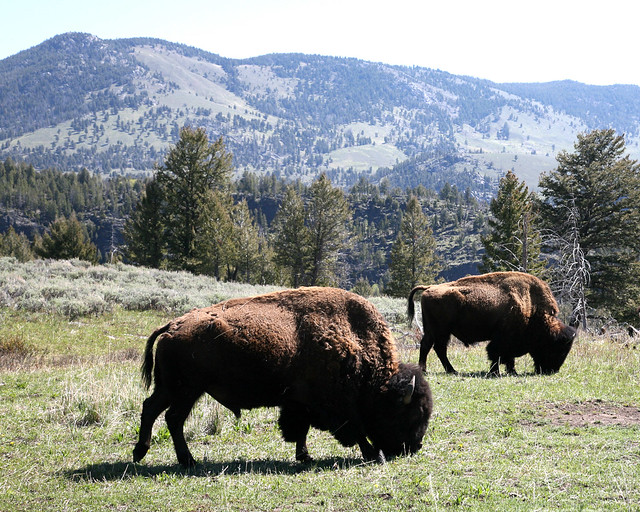
 two bison at YellowstonePhoto by Jitze CouperusThe Yellowstone Park sub-population of bison has been subjected to severe slaughter and culling as part of an effort to prevent transmission of brucellosis, a bacterial infection, to cattle.
Here’s why. The Yellowstone Park sub-population of bison has been subjected to severe slaughter and culling as part of an effort to prevent transmission of brucellosis, a bacterial infection that can sometimes cause cattle to abort their first calf post-infection. There is a lead wall (made of bullets) that attempts to bottle bison up in Yellowstone Park when they migrate to lower elevations outside of the park in search of food during harsh winters.
In addition to the direct killing of animals by Montana Department of Livestock, park rangers, and hunters, bison have also been captured and slaughtered.
In recent years, more than a thousand bison have been killed near the park borders as the bison attempted to migrate out of the park.  In 1996-1997, culling of Yellowstone bison removed 57 percent of the entire northern subpopulation and 20 percent of the central subpopulation.
Genetically Unique
The proposed listing would use a feature of the ESA called a Distinct Population Segment (DPS) designation. DPS permits the FWS to protect unique populations of a species that may have special conservation significance.
In the case of the Yellowstone park bison, its conservation value is both significant and unique. The bison in Yellowstone Park are free of cattle genes. Most other bison herds have some degree of hybridization with domestic livestock.
Furthermore, Yellowstone’s bison are the only known bison population that has been continuously wild (though for a few years they were fed hay in the Lamar Valley to build up their numbers). This is particularly important as Bozeman wildlife biologist Jim Bailey argues in his book American Plains Bison—Rewilding an Icon, Yellowstone’s bison are genetically unique.
There are only four sources of bison without cattle genes, the Henry Mountains of Utah (the bison here were originally transplanted from Yellowstone), a private herd in New Mexico and in Canada. However, the largest cattle-gene-free bison herd is in Yellowstone.
Despite this obvious rarity, the US Fish and Wildlife Service has denied two previous petitions to list the Yellowstone bison under the ESA. The new lawsuit asks the FWS to do a full review of the bison, especially in light of new genetic and other scientific evidence suggesting the Yellowstone bison population is both genetically unique and threatened by ongoing culling and slaughter.
Ironically this slaughter continues despite the fact that the bison was recently designated our “national animal.”
There are hundreds of thousands of bison being raised commercially in the United States. However, these herds are treated like livestock. That is, they are bred, artificially fed, inoculated, and slaughtered for their meat.
Apart from these, there are 44 “conservation” bison herds in the US, numbering about 17,000 animals. These conservation herds, though more wild than commercial herds, still have a significant degree of animal husbandry. Most reside behind fences, and typically experience some artificial population control through culling and hunting. And many herds are small and likely suffer from genetic inbreeding and genetic drift.
Even herds with as many as 2,000 to 3,000 animals will lose about 5 percent  of their genetic diversity over a hundred-year time period according to Bailey. Only two of these herds exceed 2,000 animals, with Yellowstone possessing the largest number. And even the herds in Yellowstone have gone through a genetic bottleneck when in the late 1800s the park’s bison population went down to as few as 25 animals.
The lives of Yellowstone’s bison were, until recently, largely affected by natural selection. In other words, bison died from disease, predators or starvation without interference from humans. These natural evolutionary processes have produced the wild bison we have today in Yellowstone.
Brucellosis and Politics
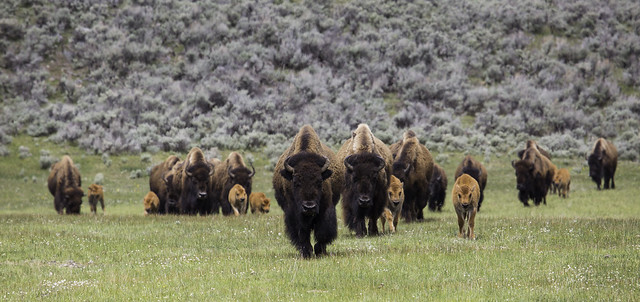
bison at YellowstonePhoto by Neal Herbert/Yellowstone National ParkBison herd with calves in Lamar Valley, Yellowstone National Park. Neither bison bull, yearlings, or calves can transmit brucellosis, yet they are regularly killed by the Montana wildlife department when they move beyond the park boundaries.
As most people know, for more than two decades now, bison migrating from Yellowstone National Park have been killed to prevent the spread of brucellosis. Ironically, the disease was originally introduced into North America via imported domestic livestock.
Cattle primarily get brucellosis by licking an aborted fetus with active brucellosis bacteria.
The Brucella bacteria can cause what is known as undulant fever in humans. Efforts by the federal government to control brucellosis in cattle was originally justified and funded as a public health issue. However, the most common way humans get infected is by eating or drinking unpasteurized or raw dairy products. (When sheep, goats, cows, or other livestock mammals are infected, their milk becomes contaminated with the bacteria.)
While breathing in the bacteria that causes brucellosis may also lead to infection, according to the Centers for Disease control, this poses a risk mainly for people in slaughterhouse and meat-packing facilities and in laboratories that work with the bacteria.
In other words, with the advent of widespread pasteurization, the human health threat has largely been dissipated.
Nevertheless, due to lobbying by the livestock industry, taxpayers still foot the bill for brucellosis control, even though the primary beneficiaries are those in the livestock industry.
As part of this control effort, all sources of brucellosis are considered a threat to the industry. Since a percentage of the wild bison in Yellowstone carry the disease, as do elk and other wildlife, the livestock industry and the Montana Department of Livestock (DOL) has effectively lobbied Congress to force the control of wild bison by hunting or capture and slaughter.
But the truth is, the likelihood of transmission of this disease from bison to cattle is exceedingly small. So small that not one example of bison transmission of brucellosis to livestock under natural field conditions has been documented. However, a number of examples of elk transmission have occurred.
In fact, neither bison bulls, yearlings, or calves can transmit the disease, though that hasn’t stopped the Montana Department of Livestock from killing thousands of such animals. Only bison cows are likely to transmit the disease. Despite the lack of evidence that bison pose any risk to livestock, more than 6,000 of Yellowstone’s bison have been slaughtered in one fashion or another since 2000.
Spread of Infection Unlikely
For cattle to become infected with brucellosis a host of unusual circumstances need to exist.
Cattle have to come in contact with live brucellosis bacteria.  The proposed means of transmission typically would involve the abortion of an infected fetus by a wild bison. However, this is rare in the wild because an infected cow bison usually reabsorbs an infected developing fetus before it can be aborted.
Most abortions of fetuses in wild bison occurs between February and May — at time when domestic livestock are not found on the public lands adjacent to Yellowstone Park.
Even if aborted, the bacteria must remain active. Since the brucellosis bacteria is sensitive to heat and dehydration, and/or the fetus is consumed by coyotes, ravens, and other scavengers, live bacterium don’t usually last long in the environment.
Next, assuming there is an aborted fetus and the bacteria is still alive, a domestic animal must come along and lick the dead fetus or birthing fluids.
For this to happen, there has to be physical geographical overlap between bison and cattle. Since bison typically migrate out to lower elevations in the winter, and move back into the higher elevations of the park for the summer, there are few cases of actual physical overlap.
A Smokescreen
The transmission of brucellosis from wild bison to cattle has never been documented, and as explained above, the chances for transmission, while not zero are effectively insignificant.
Furthermore, there are livestock management options that further reduce the threat. For one, most of the public lands grazing allotments outside of the park are no longer used by domestic livestock as a result of permit retirement and other means. So the opportunity for geographical overlap is small.
In addition, there are vaccines for brucellosis that can reduce significantly the chances of infection even if cattle are exposed to the bacteria. However, these are not required of all cattle herds.
In addition, as previously noted, neither bison bull, yearlings, or calves can transmit the disease, yet these individuals are regularly killed. And despite the fact that all known cases of brucellosis transmission from wildlife to livestock has been attributed to elk, there is no similar slaughter or curtailment of migratory elk.
The real reason the livestock industry fears wild bison is that bison and cattle have similar diets. The industry fears that the public might demand that wild bison should have priority when it comes to grazing public lands.
The last remaining wild bison herd large enough to be evolutionarily significant resides in Yellowstone Park, yet the state of Montana has repeatedly shown an unwillingness to accept wild bison moving outside Yellowstone. Instead they are using artificial means of population control that are artificially selecting against the wild genes of the animals.
As with wolves, grizzly bears, spotted owls, sage grouse, and other species that impinge, or even appear to impinge upon, traditional economic interests, the state governments in the West are incapable of managing such controversial species due to the political pressure from local industry and politicians. This is why the Endangered Species Act was created, and why we need it now to save Yellowstone’s wild bison. The ongoing tragedy is too reminiscent of the earlier attempt to wipe out wild bison on the plains as a means of controlling Plains Indians.
Only the courts can force the federal government to do its legal obligation to protect Yellowstone’s wild bison and stop the shameful slaughter of an American icon.
George Wuerthner
George Wuerthner is an ecologist who has
 been studying predators for four decades. 
He serves on the Science Advisory Board 
of Project Coyote and is the author of 38 
books including Welfare RanchingWildfire:
 A Century of Failed Forest PolicyEnergy: 
The Delusion of Endless Growth and
 OverdevelopmentThrillcraft, and Keeping 
the Wild.

Monday, October 3, 2016

Our friend and Co-Author of the landmark LANDSCAPE OF FEAR PARADIGM, biologist John Laundre is back with us today with a very thoughtful, insightful and "circle-of-life meaningful commentary on how State Game Agencies should be interpreting and executing on the true principles of the NORTH AMERICAN MODEL FOR WILDLIFE CONSERVATION(NAM) and not be solely focused on the wants and desires of hunters, farmers and ranchers..............An intense and no-holds-barred point-of-view editorial this is

If Wildlife agencies used the NAM to set wildlife policy


The North American Model for Wildlife Conservation (NAM for short) has and continues to be touted by hunting organizations and the agencies they "own" as THE model for wildlife conservation. They claim that not only did the principles (the seven sisters) of the NAM savewildlife…from hunter abuse, in the past but serve as the only viable model to guide wildlife conservation today. They proudly point to the seven sisters as being instrumental in how state game agencies set wildlife policy and "manage" wildlife. Is this is the case, are game agencies using the NAM in making their wildlife management decisions and setting overall wildlife policy?
IF, as they say they are, then…

1) ALL game agencies should immediately STOP the hunting of predators, controlled or not. Such hunting violates several of these sacred sisters.
a) Science (Sister # 7: wildlife should be managed using the best science) has overwhelmingly refuted the hypothesis that killing predators protects "game" species and produces "more game in the bag". Several reviews of these "failed" efforts by these agencies own biologists have clearly demonstrated that predators do not NEED to be killed to protect some concept of balance (usually an imbalance) or management for a "target" population of game species.  Yet year after year game agencies continue to do and redo their "experiments" (killing predators) to try and prove this is the case. The science is clear, there is NO reason to kill predators to protect favored game species but the killing continues.


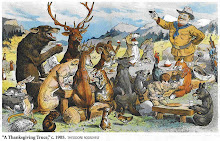
WILDLIFE AND ITS HABITAT CANNOT SPEAK, SO WE MUST AND WE WILL.
-----
THEODORE ROOSEVELT


b) Science continues to support the hypothesis that predators are probably THE most important component of ecosystems and are essential for maintaining ecosystem integrity. But by and large game agencies refuse to accept this. Should not ecosystem integrity be the goal of agencies entrusted to "manage" all the wildlife of a state? Or, as they really are, just to be politically motivated agencies that ignore the science and continue to kill predators because that is what the small select segment of society they serve wants?

c) Based on the importance of predators in ecosystem integrity, game agencies should NEVER reintroduce native game prey species without concurrent reintroductions of their native predators. The science has clearly shown that to only introduce a native prey species is ecologically wrong and has dire consequences to ecosystems. The whole eastern U.S. ecosystem is suffering under the weight of the reestablishment of deer and now elk in the region without reintroducing their primary predators, wolves and pumas. 

2) All game agencies should immediately stop ALL trapping and hunting of furbearing animals. Such activity violates two of the seven sisters. The first is Sister #5: Game should not be killed for frivolous reasons: Laws restrict against the casual killing of wildlife merely for antlers, horns or feathers.

a) How many people in the U.S. use fur as a NECESSARY clothing item today? Fur is a FASHON adornment worn by a small fraction of a percent of the people.  Each year millions of wild furbearing animals are kill for the frivolous reason of providing these adornments to that small segment of society that has no real necessity for them. Is this not as frivolous of a use of wildlife as historically "casual killing of wildlife merely for antlers, horns, or feather? Are not these furs used likewise, as frivolous adornments, as fashion pieces? Why is it wrong to kill a bird just for its feathers but ok to kill a fox just for its fur?


b) The other sister this killing of animals for their fur violates is # 2 that explicitly states: Commercial hunting and the sale of wildlife is prohibited to ensure the sustainability of wildlife populations. Why are furbearers trapped and killed? Am I missing something or are they not killed just for the sole reason to commercially sell their fur! What part of commercial do these hunter conservationists not understand? 

How does killing an animal to commercially sell its fur today differ from the past commercial selling of bison hides, passenger pigeons, deer, and the many other species that this Sister is supposed to protect? Were not whole populations of furbearers, wolves, lynx, beavers, fox, etc. also eliminated by past commercial hunting abuses? Why then is it ok to continue the commercial killing of these animals today but not others…for their antlers, horns, or feathers? Why can't a person today kill deer just to sell their hides, leaving the corpses to rot in a dump, as is done with the millions of furbears killed just to sell their fur? Trapping IS commercial hunting and thus is forbidden by the NAM…but the killing continues.

3) All game agencies should immediately abolish the classification of "varmint" for native species. Again, Sister # 5 forbids the killing of animals for other than legitimate reasons. Since when is killing animals just to kill them considered a legitimate reason for hunting? Every year millions of native animals of all taxa are killed "legally" under the classification of them being "varmints". Whole magazines are dedicated to this killing just for killing of wildlife. What does that designation really mean? Are these species somehow deemed not important to the ecosystems they live in? If so, where is the science (Sister # 7) that demonstrates this? A prime example is the continued war against prairie dogs. Science has amply demonstrated that prairie dogs are a keystone species within the ecosystems they live yet the killing 
goes on.


4) All game agencies in the Midwest and Eastern U.S. should immediately reduce deer populations by at least 30% if not more. We all know there are too many deer in these areas. These deer cause 100's of thousands of car accidents, 10's of thousands of injuries, and well over 100 deaths yearly in this region. Lyme disease continues to infect thousands of people yearly and science (Sister #7) has amply shown that excess deer are part of this epidemic. Chronic wasting disease (CWD) is reaching epidemic levels among deer populations in these regions. All the science indicates that diseases go from pandemic to epidemic as populations reach excess numbers. Do not the game agencies get it that CWD is a sign that there are too many deer?  Study after study (Sister #7 again) have amply demonstrated that the deer in these areas are also causing extensive ecological damage to the flora and fauna. Yet these game agencies continue to set "target" populations aimed at maintaining this excess number of animals with no intention of reducing deer to ecologically sustainable levels. These game agencies continue to ignore the science and refuse to even consider returning native predators that could alleviate this problem and bring relief to these battered ecosystems.  


5) Game agencies should never have nor continue to support the introduction and maintenance of exotic species. Again, Sister #7, the use of science has repeatedly demonstrated that exotic species are detrimental to the maintenance and health of native ecosystems. Just how many more species like European boar (introduced by hunter-conservationists), ibex, roe deer, etc. do we need to suffer for these "conservation" agencies to get it? Exotics should NOT be introduced!  Even what might be considered innocuous introductions of species like pheasants, chukers, Hungarian partridge, are detrimental to ecosystem health as game managers continue to suppress native predator populations in the false hope of increasing the number of these exotics for hunters to shoot. In "pheasant country" coyote killing contests are advertised by slogans such as "kill a coyote, protect our pheasants". 

 Instead of killing coyotes, efforts should be made to rid the landscape of these exotics. And why were these species introduced? Every time it is justified as ways of providing "more hunting opportunities". More opportunities for whom? For the small percent of the population who seems tired of killing the native species! The agencies entrusted with our wildlife heritage continue to destroy native ecosystems with careless non-scientifically based management objectives.

6) All game agencies SHOULD be funded by public funds NOT just the money from a selective segment of society that hunts and fish. To restrict funding of game agencies just to a select segment, as is still done in many states, violates Sisters #1 and 3. How can wildlife be held in the public trust (Sister #1) and be administered under democratic rule of law (Sister #3) when the game agencies assigned to manage them are bought and paid for by again, a small segment of society? And to be sure, this small segment of society makes it perfectly clear that "those who pay, get to say"


 They resent, scorn, and belittle any input from those who don't hunt. In some states, true public opinion is further stifled because only those who hunt or fish can be on overseeing commissions! Where is the democracy in this? Under a truly democratic system, hunters would only have 6% of the say in how wildlife were managed as they only represent 6% of the U.S. population 16 years and older. Under a truly democratic system, the "game" division of game agencies should be housed in the small corner office while the rest of the building and resources is devoted to "nongame" species. But none of this is done in clear violation of these tenets. How can these agencies be entrusted with all wildlife when they purposely are funded from a select segment of society and thus feel obligated to serve just that segment? The answer is they can't. Until we have true economic representation in these agencies, they will stay game agencies and will NOT be administered democratically nor will the wildlife be held in the PUBLIC trust. And they will NOT be "conservation agencies". 

7) All game agencies should publicly acknowledge that Sister # 4: Every citizen has an opportunity, under the law, to hunt and fish has NOTHING to do with wildlife conservation and should be removed from the NAM. Just what this tenet has to do with wildlife conservation mystifies me! This tenet would apply only to the species that are hunted, leaving out the other 99% that are not. Why should the conservation of all species rest on the declaration that everyone has the opportunity to hunt just a few species? It appears that this tenet is one of the most self-serving sisters attempts to justify, codify hunting. Just because everyone has the opportunity to hunt does not mean hunting and hunters should dominate wildlife conservation policy (see # 6). 

So do game agencies actually take the NAM into consideration in their management philosophies and   policies? These are just a few of the observations that clearly indicate the answer is a resounding NO. Game agencies pick and choose what tenets or part of the tenets to follow, and which to ignore completely. All this is based on the specific self-centered interests of their clients, the hunters. They selectively chose those sisters that fit their prime directive the best. And what is that prime directive? The day I lost faith in game agencies was the day when the then current game agency director of the state I lived in got up in front of group of hunters and fishermen at one of those "public" meetings and stated: The primary goal of our agency is to put more fish in the creel and more game in the bag. From that point on I stopped deluding myself that game agencies had anything more than just the narrow interest of a small (6% nationally) segment of the population and of wildlife.  So much for MOST of the 7 Sisters!

Hunters and their agencies should stop being hypocritical by professing to embrace a model that they have no intention on following. The NAM as written is far from a conservation model and as applied/perverted by the hunting industry and its hired underlings is an insult to what conservation is. Hunting is just an excuse for killing animals, the majority of which are discarded to rot. Hunting is an excuse to ignore the rest of the 99% of the wildlife species agencies are supposed to safeguard for the public trust. Hunting is NOT conservation. And hunters and their agencies are NOT conservationists.  

John W. Laundré

Sunday, October 2, 2016

Not too many years back the southeast was "bone dry"...........Texas was next to "parch out"................And of course the Inter-mountain West has been pounded by persistent drought for the past 5 years.......... This past year it is the Northeast and New England badly in need of rain.............The New York City region is down 10 inches of precipitation from the annual norm recorded over the past 100+ years and New England is in a similar "thirst",,,,,,,,,,."Trees are resilient, though, so even if a deciduous tree drops its leaves to conserve water, often it will recover the following year if conditions improve"............... "Wildlife has different ways of coping with dry weather".............. "The Northern Forest was seeing more bear-human conflicts, said Andrew Timmons, bear project leader for the New Hampshire Fish and Game Department"............ "Dry weather meant fewer of the wild blueberries and raspberries that bears typically eat in summer, so bears began to range more widely"..........."Various salamander species, which can live up to 20 years, crawl down holes to reach moist soil and wait"........... "American toads can dig their way to moist soil".............."Wood frogs can overwinter as tadpoles, so they will die if their ponds dry out"


http://adirondackexplorer.us5.list-manage.com/track/click?u=f2786fbb7862339a0b90113d7&id=fe9a633045&e=46b8d98c61

SATURDAY, OCTOBER 1, 2016

The Ecological Impact Of The Current Drought

Scenes from the West’s five-year drought are striking – the cracked mud at the bottom of a dry reservoir, forests in flames. Wonder what a drought would look like in the Northern Forest? Just look out the window.


This is the first time that any part of New Hampshire has been in an “extreme drought” since the federal government began publishing a drought index in 2000, said Mary Lemcke-Stampone, the state’s climatologist. “Using state records, you have to go back to the early ‘80s to get the extreme dryness we’ve been seeing in southeastern New Hampshire.”
Other parts of the region have been abnormally dry for some time. New York State has issued a drought warning for the Southern Tier and Western New York, which is an extreme drought, while the Adirondacks remain “abnormally dry” according to the U.S. Drought Monitor.
According to Lesley-Ann Dupigny-Giroux, a University of Vermont professor and state climatologist, persistence is the difference between drought and other weather conditions. “Even if we got five inches of rain, it wouldn’t take us out of drought conditions,” she said, sort of like how a thick, bone-dry sponge will initially just shed water when it’s run under a faucet. What the earth needs is a prolonged soak.

2016 Drought Monitor Index
Current U.S. Drought Monitor
least to most severe drought regions(yellow to red in intensity)

You may not be able to see a lack of rain, but once the upper level of soil dries out, you can see parched lawns and brown leaves on trees, said Dupigny-Giroux. When the lower level of soil dries up, you’ll see the level of lakes and farm ponds drop. If it still doesn’t rain, she said, you’ll see higher prices at the farmers’ market. “That’s socio-economic drought,” she said, and we may see it in the price of Northeast apples this fall.
Josh Halman, a forest health specialist, and Dan Dillner, a protection forester with the Vermont Department of Forests, Parks and Recreation, surveyed Vermont’s forests for health problems from airplanes this summer. They saw leaf browning and early color in some places. “That’s drought stress,” said Halman. Trees are resilient, though, so even if a deciduous tree drops its leaves to conserve water, often it will recover the following year if conditions improve. Wildlife has different ways of coping with dry weather. The Northern Forest was seeing more bear-human conflicts, said Andrew Timmons, bear project leader for the New Hampshire Fish and Game Department. Dry weather meant fewer of the wild blueberries and raspberries that bears typically eat in summer, so bears began to range more widely.

streams drying up across New England this year


For amphibians, the timing of rain is everything, said Jim Andrews, Director of the Vermont Reptile and Amphibian Atlas. A dry spring will mean hard times for most species, but species have different coping strategies for a dry summer. Various salamander species, which can live up to 20 years, crawl down holes to reach moist soil and wait. American toads can dig their way to moist soil, he said.
Wood frogs can overwinter as tadpoles, so they will die if their ponds dry out. Andrews said that a few dry years can wipe out a local population of spring peepers, which only live a few years. In the past, the peepers would repopulate good habitats when rain returned, but these days, he said, roads and development may sever connections between populations.
Alan Eaton, an entomologist with the University of New Hampshire Cooperative Extension, expects that dry conditions will mean fewer black-legged ticks this year, but don’t put away the Permethrin yet – Eaton predicts the difference will be statistically small. Without rain, cyanobacteria, also known as blue-green algae, are hunkered in the still depths of lakes and ponds, said James Haney, a University of New Hampshire biologist. Autumn storms could bring them to the surface, he said, stirring up toxic blooms.
Skip Lisle of Beaver Deceiver International, a beaver-control company that uses non-lethal means, said that beavers have droughts covered. “All those little dams and reservoirs keep water on the landscape,” he said. They have floods covered, too, as those same dams and reservoirs release peak flows slowly.
Intact ecosystems, Lisle said, have a way of coping. “Droughts are good. Floods are good. Dynamism is good. It’s been going on forever.”
Madeline Bodin writes about science and nature for newspapers and magazines. She lives in Vermont. John Warren contributed to this report. The illustration for this column was drawn by Adelaide Tyrol. The Outside Story is assigned and edited by Northern Woodlands magazine, and sponsored by the Wellborn Ecology Fund of New Hampshire Charitable Foundation.

On Thursday of this past week, the U.S. Fish and Wildlife Service protected the Eastern Massasauga rattlesnake as a threatened species under the Endangered Species Act.............Derived from the Chippewa language, Massasauga translates to "great river-mouth", an appropriate and accurate name as this rattlesnake is found in wetlands across the Midwest and Great Lakes............. Once occupying Illinois, Indiana, Iowa, Michigan, Minnesota, Missouri, New York, Ohio, Pennsylvania, Wisconsin and Ontario, Canada, the Massasauga is now extirpated from 40 percent of its historical range.............Draining wetlands for farms, roads and urban development has eliminated much of the habitat massasaugas use for food and shelter............ Roads and other obstacles also prevent them from moving between wetland and upland habitats, which isolates remaining populations, leading to their demise............With the"Threatened" legal protection now provided it, The Masssasauga hopefully will be provided enough protected habitat to persist into the next 100 years

https://www.google.com/url?rct=j&sa=t&url=http://www.wtol.com/story/33283487/declining-rattlesnake-species-to-get-federal-protection&ct=ga&cd=CAEYACoTMzM0MTY4NDU0MjU3NTQ1NDAxMDIaYWJiMmMxNTM2YWY2YWQ1Mzpjb206ZW46VVM&usg=AFQjCNF4Vc3MLelhe3hxKiiYGYveztUrmA

Declining rattlesnake species to get federal protection

TRAVERSE CITY, Mich. (AP) - Federal officials are extending legal protection to the eastern massasauga rattlesnake, which inhabits a broad section of the northern and central U.S. but has been in decline for years.


The U.S. Fish and Wildlife Service is listing the snake as "threatened," meaning it's vulnerable to dying out but not in such peril that it's considered "endangered."
The eastern massasauga is seldom seen. It lives in wetland areas from Missouri to New York and parts of the Canadian province of Ontario. Its numbers have fallen as wetlands have been drained for farming and urban development.


In Colonial times, the Massasauga occupied this range


Persecution from fearful humans has also hurt.
Elise Bennett of the Center for Biological Diversity says designating the snake as threatened can save habitat it needs to survive.
The snake is among more than 170 species protected under a 2011 settlement between the center and the government.
------------------------------------------------------------------------------------------------------------------

https://www.google.com/url?sa=t&rct=j&q=&esrc=s&source=web&cd=3&cad=rja&uact=8&sqi=2&ved=0ahUKEwjg7_ntqLzPAhUFbT4KHR9bBNIQqQIIMjAC&url=https%3A%2F%2Fbiologicaldiversity.org%2Fnews%2Fpress_releases%2F2016%2Feastern-massasauga-09-29-2016.html&usg=AFQjCNEjQvqyAnv2ozWzhFYni2nfWcy9Ew&sig2=BUvx7JM9eQgVX_Pei4gQFQ&bvm=bv.134495766,d.cWw

Eastern Massasauga Rattlesnake Gains Endangered Species Act Protection

Snake Threatened by Habitat Destruction in Midwest, Great Lakes States


Wetland habitat with adjacent upland forest is the Massasauga
needed habitat


Saturday, October 1, 2016

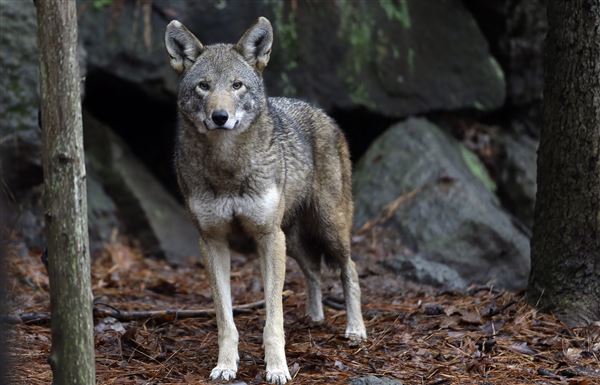
Occasionally, common sense weighs heavy against special interests with "the needs of the many, outweighing the needs of the few" -----We saw this actually occur in North Carolina on Thursday with Federal District Judge Terrence Boyle reversing the decision by the USFW Service that would have removed virtually all of the remaining 50 Red Wolves from the wild, putting them in zoos..............."Boyle’s decision comes several weeks after federal officials announced plans to reduce the wolves’ territory starting in 2017 to a federal wildlife refuge and adjacent land in Dare County, rather than the wolves’ current five-county territory"..........From my perch, the next step should be introducing a large enough Red Wolf population into that 5 county region so that the wolves will have enough of their own kind to mate with rather than "shacking up" with coyotes...................And simultaneously, find two or three additional locations up and down the Appalachian Spine where there would be further Red Wolf rewilding instituted during the next 12 months..............Lets stop talking and and actually go to work reviving this trophic carnivore as the Endangered Species Act calls for.

http://www.toledoblade.com/Nation/2016/09/29/Federal-judge-sides-with-conservationists-in-red-wolf-f

Federal judge sides with

 conservationists in red wolf fight

Says U.S. government has failed

 to protect

 the world's only wild population


A judge said that federal wildlife officials have failed to protect the world’s only wild population of red wolves in a preliminary ruling that restricts the government’s ability to remove the animals from private property.


U.S. District Judge Terrence Boyle’s preliminary injunction released today stops wildlife officials from removing the wolves from private property unless they can show that the wolves are threatening humans, pets or livestock.
Boyle also said conservation groups are likely to succeed at trial in showing that the U.S. Fish and Wildlife Service has violated the Endangered Species Act in its handling of the dwindling red wolf population.
Boyle wrote that plaintiffs have demonstrated that the wildlife service’s actions “fail to adequately provide for the protection of red wolves and may in fact jeopardize the population’s survival in the wild.”
Red-Wolves-injunction
A federal judge's injunction stops wildlife officials from removing red wolves from private property unless they can show that the wolves are threatening humans, pets or livestock.
ASSOCIATED PRESS Enlarge
Conservationists have argued that the federal government twice gave landowners permission to kill wolves on private property without meeting the strict legal requirements since 2014. One wolf was shot as a result.
Lawyers representing the U.S. Fish and Wildlife Service say conservationists are misinterpreting regulations that give federal officials wide leeway to remove animals humanely or authorize lethal means. They say that any removals are done after thorough reviews of each case. It’s generally illegal to kill the wolves without permission.
Conservation groups hailed Boyle’s decision as an important step to preserve a recovery program that has been maligned by landowners and state government officials. Some property owners complain the red wolves cause problems when they roam onto private land.
“We believe this ruling will give red wolves a fighting chance and force the Fish and Wildlife Service to conserve the species,” said Sierra Weaver, a lawyer who has led the litigation for the Southern Environmental Law Center.
The wildlife service issued a statement that it’s reviewing the judge’s order with its lawyers and declined further comment.
Once common around the Southeast, the red wolf had been considered extinct in the wild as of 1980. Releases of captive-bred wolves started in 1987.
The only wild population, in North Carolina, grew to about 130 wolves in 2006 before experiencing sharp declines. The wild population is now about 45 wolves.


The federal government has also argued that the 200 or so red wolves living in captivity justify the wild wolves’ classification as a “nonessential” population.
Boyle’s decision comes several weeks after federal officials announced plans to reduce the wolves’ territory starting in 2017 to a federal wildlife refuge and adjacent land in Dare County, rather than the wolves’ current five-county territory. Wildlife officials have said that wolves straying beyond that shrunken territory would be captured and removed. The new plan is contingent on modifying current program rules after a public comment period.


But as long as Boyle’s injunction is in place, conservationists say that federal officials can’t execute their plan.
“Under this ruling they will not be able to remove non-problem wolves from the wild,” said Jason Rylander, senior attorney for Defenders of Wildlife, one of the groups that sued the federal government.
Boyle previously gave environmentalists a win in a separate case when he temporarily halted coyote hunting in the wolves’ territory, and he later approved a permanent agreement in 2014 banning nighttime coyote hunting in the five-county area. Conservationists say red wolves can easily be mistaken for coyotes by hunters.
------------------------------------------------------------------------------
A Little Background on Red Wolves
Thousands of magnificent red wolves once roamed across the southeastern United States north to Pennsylvania, helping to keep this part of the natural world in balance.  Smaller than gray wolves, red wolves weigh 50-85 pounds—about twice the size of a coyote. These social animals live in packs of five to eight animals consisting of a breeding adult pair and their offspring. Red wolves prey on a variety of wild mammals. Most active at dusk and dawn, red wolves are elusive and generally avoid people.
Why Red Wolves are Essential
  • Red wolves are good for landscapes: These small wolves likely play a critical role in maintaining the ecological balance in the Southeast.  As a top predator, they feed upon white-tailed deer, raccoons, rabbits, nutrias and other rodents (some of which are believed to be the carriers of Lyme disease.

  • Red wolves are part of America's natural heritage: Red wolves are only found in the US; they are our native wolves. Protecting them ensures a future for our kids in which our Nation's rich and diverse natural heritage thrives.
Why Red Wolves Need a Recovery Program
The red wolf is America's rarest wild canid. By the 1970s predator control programs and habitat loss had decimated their numbers to only remnant populations in Louisiana and Texas. After declaring the red wolf an engangered species in 1973, the US Fish and Wildlife Service (FWS) initiated a recovery program in an attempt to save the red wolf from extinction


 After capturing those that remained in the wild, only 14 were found to be pure red wolves. Subsequently, these animals became the founders of a successful captive breeding program. In 1987 the first red wolves were released into North Carolina’s Alligator River National Wildlife Refuge. This program has become one of the most successful reintroductions of a large mammal in the world—their highest numbers reach approximately 130 red wolves living in the wild in 2009.
Today the only free-ranging population of red wolves lives in northeastern North Carolina on 1.7 million acres of public, private and state land. This area contains three national wildlife refuges (Alligator River NWR, Pocosin Lakes NWR and Mattamuskeet NWR) that provide important protection to the wolves. Another 200 red wolves remain in US-based zoological facilities as part of their red wolf breeding program.
Photo Credit: USFWS/A. Beyer
Red Wolves need us now!
Since 2009 when the red wolf populaton was at its peak, approximately 10% of the population has been lost annually, largely due to gunshot and trapping. In 2015, at least six wolves were lost to gunshot, trapping and suspected illegal take. And in a crippling blow to the program, the FWS has cut its funding.
Critical pieces to a successful red wolf recovery plan!
  • More reintroduction sites
  • More breeding of red wolves for reintroduction