Visitor Counter

hitwebcounter web counter
Visitors Since Blog Created in March 2010

Click Below to:

Add Blog to Favorites

Coyotes-Wolves-Cougars.blogspot.com

Grizzly bears, black bears, wolves, coyotes, cougars/ mountain lions,bobcats, wolverines, lynx, foxes, fishers and martens are the suite of carnivores that originally inhabited North America after the Pleistocene extinctions. This site invites research, commentary, point/counterpoint on that suite of native animals (predator and prey) that inhabited The Americas circa 1500-at the initial point of European exploration and subsequent colonization. Landscape ecology, journal accounts of explorers and frontiersmen, genetic evaluations of museum animals, peer reviewed 20th and 21st century research on various aspects of our "Wild America" as well as subjective commentary from expert and layman alike. All of the above being revealed and discussed with the underlying goal of one day seeing our Continent rewilded.....Where big enough swaths of open space exist with connective corridors to other large forest, meadow, mountain, valley, prairie, desert and chaparral wildlands.....Thereby enabling all of our historic fauna, including man, to live in a sustainable and healthy environment. - Blogger Rick

Subscribe via email to get updates

Enter your email address:

Receive New Posting Alerts

(A Maximum of One Alert Per Day)

Wednesday, September 6, 2017

I have previously Posted about the scam that is currently being put forth and is the rage of certain Politicians----The falsehood that Wind and Solar are "green sources" of energy and that coal, oil, natural gas and nuclear power are dirty polluting sources of energy................The fact is that outside of putting solar panels on every rooftop, constructing large scale Solar Farms in our deserts and farm fields as well as placing 300-500+ foot Wind Towers on those same farms and Mountain tops is anything but green.............Not only do they provide a fraction of the reliable power of the fossil and Nuclear sources of fuel, Wind and Solar farms equally desecrate and destroy our open spaces,,,,,,,,,,,,Yes, it sucks that we have to dig out coal mines, puncture the earth for oil and gas, but those "punctures have long been with us and realistically we would not be living the advanced lives we lead today without them..................To allow Politicians of a certain Party to claim that they are "green" because they support wind towers and solar farms is to be an Ostrich----You either just don't know the real facts about energy sources or you choose to be an Ostrich----Not wanting to "see no evil", "hear no evil", "speak no evil" even though it is self-evident that the panels and wind towers are destroying open space and biodiversity on land that just yesterday, was "God's Country"..............We need our best and brightest minds to truly come up with a non-destructive, non-invasive, non-planet scarring source of energy that is truly "green" in all manner, shape and size,,,,,,,,,Not allowing Politicians to manipulate, insult and pacify us with some B.S.. rhetoric about alleged green energy that is anything but green!


 IN YOUR HEART OF HEARTS, BE, HONEST AND TRY
NOT TO BE POLITICALLY CORRECT IN YOUR RESPONSE,,,,,,,,,,

ARE ANY OF THESE ENERGY SOURCES IN THE PICTURES BELOW REALLY "GREEN",,,,,,,,,,,,,,

OR, ARE THEY ALL DESTROYING OUR OPEN SPACE AND KILLING BIODIVERSITY WHEREVER THEY ARE BUILT,
DUG AND MINED?

--------------------------------------------------------------------------

A solar power plant in California's Mojave Desert.
Credit: Worklife Siemens/flickr

http://www.climatecentral.org/news/solar-study-sees-ecological-risks-19568

Study Sees Ecological Risks as Solar Expands

publishhed: October 19th, 2015

Solar power development is big business in sunny California, fueled by low solar panel prices and the drive to reduce greenhouse gas emissions to tackle climate change. Some biologists, however, are growing concerned that the placement of new large-scale solar power plants in the Mojave Desert may harm the biological diversity found there.
A study published Monday shows that solar power developers in California have been using mostly undeveloped desert lands with sensitive wildlife habitat as sites for new solar power installations rather than building on less sensitive, previously developed open lands.
The study, by the Carnegie Institution for Science and Stanford University, shows the ecological footprint of solar power development could grow to more than 27,500 square miles — roughly the land area of South Carolina — if the U.S. were to adopt a more ambitious climate goal. When thousands of solar panels are built in undeveloped natural areas, the panels crowd out wildlife and destroy their habitat.
The Ivanpah Solar Electric Generating System in California.
Credit: Ken Lund/flickr


“Solar takes out a lot of territory, right? It obliterates everything,” University of California-Santa Cruz ecologistBarry Sinervo, who is unaffiliated with the study, said. “There is as much plant biodiversity in the Mojave as there is in a redwood forest. The key part of this is, do we want to tile out the last largest wilderness area that we have, which is the Western desert?”
The Carnegie study found that of the 161 planned or operating utility-scale solar power developments in California, more than half have been or will be built on natural shrub and scrublands totaling about 145 square miles of land, roughly the land area of the city of Bakersfield, Calif. About 28 percent have been built on agricultural land and 15 percent have been built in developed areas.
Areas that have already been developed and have little wildlife habitat would be better suited for solar development from an ecological standpoint, said study lead author Rebecca Hernandez, a postdoctoral fellow at University of California, Berkeley, and a former ecologist at the Carnegie Institution.
Hernandez said she was surprised to find that nearly a third of solar development is occurring on former cropland, perhaps because farmers are shifting from growing crops to using their land to generate electricity. California’s devastating drought may be responsible for farmers’ shift to solar, something one of the study’s co-authors is researching in more depth.
“We see that ‘big solar’ is competing for space with natural areas,” she said. “We were surprised to find that solar energy development is a potential driver of the loss of California’s natural ecosystems and reductions in the integrity of our state and national park system.”
Finding ways to resolve conflicts between renewable energy development and ecosystem protection may be critical if the U.S. is to rely on more solar power to displace fossil energy to reduce greenhouse gas emissions.
Assuming that 500 gigawatts of solar power may be needed to meet a future climate goal of reducing greenhouse gas emissions 80 percent below 1990 levels by 2050, Hernandez’s team found that a region of California roughly equal to the land area of South Carolina may be needed to accommodate all the new solar power plant development.
There are caveats to that, however: Though a 2050 greenhouse gas reduction goal has been adopted in California, the Obama administration’s current goal for the U.S. is to cut emissions by up to 28 percent below 2005 levels within 10 years. The study also does not account for increasing solar panel efficiency over time, something that is likely to reduce the amount of land needed to generate a megawatt of solar electricity.
“In light of advancing solar energy technologies, we will need less land in 2050 to generate 1 MW (megawatt) than we do now in 2015,” Hernandez said.
Hernandez’s team found that there are more than 8,500 square miles of land throughout California that is less environmentally sensitive than desert scrubland and agricultural land that would be best suited for future solar power development.
Just as important in reducing the ecological footprint of solar power is the expected growth of rooftop solar, which allows homeowners to generate electricity on site, reducing the demand on utilities’ solar power installations, she said.
Hernandez’s research emphasizes that there are sometimes significant tradeoffs between climate and energy policy and the needs of the natural environment, Cameron Barrows, a research ecologist at the University of California-Riverside, who is unaffiliated with the study, said.
“We can’t just throw them (solar installations) across a landscape and say biological diversity be damned,” he said.
“We have to find the right places to put these things,” he said. “If you’re in Washington or Spain or France and you just see this landscape that from a satellite looks like there’s nothing there, it’s hard for them to imagine why anyone would be upset about throwing 10 or 20 square miles of glass across this (desert) to produce solar energy. There are biological riches that are part of our natural heritage that we don’t want to lose.”
----------------------------------------------------
https://www.google.com/url?sa=t&rct=j&q=&esrc=s&source=web&cd=9&cad=rja&uact=8&ved=0ahUKEwjO3sOv7pHWAhUniFQKHWURBxIQFghHMAg&url=http%3A%2F%2Fsavetheeaglesinternational.org%2Fnew%2Fus-windfarms-kill-10-20-times-more-than-previously-thought.html&usg=AFQjCNFica8t31PXv5ZS3IQxZO0hd-Cpug


Windfarms kill 10-20 times more than previously thought

Red Kite at Navarre Windfarm

Red kite agonizing under wind turbine, Spain.
Courtesy of association of ecologists GURELUR, Navarre.

The Obama administration is issuing 30-year permits for “taking” (killing) bald and golden eagles. The great birds will be legally slaughtered “unintentionally” by lethal wind turbines installed in their breeding territories, and in “dispersion areas” where their young congregate (e.g. Altamont Pass).


By chance (if you believe in coincidences), a timely government study claims wind farms will kill “only” 1.4 million birds yearly by 2030. This new report is just one of many, financed with taxpayers’ money, aimed at convincing the public that additional mortality caused by wind plants is sustainable. – It is not.


Dr. Shawn Smallwood’s 2004 study, spanning four years, estimated that California’s Altamont Pass wind “farm” killed an average of 116 Golden Eagles annually. This adds up to 2,900 dead “goldies” since it was built 25 years ago. Altamont is the biggest sinkhole for the species, but not the only one, and industry-financed research claiming that California’s GE population is stable is but a white-wash.

Eagles are not the only victims. Smallwood also estimated that Altamont killed an average of 300 red-tailed hawks, 333 American kestrels and 380 burrowing owls annually – plus even more non-raptors, including 2,526 rock doves and 2,557 western meadowlarks.


In 2012, breaking the European omerta on wind farm mortality, the Spanish Ornithological Society (SEO/Birdlife) reviewed actual carcass counts from 136 monitoring studies. They concluded that Spain’s 18,000 wind turbines are killing 6-18 million birds and bats yearly.


Extrapolating that and similar (little publicized) German and Swedish studies, 39,000 U.S. wind turbines would not be killing “only” 440,000 birds (USFWS, 2009) or “just” 573,000 birds and 888,000 bats (Smallwood, 2013), but 13-39 million birds and bats every year!


However, this carnage is being covered up by self-serving and/or politically motivated government agencies, wind industry lobbyists, environmental groups and ornithologists, under a pile of misleading studies paid for with more taxpayer money.


Wildlife expert Jim Wiegand has documented how areas searched under wind turbines are still confined to 200-foot radiuses, even though modern monster turbines catapult 80% of bird and bat carcasses much further. Windfarm owners, operating under voluntary (!) USFWS guidelines, commission studies that search much-too-small areas, look only once every 30-90 days, ensuring that scavengers remove most carcasses, and ignore wounded birds that happen to be found within search perimeters.


These research protocols are designed to guarantee extremely low mortality statistics, hiding the true death tolls – and the USFWS seems inclined to let the deception continue. In addition, bird mortality data are now considered to be the property of windfarm owners, which means the public no longer has a right to know.


Nevertheless, news has leaked that eagles are being hacked to death all across America. This is hardly surprising, as raptors are attracted to wind turbines. They perch on them to rest or scan for prey. They come because turbines are often built in habitats that have abundant food (live or carrion) and good winds for gliding.

Save the Eagles International (STEI) has posted photographs of raptors perched on nacelles or nonmoving blades , and ospreys building a nest on a decommissioned turbine. Moving blades don’t deter them either: videos show a turkey vulture perched on the hub of a spinning turbine, and a griffon vulture being struck. Birds perceive areas traveled by spinning blades as open space, unaware that blade tips are moving at up to 180 mph. Many are focused on prey. These factors make wind turbines “ecological death traps,” wherever they are located.


By 2030, the United States plans to produce 20% of its electricity from wind. That’s nearly six times as much as today, from three or four times as many turbines, striking more flying creatures due to their bigger size (even the mendacious study predicting 1.4 million bird kills recognizes this). Using the higher but still underestimated level of mortality published by Smallwood in 2013, by 2030 our wind turbines would be killing over 3 million birds and 5 million bats annually.


But this is shy of reality by a factor of ten, because 90% of casualties land outside the search perimeter and are not counted. We are thus really talking about an unsustainable death toll of 30 million birds and 50 million bats a year – and more still if we factor in other hide-the-mortality tricks documented by STEI.


This carnage includes protected species that cars and cats rarely kill: eagles, hawks, falcons, owls, condors, whooping cranes, geese, bats and many others. The raptor slaughter will cause rodent populations to soar. Butchery of bats, already being decimated by White Nose Syndrome, will hammer agriculture and forestry.

The U.S. Geological Survey says the value of pest-control services to US agriculture provided by bats ranges from $3.7 billion to as much as $53 billion yearly. These chiropters also control forest pests and serve as pollinators. A Swedish study documents their attraction from as far as nine miles away to insects that swarm around wind turbines. Hence the slaughter.


Wind lobbyists claim they need “regulatory certainty.” However, eagle “take” permits will also ensure extinction certainty – and ecological, agricultural, economic, social and health disasters that we cannot afford.


Note 1: our entire webpage was destroyed. We are reconstructing it. Given time, we will put back all the articles with all the links to reference material. If you need some urgently, please advise: save.the.eagles@gmail.com
Note 2: all comentaries were also wiped out. We explain that in the comentary below.

Monday, September 4, 2017

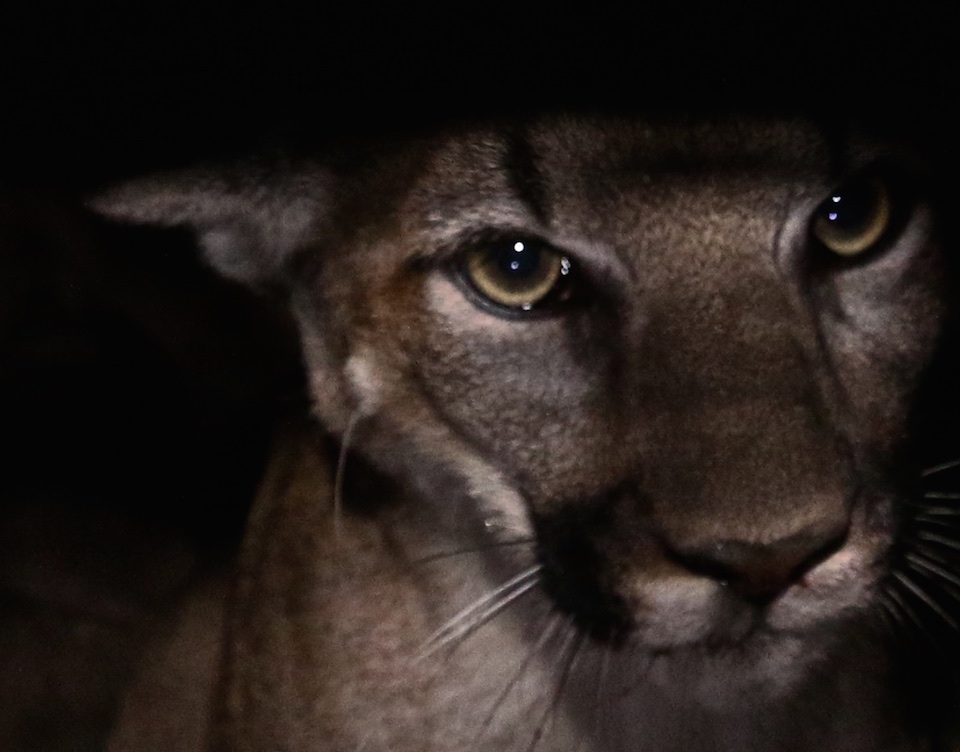
Imagine if you were someone's Father, Grandfather and Great Grandfather? Impossible you say!,,,,,Well, virtually all of us cringe at that thought............Beyond the moral questions at play, the idea that you are likely dooming your new child to all kinds of genetic abnormalites makes such a siring a non-starter...............So, while we cheer the fact that two new Puma cubs(Mountain Lions)named P-50 and P-60) have been born in the Santa Monica Mountains, we also are extremely concerned for their ultimate welfare as they grow into adults.............Their likely dad(P-12), appears to be the unimaginable triad of Father/Grand Father and Great Grandfather----the very reason that we must build the Wildlife Over/Unerpass) on the 101 freeway in Agoura Hills at the Cheseboro/Liberty Canyon exits(minutes from my home)................This section of the 101 is the only place where open space still exists on both sides of this traffic-filled highway, the one link that would bridge protected habitat in both the Santa Monica and San Susana Mountian Ranges, allowiing for Pumas to migrate freely from different populations and enabling the bottlenecked dozen or so Santa Monica Pumas to get a "genetic boost" from a prospecting male or female Cat

https://www.google.com/url?sa=t&rct=j&q=&esrc=s&source=web&cd=4&cad=rja&uact=8&ved=0ahUKEwjuyM-N2ozWAhUBeSYKHaWDCiEQFgg6MAM&url=http%3A%2F%2Fwww.mercurynews.com%2F2017%2F08%2F29%2Fla-has-two-new-mountain-lion-kittens-but-whos-their-father%2F&usg=AFQjCNHk
hfuMX856TnzSZbBeVob-TnBI4Q

Los Angeles’ new mountain lions: 

Their dad is bad news


PUBLISHED: 


Two new mountain lion kittens in the hills near Los Angeles could be seen as a victory for the species — except for the fact that their father is believed to also be their grandfather, great-grandfather and great-great-grandfather.


The kittens — a female-and-male pair dubbed P-59 and P-60 — were discovered this month in the Santa Monica Mountains by biologists from the National Park Service and the California Department of Fish and Wildlife.
They are the first litter of 2-year-old P-53, the youngest lion in the study group to bear offspring. But it’s the other line of their parentage that troubles researchers.
DNA results are pending, but circumstantial evidence indicates the father is P-12. He is the only lion known to have crossed into the Santa Monica Mountains from the north, and he has become the dominant male mountain lion in the area.


Likely Dad, Grandfather and Great Grandfather: P-12

Biologists are concerned because he has mated with his own offspring and their offspring, which reduces the genetic diversity of the mountain lions in the area.
“If P-12 is in fact these kittens’ father, that also means he’s their grandfather, their great-grandfather, and their great-great-grandfather,” said Jeff Sikich, a biologist with Santa Monica Mountains National Recreation Area, a unit of the National Park Service. “Inbreeding to this degree really highlights the need for providing safe passage across the 101 freeway so new mountain lions can enter the population and breed.”
A resident of the area where the kittens were found reported hearing mountain lions “interact” in April. Mountain lion gestation is  about 90 days.
They are the 13th litter discovered by researchers in the area.
Researchers have noted both triumphs and tragedies in the last 10 months in Southern California’s mountain lion community.
P-53
P-53, mom of P-50 and P-60

Earlier this month, a male mountain lion named P-55 was documented successfully crossing Highway 101, a rare event for the region’s big cats. He represented only the fourth case of a successful crossing since the NPS began its mountain lion study in 2002.
But last winter three lions were killed in just a few weeks on Highway 118 near Simi Valley: P-39 on Dec. 3, and then her kittens P-52 and P-51.
“There is always some good news and some bad news, and that’s a similar pattern we’ve seen in this study,” said National Park Service spokesman Zach Behrens. “This is a long-term study. We’re going to see life and death through out it. The goal over time is to preserve these species for future generations.”


proposed Wildlife Overpass at the Liberty Canyon/Chesbrough
exits on the 101 freeway in Los Angeles(red circle far right)


Artist rendition of the what the 101 wildlife overpass
would look like

Ten to 15 mountain lions are studied at a time.
Wildlife advocates and activists have called for a wildlife corridor over Highway 101, and Liberty Canyon in Agoura Hills has been identified as the ideal spot. A proposal is currently being drawn by CalTrans.

Saturday, September 2, 2017

"what is a healthy forest?"................... "It’s not a green dreamland where nothing dies"................... "On the contrary, it is a place where everything dies",,,,,,,. "Trees, especially, are killers"...... "New young ones fight each other to the death, shading out their neighbors as they reach for the sun".............. "By the time a tree has reached the canopy, it has killed dozens of its compatriots"............So then, can logging operations improve on this "tug of war", actually improving the health of a forest?.........."There is no way logging could improve the health of a pristine, untouched forest, especially one magically isolated from today’s polluted air"..................... "But most of the forest now growing in the Northeast(and across the USA) is far from untouched(see Harvard Frorest Dioramas below pictorializing land use in the Eastern USA from colonization to industrialization)".................... "Instead, our woods usually consist of trees of the same age – even-aged stands – that became established on abandoned fields and pastures"............. "This situation is unnatural enough that a thoughtful logging operation has a good chance of making it better"....................... "Harvests that result in sunny openings, for instance, provide enough sunlight for seedlings and saplings to become established, and a new generation of trees is able to get a start".................... "This adds complexity and creates what foresters and ecologists call structural diversity(horizontal and vertical tangle), a plus(hiding plancesand food) for many wildlife species"................."The bottom line is that logging, for the most part, it’s is exactly like everything else we humans do – whether it’s driving a car, eating a meal, or reading a newspaper – our every move takes some small something from the earth and diverts it to our species".................. "None of us is a hero in Mother Nature’s eyes"............ "The best we can do is to minimize our impact".................. "Cutting trees for our needs close to home, using methods that are in harmony with nature and which sustain the health and and which sustain the health and diversity of the forest, easily beats most of the alternatives"

http://northernwoodlands.org/outside_story/article/healthy-forest


1
Healthy Forests?
Illustration by Adelaide Tyrol
What makes a forest healthy? And can logging improve forest health?
Perhaps you’ve seen ads – from paper companies, loggers, and sometimes foresters – with this message: “If you want your forest to be healthy, call us today!” It’s a very tempting invitation, for above all else, we all want healthy forests.  But can logging really improve the health of a forest?
The answer is an emphatic maybe. There are many good reasons to cut trees in your woods, but improving forest health is, at best, questionable.


So-Called Selective cutting can increase dfferent age classes
and begin to bring back horizontal and vertical tangle(below),
a better haven for wildlife to find food and shelter


First, there’s the question of what is a healthy forest. It’s not a green dreamland where nothing dies. On the contrary, it is a place where everything dies. Trees, especially, are killers. New young ones fight each other to the death, shading out their neighbors as they reach for the sun. By the time a tree has reached the canopy, it has killed dozens of its compatriots.
A multitude of organisms has evolved to capture the enormous amount of energy that is stored in dead trees of all sizes. Some of these have figured out how to feed not just on dead, but on dying trees. And, yes, some insects, bacteria, and fungi jump the gun a little and kill stressed trees.
But notice that these agents of death are themselves forms of life. They actively recycle leaves, bark, and wood, keeping a grip on most of the nutrients until another living plant can incorporate them once again. The rate at which trees grow is closely coupled to the rate at which animals and microbes consume dead plants, releasing essential nutrients for tree uptake. In a healthy forest, predators, weather, and the trees’ chemical defenses combine to keep insects and diseases below the levels that seriously harm the plant community. Individual trees die, the plant community lives.
If death doesn’t signify ill health, what does? And can a logging job fix it? Seriously ill forests are missing whole generations of trees or important tree species. Pollution is thought to be the main cause of the terribly sick forests in Europe. And we all know about the losses in this country from introduced diseases and insects – I won’t repeat the long, all too familiar, sorrowful list. Whether it’s the ‘cogs in the wheel’ or ‘rivets in the airplane’ analogy of ecological health, losing key pieces is not good for the community. Logging, however, can’t cure these problems and didn’t cause them.
What logging can do is to greatly improve a forest’s productivity. Even if you yourself have never marked the tress to be removed in a logging operation, you can imagine what it’s like: freeing some of the best trees to grow, removing some of those that are poorly formed, suppressed, or diseased. Working carefully over a long period of time, landowners and foresters can dramatically change a forest’s ultimate value and usefulness to humans, while preserving almost all of its beauty and ecological integrity.
There is no way logging could improve the health of a pristine, untouched forest, especially one magically isolated from today’s polluted air. But most of the forest now growing in the Northeast is far from untouched. Instead, our woods usually consist of trees of the same age – even-aged stands – that became established on abandoned fields and pastures. This situation is unnatural enough that a thoughtful logging operation has a good chance of making it better. Harvests that result in sunny openings, for instance, provide enough sunlight for seedlings and saplings to become established, and a new generation of trees is able to get a start. This adds complexity and creates what foresters and ecologists call structural diversity, a plus for many wildlife species.
I’d love to think that logging can cure a forest’s ills, but it seems to me that logging, for the most part, it’s is exactly like everything else we humans do – whether it’s driving a car, eating a meal, or reading a newspaper – our every move takes some small something from the earth and diverts it to our species. None of us is a hero in Mother Nature’s eyes. The best we can do is to minimize our impact. Cutting trees for our needs close to home, using methods that are in harmony with nature and which sustain the health and and which sustain the health and diversity of the forest, easily beats most of the alternatives.
Virginia Barlow is the former editor of Northern Woodlands magazine in Corinth, VT.
--------------------------------------------------------------------------------------------------------

http://harvardforest.fas.harvard.edu/diorama-series/landscape-history-central-new-england


Landscape History of Central New England

Printer-friendly version
Seven of the Harvard Forest dioramas form a historical series that depicts changes in the New England landscape over the past 300 years at one location. The scene was designed to depict all the important transformations of the landscape in the upland area of central Massachusetts since the pre-European-settlement period.
The ecological and historical interpretation of the details and significance of these transformations has changed little since Fisher and his colleagues designed the dioramas in the 1920s and 1930s. Importantly, the concepts presented in the dioramas provide the basis for much current understanding and research ecology, conservation biology, and forest management at the Harvard Forest and beyond.
One of the major lessons that emerges from the dioramas is that in order to understand our forests today we need to become deeply knowledgeable about their particular history. This historical perspective shows us that our forests have always been characterized by change and carry a strong cultural legacy of past human activity. This understanding should inform our predictions of future forest development, as well as our attempts to conserve and manage them.  

1700 A.D.
In the pre-settlement forest,
natural variation across sites
 and ongoing
 natural and human disturbance
processes led to differences in age, 
density, size, and species of trees across a wide range of
 sites. Notice
 the large trees and large fallen trunks on the right in the
 diorama. Compare them with... Read More >
1740 A.D.
For most of the New England
 region, European settlement
occurred
 largely during the 18th century. Through forest clearing,
hunting, and
 trapping, the abundance of many species changed rapidly
 and the 
wilderness was gradually transformed into a domesticated
 rural landscape. 
1830 A.D.
The peak of deforestation
and agricultural activity across
 most of
 New England occurred from 1830 to 1880. Across much
of New
 England, 60 to 80 percent of the land was cleared for pasture,
 tillage, orchards and buildings. Small remaining areas of
woodland 
were subjected to frequent cuttings for... Read More >
1850 A.D.
Beginning in the mid-1800s and continuing for more than a century, farming declined on a broad scale across New England. Abandoned pastures and fields rapidly developed into forests. In central Massachusetts and across much of central New England these forests were dominated by white pines.  Read More >
1910 A.D.
As the "old-field" stands of white pine reached middle age, it became evident that they contained a valuable and rapidly growing crop of second-growth timber. As this white pine became marketable portable sawmills appeared across central New England. One of the most common and valuable uses of... Read More >
1915 A.D.
Clear-cutting of the "old-field" white pines led to the succession of mixed hardwoods across much of the landscape. The inability of white pine to sprout after being cut, in contrast to the prolific sprouting of our hardwood species, facilitated this succession. Patterns of succession enhanced the... Read More >
1930 A.D.
One of the characteristic features of the hardwood forest that developed after the clear-cutting of the "old-field" white pines is the predominance of multi-stemmed sprout clumps. Fast-growing species that sprout prolifically -- red oak, red maple, white ash, birches, and black cherry -- are... Read More >

1930 A.D.
One of the characteristic features of the hardwood forest that developed after the clear-cutting of the "old-field" white pines is the predominance of multi-stemmed sprout clumps. Fast-growing species that sprout prolifically -- red oak, red maple, white ash, birches, and black cherry -- are... Read More >
In the period since the dioramas were constructed, the trends in forest development illustrated in the 1930 model have continued. Remarkable expanses of maturing forest extend across a densely populated landscape in the northeastern United States.As these forests grow and mature and as dead and... Read More >

Friday, September 1, 2017

In the video below, two Lynx(likely two males) near Baxster State Park in Maine growl at each other, likely one telling the other to get out of it's territory............."As a general rule, lynx practice mutual avoidance which tends to minimize aggressive run-ins".............. "As in many carnivores, male lynx maintain larger home ranges than females: an average of 53.6 kilometres (21 square miles) compared to 25.7 kilometres (10 square miles)"............... "In one study from northern Maine, territories of lynx of the same sex only minimally overlapped"............."However, the purview of a male lynx (a tom) is likely to encompass parts of the home range of one or more females".....................And if another male tries to take over the incumbents territory, it is possible that the two Toms could fight to the death


OUTDOORS

Video: Pair of lynx meet on a dirt road in Maine


Spotting a single lynx is a little unusual; catching 2 in such close proximity is a once-in-a-lifetime event.

CLICK ON LINK TO WATCH VIDEO--great audio of two Lynx yelling at each other
http://r20.rs6.net/tn.jsp?f=001UfLwZhI9a35eVQnWGNTW3b2MSWnLQc9p6g1UBpg5Npgfql3rrKRQdPBW-nYbOIr2J2dK79LuUt1H_X0EM1OtbvQQYeSv9dqp7UbORLbgoBPZ7yxIlealbIb5sWsVy2fk3zp_rHOTGKE17ZrJxEzONF7P0H15B5ytNwzxV9_Wi7y-d-DzvT-PrOFNNDs39wwHnIqtlZVg8-o9PkhHZHL6TnUYSp-F7JsbhaAqoNzvpBwPGDfoMbyYTar7lPcQLF1s&c=Ynx-OEzOSLvbius-ZV6lhmHn5jWsjiDYWdP3WMbfsAoMCSwqsv-R5Q==&ch=at5JCeaHOJT2mK9d-L1TzMl29LgCPUUNustkHxzsb-eWhXyFogeG7A==


A group of friends was traveling on a dirt road in Kokadjo over the weekend when a run-in with a pair of Lynx stopped them in their tracks. Kokadjo, near Baxter State Park, is known for its wildlife and limited human residents (the town’s population sign says simply “not many”).


While the two Lynx in the video, did not
end up fighting, Males will go at it to seek
exclusive use of a given territory and the
females that reside there


Sarah Verney said in a Facebook post a pair of friends – Peter and Tammy Mullen – ran into the unusual sight. The two cats seemed to have a little standoff before one of them backed away. The travelers got it on video. Peter Mullen said in an email it was actually the second time the two cats had a standoff in the middle of the road. Mullen and his wife then drove on to meet Verney at an Appalachian Mountain Club lodge.

The lynx is a federally threatened species, and Maine has the only breeding population in the the Eastern USA, according to the state. The state is home to about 1,000 adult lynx.
-------------------------------------------------------
https://www.earthtouchnews.com/natural-world/animal-behaviour/backroad-traffic-in-maine-canada-lynx-in-noisy-face-off/

Backroad traffic in Maine: Canada lynx in noisy face-off

Backroad traffic in Maine: Canada lynx in noisy face-off
BY ETHAN SHAW SEPTEMBER 01 2017

A couple of motorists last weekend had the uncommon privilege of seeing not one but two Canada lynx working out some issues on an unpaved forest road in the heartland of Maine.
It's rare to spot a lynx at all, let alone a pair of them: the lanky wildcats tend to be elusive wherever they're found, including in this northernmost New England state, the vast, sparsely populated conifer backwoods of which make one of their most important strongholds in the contiguous US.
But in video posted by Sarah Verney, some windshield observers found themselves with front-row seats to a lynx face-off, right in the middle of the roadway near Kokadjo. It's a fascinating glimpse at lynx behaviour – and as good a sonic definition of the term "caterwauling" as you'll find.
"The big animal on the left is obviously a pretty robust male," he said. "The other one, I can’t say for sure whether it’s a female or a smaller subordinate male, but this is certainly a territorial stare-down."
The noisy standoff without actual physical contact is typical of felids, Harrison noted. "Cats are so well-equipped that they kind of avoid violence at all costs," he said, "because when they do get in a fight somebody gets hurt."
The rather wacky noises the two lynx are issuing are "part of the intimidation", Harrison said, likely attempts by the cats to proclaim their relative dominance. "It's not unlike when you're sleeping at night and hear two tomcats outside," he explained.
A general lynx practice of mutual avoidance tends to minimise these sorts of aggressive run-ins. As in many carnivores, male lynx maintain larger home ranges than females: an average of 53.6 kilometres (21 square miles) compared to 25.7 kilometres (10 square miles), in one study from northern Maine. Territories of lynx of the same sex only minimally overlap, but the purview of a male lynx (a tom) is likely to encompass parts of the home range of one or more females.
"It's what we call intrasexual territoriality: males territorial against other males, females against other females, but males and females overlapping," Harrison said.
It's possible the smaller lynx in the Kokadjo video is a female: encounters between resident toms and females can be antagonistic outside of the breeding season. The other lynx might also be a young male in the process of looking for or establishing his own HQ. Lynx mate in late winter, and that's when male offspring tend to disperse from their mothers' territories.
"[A young male] could still be transient this time of year," said Harrison, "or it may have established residency near the edge of another male's territory, and in this case happened to bump into him."
Harrison also emphasised that the setting of this two-for-the-price-of-one lynx encounter isn't out of the ordinary. "Lynx use roads for travel corridors, so lynx encounter other lynx along roads," he explained. "The vast majority of lynx on roads we never see because they're in the woods before we notice them."
But when the cats are preoccupied with asserting territorial rights, they may be a bit more likely to ignore human bystanders. That may explain why more than a few people have managed to film similar lynx yowl-offs on backroads and trails. This one, also from Maine, may take the cake in the ridiculous-noises department: