Visitor Counter

hitwebcounter web counter
Visitors Since Blog Created in March 2010

Click Below to:

Add Blog to Favorites

Coyotes-Wolves-Cougars.blogspot.com

Grizzly bears, black bears, wolves, coyotes, cougars/ mountain lions,bobcats, wolverines, lynx, foxes, fishers and martens are the suite of carnivores that originally inhabited North America after the Pleistocene extinctions. This site invites research, commentary, point/counterpoint on that suite of native animals (predator and prey) that inhabited The Americas circa 1500-at the initial point of European exploration and subsequent colonization. Landscape ecology, journal accounts of explorers and frontiersmen, genetic evaluations of museum animals, peer reviewed 20th and 21st century research on various aspects of our "Wild America" as well as subjective commentary from expert and layman alike. All of the above being revealed and discussed with the underlying goal of one day seeing our Continent rewilded.....Where big enough swaths of open space exist with connective corridors to other large forest, meadow, mountain, valley, prairie, desert and chaparral wildlands.....Thereby enabling all of our historic fauna, including man, to live in a sustainable and healthy environment. - Blogger Rick

Subscribe via email to get updates

Enter your email address:

Receive New Posting Alerts

(A Maximum of One Alert Per Day)

Sunday, November 23, 2014

More from the long running Chicago Urban Coyote Study headed up by our friend, Biologist Stan Gehrt...............The 2000 Coyotes living in Chicago are thriving,,,,,,,,,,,nocturnal, adaptable and largely staying clear of the residents in our third largest city

https://www.google.com/url?rct=j&sa=t&url=http://www.dailymail.co.uk/news/article-2845301/Meet-coyotes-roaming-downtown-Chicago-Packs-predator-adapted-city-life-meaning-2-000-carnivores-call-Windy-City-home.html&ct=ga&cd=CAEYACoTNzk5NTU1MDY3MTEyNzU4NjAyMzIaMjk4ZGEwYjQzNzk3YWJmYjpjb206ZW46VVM&usg=AFQjCNHopkEsgh2hI2E8VxHo9SMVWRSamg

Meet the coyote packs roaming downtown CHICAGO: Predators have adapted to city life so well more than 2,000 now call the Windy City home

  • Around 2,000 coyotes thought to be living in the Windy City
  • Have learned to live in close quarters with people and cross busy roads
  • They are strictly nocturnal and will sleep near sidewalks during the day
  • Suburban sprawl means downtown areas are one of their last options
  • Some have been used by the city to kill rodents  
As suburban populations increase in places like Chicago, there is no space left for coyotes to live and roam for their prey.

Therefore almost 2,000 have ventured into a new habitat - among the skyscrapers of downtown Windy City.

The animals have adapted to living in close quarters with humans and have learned to navigate tasks associated with built-up areas - such as crossing busy roads and avoiding cars.

Over the past few years they have spread to nearly every corner of the United States - wreaking havoc by preying on domestic pets and even attacking children. 
But the suburban sprawl and increase in out-of-town developments have prompted some to migrate to more urban areas.

Urban crawlers: A Crittercam used as part of a study by Ohio State University shows a pair of coyotes trying to cross a road in downtown Chicago 
Lifestyle: The project, which has seen 850 of the creatures tagged with GPS and 400 with radio collars, has found them to be strictly nocturnal, but during the day they sleep yards away from where humans walk 

They are strictly nocturnal, curling up in a ball during the day just yards from where people walk, and are able to defend large settlement areas.  

Stan Gehrt, a wildlife ecologist at Ohio State University in Columbus, told National Geographic that the versatile creatures are 'expanding their ecological envelope'.
'We felt there were parts of Chicago too urban, with too many people, for coyotes to live—and we were wrong,' he said. 'They're a humbling animal'. 

Gerht, who has been tracking urban coyotes in Chicago since 2000, tagged 850 coyotes with GPS devices and placed radio collars on about 400.
During the course of the project they have found that coyotes thrive in urban populations - living longer than their rural cousins and being more active at night. 
Crittercams attached to the animals show them stopping and waiting for cars, rushing between streets and following their mates.  

Because of access to a wider range of resources - such as discarded food - they are able to produce larger litters of puppies, with an average of up to nine per pack.
One GPS-collared coyote named 748 and his mate were able to raise a litter of five pups inside a secret concrete den in the parking lot of Soldier Field Stadium, home of the Chicago Bears.
One GPS-collared coyote managed to raise five pups in a secret concrete den in the parking lot of Soldier Field Stadium, the home of the Chicago Bears 
The survey is run by the Urban coyote ecology and management based in Illinois. Their website reads: 'Originally known as ghosts of the plains, coyotes have now become ghosts of the cities, occasionally heard but less often seen. 

'With the exception of a few individuals, coyotes have largely learned to avoid us.'
The movement of the carnivores into the city was embraced in 2011, when officials used one to help rid the streets of rats. 


Location: Suburban sprawl has meant that downtown and built-up areas are one of the only places coyotes can set up their habitats 
Strong: In comparison to their rural cousins, urban coyotes live longer and can develop larger families 


Read more: http://www.dailymail.co.uk/news/article-2845301/Meet-coyotes-roaming-downtown-Chicago-Packs-predator-adapted-city-life-meaning-2-000-carnivores-call-Windy-City-home.html#ixzz3JwldoCgh
Follow u
s: @MailOnline on Twitter | DailyMail on Facebook

HOW WOLVES CHANGE RIVERS is a great short video that you can open and watch by clicking on the link below...........The storyline follows the John Laundre and Bill Ripple LANDSCAPE OF FEAR paradigm which postulates convincingly that "fear and intimidation are far more common in nature than we realised, with surprising consequences not just for animals but for the entire landscape".............While this paradigm has been challenged in recent years by other biologists, if one reads closely all the competing literature, it seems to reveal that while predators like Wolves, Pumas and Grizzlies might not be solely responsible for promoting healthy landscapes from their top down trophic impacts, they are in fact significant contributors in keeping natural systems, "natura;", helping to optimize biodiversity via their coursing and ambushing of prey animals.............Enjoy the video.................and the Psychology Today article that reflects on THE LANDSCAPE OF FEAR

THE LANDSCAPE OF FEAR ON CAMERA IN THE YELLOWSTONE SYSTEM


CLICK BELOW TO WATCH VIDEO
http://youtu.be/ysa5OBhXz-Q
---------------------------------------------------------------------------------------------------------------------

CLICK BELOW TO READ ARTICLE  ON THE lANDSCAPE OF FEAR THEORY

 https://www.google.com/url?sa=t&rct=j&q=&esrc=s&source=web&cd=4&cad=rja&uact=8&ved=0CDMQFjAD&url=http%3A%2F%2Fwww.psychologytoday.com%2Fblog%2Fanimal-emotions%2F201306%2Fwhos-afraid-the-big-bad-wolf-fear-and-loathing-in-ynp&ei=PotyVLL6BIimyASpjYHYAw&usg=AFQjCNFrgG1SnRPFbQL3g9pLQ2GqyPHTSw&bvm=bv.80185997,d.aWwhttps://www.google.com/url?sa=t&rct=j&q=&esrc=s&source=web&cd=4&cad=rja&uact=8&ved=0CDMQFjAD&url=http%3A%2F%2Fwww.psychologytoday.com%2Fblog%2Fanimal-emotions%2F201306%2Fwhos-afraid-the-big-bad-wolf-fear-and-loathing-in-ynp&ei=PotyVLL6BIimyASpjYHYAw&usg=AFQjCNFrgG1SnRPFbQL3g9pLQ2GqyPHTSw&bvm=bv.80185997,d.aWw

Saturday, November 22, 2014

A new study of Grizzly Bears in the Greater Yellowstone reveals that yearlings can be successfully removed from their mothers and be successfully be relocated to other regions............."Yearlings can thrive when separated from sows translocated due to conflicts", said Mark Haroldson, supervisory wildlife biologist with the USGS Interagency Grizzly Bear Study Team. ......................Researchers log data on every grizzly handled in the Greater Yellowstone Ecosystem since the 1970s................. Haroldson is using data on sows with young relocations between 1981 and 2013 to track what happens to the offspring of bears......... .....Knowing yearlings can be moved separately from their mother and still survive to adulthood gives hope in cases where the mother is killed in an incident or due to repeat offenses, or needs to be moved elsewhere, Bjornlie said................ “The main issue is, we thought for a long time yearlings without mothers were basically lost to the population".................... “(We thought) their chances of survival are very, very low"......... "They aren’t going to make it"............ "They aren’t going to contribute"............ "What we’re finding is that is not necessarily the case"............. "We know now these yearlings have a decent chance of surviving on their own"............. Haroldson hopes to publish his findings in the spring and wants to explore other variables that could influence which bears survive, such as the weight of the bears when moved, the population density in the new areas and available food

http://wyofile.com/kelsey-dayton/offspring-conflict-bears-often-survive-relocation/#sthash.O6oIxNtm


Offspring of conflict bears often survive relocation

By Kelsey Dayton
— November 18, 2014
In 1989 a grizzly bear north of Gardiner, Mont., had twins. The next year, the bear, a known nuisance raiding an apple orchard and chicken coop, got into trouble one too many times.


Dan Bjornlie fits a GPS collar on grizzly bear No. 179 on the Bridger-Teton National Forest. The bear was separated from its mother as a yearling and has led a long productive life. (click to enlarge)
Dan Bjornlie fits a GPS collar on grizzly bear No. 179 on the Bridger-Teton National Forest. The bear was separated from its mother as a yearling and has led a long, productive life. (photo courtesy of Mark Gocke, Wyoming Game and Fish Department - See more at: http://wyofile.com/kelsey-dayton/offspring-conflict-bears-often-survive-relocation/#sthash.O6oIxNtm.Xo76CX9R.dpuf

Wildlife managers relocated the sow to the southeast corner of Yellowstone National Park. Its young, a year-old and known as yearlings, were sent to the northwest corner of Grand Teton National Park in hopes separating the family would prevent the yearlings from learning behavior that could later get them in trouble.
One of the young, tagged No. 179 for monitoring purposes by biologists, would go on to birth at least 10 offspring recorded by scientists, and it never got into major trouble again.

Bear No. 179 is a perfect example of how yearlings can thrive when separated from sows translocated due to conflicts, said Mark Haroldson, supervisory wildlife biologist with the USGS Interagency Grizzly Bear Study Team.
Researchers log data on every grizzly handled in the Greater Yellowstone Ecosystem since the 1970s. Haroldson is using data on sows with young relocations between 1981 and 2013 to track what happens to the offspring of bears.

He’s finding survival rates are nearly identical for yearlings translocated with the mother and those moved separately. The separate relocations came either because the mother was killed, or because managers worried the yearlings would learn bad behavior if they stayed with the mother.
The study is still in-process, and Haroldson has not published his initial findings, although he did present it at the Biennial Scientific Conference on the Greater Yellowstone Ecosystem this fall.

Grizzly bear no. 179 heads into the forest have a capture. (click to enlarge)
Grizzly bear no. 179 heads into the forest after being relocated. (photo courtesy of Mark Gocke, Wyoming Game and Fish Department — click to enlarge)
Haroldson’s data included 28 yearlings moved with their mothers, and 25 moved without, after management captures. Survivorship within the first year after transport was 61 percent for those yearlings moved with their mother and 68 percent for those transported without. Of 38 yearlings moved four or more years ago, 56 percent of the 16 yearlings translocated with the mother reached age 5, while 41 percent of the 22 moved without the mother lived that long.
In Greater Yellowstone, the probability a yearling lives to age 5 is about 47 percent, Haroldson said. The yearlings, moved with or without their mother, were about average in survivorship.

The similarities in the survival rates of the two groups, both for the first year after relocation and five years later, supports an additional management strategy. If wildlife managers decide yearlings will learn bad behavior, such as mimicking the mother’s use of livestock or apple orchards as a food source, it might benefit the young bears if they are separated from the mother. It also shows that if the mother can’t be captured and moved, the yearlings can still survive if they are moved on their own.

How biologists manage conflict bears depends on the offense, the bear’s history and where it happens. There isn’t set protocol, Haroldson said.
So far in 2014 only two yearlings — siblings — have been moved. Their mother was involved in cattle depredation and eluded capture, so the young were moved alone.
Dan Bjornlie fits a GPS collar on grizzly bear No. 179 on the Bridger-Teton National Forest. The bear was separated from its mother as a yearling and has led a long productive life. (click to enlarge)
Dan Bjornlie, pictured here with grizzly bear No. 179, said biologists once believed that cubs relocated with and without their mothers stood a low chance of survival. But new research is changing that perspective. (photo courtesy of Mark Gocke, Wyoming Game and Fish Department — click to enlarge)

Wyoming Game and Fish staff who move conflict bears work hard to capture and move the entire family, said Dan Bjornlie, large carnivore biologist with the agency.

“But if we can’t capture the yearlings for some reason, or the situation dictates that it’s better to move them separately, we now know we can do that and the yearlings have a good chance of survival,” he said.

Data on bear conflicts and captures hasn’t been completed yet for 2014. In 2013, there were 26 bears captured due to conflicts. Of the 18 bears relocated there was only one female with yearlings and the unit was moved together, according to Bjornlie. The trio was moved to Togwotee Pass. Biologists collared the mother, but not the young. All three were spotted in early May together and then separately, as is normal for 2-year-olds, later in the summer
.
Unlike cubs-of-the-year that couldn’t survive on their own, yearlings, especially in the fall, can weigh up to 170 pounds, nearing the 250-pound average of an adult female. The last thing yearlings do with their mother is den and they split up naturally in the spring. The bears have already denned once with the mother and can do it on their own.

Knowing yearlings can be moved separately from their mother and still survive to adulthood gives hope in cases where the mother is killed in an incident or due to repeat offenses, or needs to be moved elsewhere, Bjornlie said.
“The main issue is, we thought for a long time yearlings without mothers were basically lost to the population,” he said. “(We thought) their chances of survival are very, very low. They aren’t going to make it. They aren’t going to contribute. What we’re finding is that is not necessarily the case. We know now these yearlings have a decent chance of surviving on their own.”
Haroldson, who hopes to publish his findings in the spring, wants to explore other variables that could influence which bears survive, such as the weight of the bears when moved, the population density in the new areas and available food.

Bjornlie, who often works on data analysis projects with Haroldson, also wants to look at other reasons some yearlings survive.
“There are quite a few questions we can add into the work (Haroldson’s) already done,” Bjornlie said.

As for bear No. 179, its mother died in a conflict with a hunter in 1996. Its sister found success after its relocation. The last verified contact with it was in 1996. No. 179 dropped its last collar in October 2013 and was sighted this year. It was 24 years old and was spotted with cubs.

— “Peaks to Plains” is a blog focusing on Wyoming’s outdoors and communities. Kelsey Dayton is a freelancer and the editor of Outdoors Unlimited, the magazine of the Outdoor Writers Association of America. She has worked as a reporter for the Gillette News-Record, Jackson Hole News&Guide and the Casper Star Tribune. Contact Kelsey at kelsey.dayton@gmail.com. Follow her on twitter: @Kelsey_Dayton

- See more at: http://wyofile.com/kelsey-dayton/offspring-conflict-bears-often-survive-relocation/#sthash.O6oIxNtm.Xo76CX9R.dpuf


Shawn T. O′Neil, Kasey C. Rahn, Joseph K. Bump from the School of the Forest Resources and Environmental Science, Michigan Technological University have just published a peer reviewed paper that prognosticates that Michigan and Wisconsin could sustain a Puma population of at least 500 based on white tail deer, human population and road densities................You can read the entire article by clicking on the link below............Thanks to Chris Spatz of COUGAR REWILDING for providing us with this article


Habitat Capacity for Cougar Recolonization in the Upper Great Lakes Region

  • Shawn T. O′Neil,
  •  
  • Kasey C. Rahn,
  •  
  • Joseph K. Bump mail
  • Published: November 12, 2014
  • DOI: 10.1371/journal.pone.0112565

click on this link to read full peer reviewed article----PLOS ONE


Cougar Capacity


Deer density estimates per DMU ranged from 0.5 to >20 deer/km2 ( = 11.1, SD = 6.1; Fig. 3a). Using these estimates and three potential age/sex population structures, deer biomass per DMU could conceivably range from approximately 3,000 kg/100 km2 (unbalanced age structure, lowest deer density) to over 200,000 kg/100 km2 (balanced age structure, highest deer density). After restricting the DMUs to favorable cougar habitat, the mean deer biomass estimates per DMU within potential cougar habitat were approximately 10,000–165,000 kg/100 km2 depending on the age/sex structure applied (Table 5). Thus, we estimated that prey biomass within potential cougar habitat was geographically variable and could support up to 15 cougars/100 km2 (Fig. 3b). However, we also assumed that >3 cougars/100 km2 anywhere within the study area was unrealistic despite high deer densities in some areas. Using three different maximum viable densities (1, 2, and 3 cougars/100 km2) and allowing lower estimates to depend on approximations of deer biomass where deer densities were low, we calculated that available resources could sustain 582 to 1,677 cougars within favorable habitat.
----------------------------------------------------------------------------
Using Geographic Information Systems (GIS), we extended a cougar habitat model to Michigan and Wisconsin and incorporated primary prey densities to estimate the capacity of the region to support cougars. Results suggest that approximately 39% (>58,000 km2) of the study area could support cougars, and that there is potential for a population of approximately 500 or more animals. An exploratory validation of this habitat model revealed strong association with 58 verified cougar locations occurring in the study area between 2008 and 2013.
The study area for an analysis of cougar habitat and capacity for the Upper Great Lakes states, USA.
Probable and verified cougar locations are represented from 1 January, 2008 to 1 June, 2013.
Add caption


c

My friend Michael Harris has been hard at work producing a documentary film on the plight of the dozen or so Pumas still inhabiting the Santa Monica Mountains ringing Los Angeles....As many of you know, these "Cats" are penned in by multiple impassable freeways and the result of this is inbreeding and the beginnings of genetic malformities in the cubs that are being born to "cousin parents".......................Michael is in Post-Production on his insightful film,,,,,,,,,,He is seeking contributions for editing and finishing up this project................His email and phone number is below should you want to contact him about his work and interest in donating to his cause.


From: michael ;michaelharrisblue@hotmail.com
Date: November 19, 2014 at 3:08:54 PM EST
To: "rick.meril@gmail.com" <rick.meril@gmail.com>
Subject: ... the 'ghost cats' of the santa monica mountains!

-->
Hi Rick,
Hope this email finds you doing well! It's been awhile since I last touched base about the documentary film. I'm glad to inform you, that after working on this project for the better part of five years... filming has finally been completed, and we've started post production.
I'm working with a really talented editor who has worked as an assistant editor for some of the biggest editor's in the business, and on some major studio feature films. We've been making exciting progress, but editing is taking more time than anticipated, and was budgeted for. So unfortunately, I'm back at fund raising to complete the film. 
It's been a long journey to reach this point, but it's turned out to be fortuitous how things have worked out, well, at least story wise. If completed earlier, there would have been several huge events that wouldn't have otherwise been covered and in the story. P12's crossing of the 101 freeway. The young dispersing male lion who was gunned down in downtown Santa Monica, who was fathered by P12.
Then another young dispersing male found in Griffith Park (P22) who it turned out was also fathered by P12! How this very young lion was able to cross the 405 freeway, navigate his way along the Hollywood Hills for twenty two miles undetected, then had to cross yet another freeway into Griffith Park... is just absolutely amazing.
Sad news to report on P22. He was recaptured a couple months ago to change his GPS collar, and found to be sick. He had lost a considerable amount of weight, had mange disease, and showed signs of rodentiside poisoning. He was treated with an injection of vitamin K to reverse the anti-coagulant, and a topical ointment for mange. Blood analysis would later confirm the presence of rodentiside compounds in his system. 
I'm in need of some additional funding to complete the film. So, I'm reaching for donations. We are right in the middle of editing, and I'm trying to cobble together the funding needed to keep things moving forward. I wanted to see if you might be willing to make another donation, or maybe you know someone who would like to donate to this important cause and help bring this remarkable story to life.
Anyway you can help will be very much appreciated ... Thank you so much for your time, and consideration Rick!
Best regards,
Michael Harris
818-731-2142

P.S. The Felidae Conservation Fund is the project fiscal sponsor. www.felidaefund.org 

Thursday, November 20, 2014

According to a recent U.S. Geological Survey, the Louisiana Black Bear that had been threatened with extinction now has less than a 1% chance of blinking out over the next 100 years........Historically, The bear once roamed eastern Texas, Louisiana, southern Arkansas and western Mississippi.............It was found that the estimated 350-500 Bears are intermingling among the four geographically separated populations in the state and this helped in researchers concluding that there was less than a 1% chance that all 4 groups of bears would simultaneously would face a calamity causing extinction..............Cannot help wonder if it is premature to come to this conclusion with at most 500 recovering Bears..............Tiny NJ has some 2000 Bruins..............Perhaps that is more the number researchers should be striving to see on the goround before calling for Delisting from the Federal Threatened list

USGS Study Looks at Louisiana Black Bear Population - MyArkLaMiss.com - KTVE NBC 10 -


USGS Study Looks at Louisiana Black Bear Population


The threatened Louisiana black bear,
one of 18 subspecies of black bear in
 North America, has less than a 1 percent
 chance of going extinct in the next 100
 years. 


The bear species nicknamed “teddy”
 more than a century ago that inspired
 the iconic stuffed toy still popular today
will likely survive at least another century,
 according to a new U.S. Geological
Survey study.
 
The threatened Louisiana black bear,
 one of 18 subspecies of black bear in
 North America, has less than a 1
percent chance of going extinct in
the next 100 years.  The bear was
once found throughout Louisiana,
eastern Texas, southern Arkansas
 and western Mississippi. Habitat
loss and overhunting has since
reduced and fragmented the
 population resulting in its listing
 as threatened under the
Endangered Species Act in 1992.


The species was nicknamed the
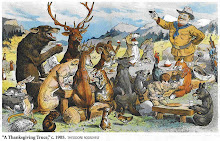
 “teddy bear” in 1902 when
 President Theodore “Teddy”
Roosevelt famously refused
to shoot a tethered bear while
on a hunting trip.
 
To determine the viability of
the bear population today,
research funded primarily
by the Louisiana Department
of Wildlife and Fisheries (LDWF)
 used projections of population
growth over time based on
capture and radio-telemetry
 data to estimate the bear’s
extinction probability.

In some instances, scientists
captured and
released the bears to obtain
the data. At other times, they
 collected DNA extracted from
hair samples to identify
individual bears. The study
also used genetics and
capture data to evaluate
 how frequently individual
bears move between the
fragmented subpopulations
of Louisiana black bear in
 the Lower Mississippi
Alluvial Valley.

Connectivity among subpopulations
of a species is important to help
avoid genetic problems resulting
 from too much inbreeding.
These findings address goals
created in 1995 by the U.S. Fish
 and Wildlife Service for recovery.
 
“Estimates of a species’ viability
can help wildlife managers determine
 the status of threatened, endangered
 or at-risk species and guide effective
management efforts,” said Joseph
 Clark, the USGS research ecologist
 who led the study in collaboration
with Jared Laufenberg from the
University of Tennessee. “This
 study will be used by the U.S.
Fish and Wildlife Service to
determine whether to pursue
removing the bear from the
 ‘threatened’ species list.”
 
Researchers collected data with
DNA sampling, live capture,
winter den visits and monitoring
of radio-collared animals from
2002 to 2014. To collect the
 DNA samples, researchers set
 up barbed wire fences that bears
 had to cross to obtain pastry baits.
This method, which does not harm
 the bears, results in the bears
 leaving their DNA in the form of
 hair samples on the barbs, which
 scientists are able to use to identify
 the individual identities of each
 bear visiting the site.
 
“The completion of this project
 represents many years of
 collaborative work and we’re excited
 about the results,” said Maria
 Davidson, Louisiana Department
of Wildlife and Fisheries biologist
program manager.  “The information
provided by this project is based on
 the best available science, enabling
us to make management decisions
 focused on the long term
sustainability of the Louisiana
black bear.”
 
Bears in Louisiana primarily exist in
 four distinct subpopulations, and
data were sufficient for researchers
to perform viability analyses on
three of them. The probability of
these bears not going extinct ranged
 from 29.5 percent to greater than 99
 percent, depending on the
subpopulation and the assumptions
upon which the models were based. 
 However, the chances that all of the
 subpopulations will simultaneously
go extinct, based on the most c
onservative models, were only
 0.4 percent. The researchers also
 found that individual bears were
moving among some subpopulations.
 
Since originally being listed as
threatened in 1992, the Louisiana
black bear population has grown
and the habitat has recovered to
 the extent that the U.S. Fish and
Wildlife Service is considering
 “delisting,” or removing the bear
from the threatened species list.
This population growth is because
of state and federal protection of
the bears, a reintroduction project
 and habitat recovery aided by the
 Federal Conservation Reserve
Program and the Federal Wetlands
 Reserve Program.
 
The study was completed in
 cooperation with Louisiana
 Department of Wildlife and
Fisheries, U.S. Fish and Wildlife
Service, University of Tennessee
and Louisiana State University,
among others. The full study
-- Population Viability and
Connectivity of the Louisiana
Black Bear (Ursus americanus
 luteolus) -- is available online
.gov/louisiana-black-bear
-management-and-research.
-------------------------------------------------


Researchers find

 Louisiana black

 bear populations are intermingling


black bear
The swamps and woodlots of Louisiana
are home to a growing population of
black bears because distinct populations
 are beginning to intermingle.
(File photo) (File photo)

  By Todd Masson, NOLA.com |
 The Times-Picayune The Times-Picayune
Email the author | Follow on Twitter
on August 12, 2014 at 3:22 PM,
updated August 12, 2014 at 3:25 PM 


Louisiana's black bears are making
huge strides toward recovery as the
 state's disparate populations appear
 to be intermingling, according to two
researchers who presented their
 findings Tuesday at a public meeting
 in Baton Rouge. Jared Laufenberg
 and Joseph Clark said efforts to
restore bear habitat, particularly
in the state's delta region, has paid
big dividends for the health of the
 population. Laufenberg studied
Louisiana's once-threatened bear
population as part of his University
 of Tennessee doctoral dissertation.


Louisiana black bears once ranged
 throughout the Bayou State and
into South Mississippi and East
Texas, but by the 1950s, the
distribution was profoundly
 reduced due to conversion of
 hardwood forests to croplands.
The population dwindled to only
80 to 120 bears remaining in a
tiny slice of the forested delta.
State biologists in the 1960s
 brought 161 bears down from
 Minnesota as part of a restocking
program, and by the 1990s,
 populations had become
established in the Tensas River
 Basin, the upper Atchafalaya
River Basin and the Lower
Atchafalaya Basin.


To help the population recover
further, officials enrolled Louisiana
 black bears in the Endangered Species
 Act program in 1992, and published
 a recovery plan in 1995. The three
recovery criteria were that there
 needed to be at least two viable
 populations, there had to be
movement corridors between
 them and the habitat needed
to be protected.


According to the information
 presented by Laufenberg and
 Clark, each of the goals appears
 to have been met.
"What is clear is that Louisiana
black bears are in much better
 condition than 22 years ago
 when they were listed," Clark
told the crowd attending the
 presentation.


One of the many reasons is
that state biologists from 2001
through 2009 transferred some
of the bears from the established
Tensas River Basin population to
 the Three Rivers area to seed a
"stepping-stone" population
between the Tensas population
 and another distinct group of
bears in the Upper Atchafalaya Basin.


The plan has worked well, Clark
explained. Bears have gotten
 well-established in the Three
Rivers area, and the females have
 begun to intermingle with males
from the Upper Atchafalaya Basin
 population. In general, female
black bears disperse very little,
 while males roam great distances
 looking for mates. This trait has
evolved to reduce inbreeding
 in bear populations, Clark said.
Because of the stepping-stone
 population in the Three Rivers
 area, the genes of the Upper
Atchafalaya Basin bears have
been found all the way up in
the Tensas River population,
 Clark said.


"Without that Three Rivers
population, I doubt we would
 have had any interchange
between Upper Atchafalaya
 Basin and Tensas River
Basin (bears)," he said.
Although males from the
Atchafalaya Basin population
 are migrating up to Three Rivers,
none from that area seem to be
 moving down to the Atchafalaya
 Basin, and the researchers are
baffled as to why.


One possibility, Clark said, is
that the bears are finding natural
 funnels moving in one direction
 but not the other.
Once the males get to the Three
Rivers area, they're finding easy
pickings. The area is dominated
 by females because that's mostly
 what biologists transferred there.
"The Three Rivers area was
stocked with females that were
 producing cubs in the Tensas River
 Basin," Laufenberg said. "That's
 not a bad thing. If you're going to
stock a place, why not stock it
with good numbers of females
 who are producing cubs?"
Those migrating males are doing
 a good job spreading their genes
 among the populations. Of 35
cubs recently tested in the area
, 20 were sired by males that had
come from the Upper Atchafalaya
 Basin population, Clark said.


The state's population has just
 completed its breeding season,
 which is in June and July,
Laufenberg said, and the
females will give birth in
January or February while
they are denned up for the
winter.


Although there is no official
estimate for the size of the
black-bear population
throughout Louisiana, Clark
 and Laufenberg gave a rough
 guess of between 258 and 283
 females combined in the Tensas,
Upper Atchafalaya and Lower
Atchafalaya populations.


The Civil War was a huge step forward to accelerating the environmental destruction of the USA..............The "snowball" of forest removal, habitat destruction and species extirpation mirrored the technology explosion that all Wars engender.................It also quickened the "here and there" siren calls from deep thinking transcendentalists who began lobbying for land protection and environmental consciousness

Sent by rick.meril@gmail.com:


The Civil

 War's

 Environmental 

Impact

BY TED WIDMER
Northern and Southern
 armies cut down roughly
two million trees.

click on picture above for full story


Or, copy and paste this URL into your browser: http://nyti.ms/1sTOh0Z
To get unlimited access to all New York Times articles, subscribe today. See Subscription Options.
To ensure delivery to your inbox, please add nytdirect@nytimes.com to your address book.


Tuesday, November 18, 2014

Perhaps one of the least researched and "hey, let's publish this titillating story on how "hunting wolves might actually boost their population" appeared in the Oregonian Newspaper today......It is obvious that the reporter picking up on an University of Calgary research report that indicated that wolves respond to human hunting pressure by the remaining wolves pairing up and having twice the litters in a given region...............The Reporter failed to ask the question if this is a good thing............Would it be a good thing to start killing people so that the remaining human population would breed more to compensate for the losses incurred by the killing?..............Yes, Wolves and Coyotes(especially Coyotes) do tend to have larger litters and create smaller territories with additional breeders as hunting pressure mounts.............But that leads to younger and inexperienced wolves and coyotes running amuck and getting into more trouble with people................Same thing happens in persecuted puma populations.........Juvenile males move into vacant territories, breed with remaining females and simultaneously take risks in and around human settlements(adolescent risk taking)..............What we should be striving for is intact wolf and coyote units,,,,,,,,,intact puma spatial organization so that least conflict with us human animals occur while optimum top down trophic ecosytem services occur generating the greatest array of biodiversity possible

https://www.google.com/url?rct=j&sa=t&url=http://www.oregonlive.com/environment/index.ssf/2014/11/post_41.html&ct=ga&cd=CAIyGjNiY2FkZTRjYzk3Y2I0MjI6Y29tOmVuOlVT&usg=AFQjCNGMmoc61yqjkqpDDNicnE9bLoPkqA

Oregon environment roundup: Could hunting wolves actually boost wolf population?

wolves.zip
Wolf pups from the Wenaha Pack huddle in a 2012 photo. A new study indicates wolf hunting could actually cause population increases by elevating stress hormones that, in turn, encourage reproduction. ( Photo courtesy of Oregon Department of Fish & Wildlife)
Kelly House | khouse@oregonian.comBy Kelly House | khouse@oregonian.com 
Email the author | Follow on Twitter
on November 18, 2014 at 8:00 AM, updated November 18, 2014 at 8:05 AM

Could wolf hunting as a means of population control be having the opposite effect? A study published Wednesday in the journal Functional Ecology indicates it could. According to research from scientists at the University of Calgary, wolves change their reproductive behavior in response to the stress of being hunted. In short, they have more babies. Part of the reason, the scientists conclude, is because alpha male deaths lead to social disruption, enabling lower-ranking males to breed with female pack members.


"

Monday, November 17, 2014

At what point will we all concede that we are dooming the Polar Bear to an extinction event?............ New research from the U.S. Geological Survey concludes that the Bears in northeast Alaska and Canada that abut the Beaufort Sea have declined from 1500 to 900 in the first decade of this new 21st century.................Disappearing ice has the Bears not reproducing as efficiently(see related posting below this one), not eating as well as they once did and therefore beginning to blink out from environmental stress................Similar stresses are also adversely impacting the Hudson Bay Polar Bear population

http://www.takepart.com/article/2014/11/17/study-polar-bear-population-plummets-has-plummeted-40-percent-alaska-and-canada


Study: Polar Bear Populations Have Plummeted 40 Percent in Alaska and Canada

Scientists attribute the steep decline to melting sea ice as the Arctic warms.


Astudy published Monday has found that polar bear populations along the southern Beaufort Sea in northeast Alaska and Canada  have been declining for over a decade.
The likely culprit, according to scientists, is melting sea ice triggered by climate change.
The study, published online in the journal Ecological Applications, concluded that the number of polar bears in the area fell from 1,500 to 900 between 2001 and 2010.


“There have been some signs of decline in past studies, including a 2010 paper that hypothesized that the population was probably declining, but this now confirms that hypothesis,” Jeffrey Bromaghin, a research statistician at the U.S. Geological Survey and the study’s lead author, said in a phone interview.
Previous studies linked declines in summer sea ice due to warming temperatures to “reduced physical condition, growth, and survival of polar bears,” the report said.
Polar bears depend on sea ice to let them travel across the frozen water to hunt for seals—their preferred diet—that emerge through cracks in the ice to breathe.
The study found that low survival rates from 2004 through 2006 led to a 25 percent to 50 percent decline in the number of bears in the region.
“We hypothesize that low survival during this period resulted from 1) unfavorable ice conditions that limited access to prey during multiple seasons; and possibly 2) low prey abundance,” the authors wrote.
“We’ve seen the same sort of trend in the Hudson Bay population, which has been studied quite a bit,” Bromaghin said. “We see low survival for a couple of years where the population takes a downward step, then levels off for a while.”

During the years of steepest decline, between 2003 and 2007, polar bear cubs fared the worst. Just two out of 80 cubs documented in Alaska during those years are known to have survived.
Though adult and cub populations began to improve in 2007, the number of subadult bears—those between the ages of two and four—has continued to fall.
“Our estimates would suggest that whatever change there was in the ecosystem in 2007, it allowed adults and cubs to be doing a little bit better, but subadults are still struggling some,” Bromaghin said.
The reason for that stabilization, ironically, might be climate change itself.
Warming temperatures in the Arctic region have led to a change in crack patterns that appear in the ice, perhaps providing greater hunting opportunities for the bears.
“We don’t know what the changes were, but ancillary evidence points in that direction,” Bromaghin said.


He noted that a Canadian study found that the distribution of seals killed by polar bears began changing in 2007. “We started noticing more kill sites, so either the seals are more abundant or somehow more available to the bears,” he said.
“Here are concrete numbers to show us that the impacts of climate change are happening now,” Margaret Williams, managing director for World Wildlife Fund’s Arctic Program in Alaska, said in an email.
“We know human activities have caused global wildlife populations to drop by over half in the last 40 years,” she said. “We need to change course if we want to stop further habitat loss and ensure resilient wildlife populations, both in the Arctic and around the world.”