Visitor Counter

hitwebcounter web counter
Visitors Since Blog Created in March 2010

Click Below to:

Add Blog to Favorites

Coyotes-Wolves-Cougars.blogspot.com

Grizzly bears, black bears, wolves, coyotes, cougars/ mountain lions,bobcats, wolverines, lynx, foxes, fishers and martens are the suite of carnivores that originally inhabited North America after the Pleistocene extinctions. This site invites research, commentary, point/counterpoint on that suite of native animals (predator and prey) that inhabited The Americas circa 1500-at the initial point of European exploration and subsequent colonization. Landscape ecology, journal accounts of explorers and frontiersmen, genetic evaluations of museum animals, peer reviewed 20th and 21st century research on various aspects of our "Wild America" as well as subjective commentary from expert and layman alike. All of the above being revealed and discussed with the underlying goal of one day seeing our Continent rewilded.....Where big enough swaths of open space exist with connective corridors to other large forest, meadow, mountain, valley, prairie, desert and chaparral wildlands.....Thereby enabling all of our historic fauna, including man, to live in a sustainable and healthy environment. - Blogger Rick

Subscribe via email to get updates

Enter your email address:

Receive New Posting Alerts

(A Maximum of One Alert Per Day)

Thursday, February 25, 2016

'"Black bears were abundant throughout Missouri during the 18th and 19th centuries"............."However, by the 1890s, they were almost gone from their last stronghold in the Ozarks"............. "Bears were believed extirpated from the state by the 1940s due to unregulated hunting and major losses in forest habitat"................ "Over the past 50 years, black bears have been naturally recolonizing Missouri coming into Missouri from Arkansas"............ "Sightings of adult bears and cubs, nuisance complaints and other incidents involving bears have increased considerably over the past 10-15 years, suggesting that the black bear is increasing in abundance and expanding its range in the state"............Some 300+ bruins are thought to call Missouri home as of the start of 2016

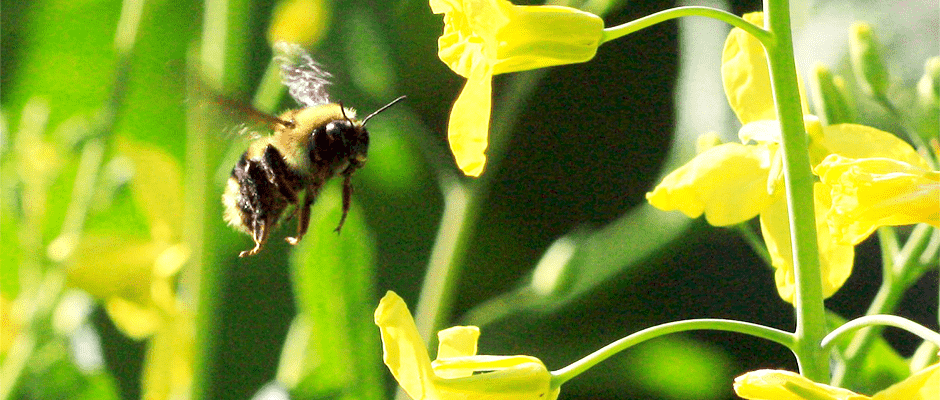
The once preeminent Bumblebee of the northwest states, Bombus, occidentalis, took a steep population dive in the 1990's, likely due to the Nosema parasite...........Now, the Bees seem to be rebounding, perhaps through a very fast evolutionary metamorphosis that enables them to fight off the adverse impacts of the parasite


http://app.getresponse.com/click.html?x=a62b&lc=8P0o9&mc=IC&s=RzieYd&u=Yy3s&y=S&

Rare bumblebee makes comeback

By Dana Kobilinsky

Bombus occidentalis, also known as the western bumblebee, is making a return in the Pacific Northwest. ©naturalflow
Populations of the bumblebee species Bombus occidentalis have been taken on a rollercoaster ride of declining and re-emerging, but the bees now appears to be on the ascending part of the ride, according to recent research.
The species had once been the most common bumblebees in the Pacific Northwest, but faced major declines in the mid-1990s to the point where it was one of the rarest.
“The population seems at least to be re-emerging where it hadn’t been seen in the last 10 years,” said James Strange, a researcher at the USDA’s Pollinating Insects Research Unit at Utah State University, in a release. “There is some resilience in the population of Bombus occidentalis. They do seem to be coming back.” Strange is one of the authors of a newly published study in the Journal of Insect Science.
Researchers have suggested that the Nosema parasite might have played a role in the bees’ decline. However, studying the parasite isn’t an easy feat.
“When we try to raise the bees in captivity, they die, so we can’t do a lot of experimental work to show that this [parasite] is really the thing [killing bees],” Strange said. “We have a lot of correlation, but we can never get the species without the pathogen. We can’t clean this pathogen out.”
The researchers are looking for reasons why the bees are currently re-emerging. Strange suggests the upswing is due to evolution. He says the parasite may be losing its pathogenic effect or individual bees may have become resistant to it.
Dana Kobilinsky is an associate science writer at The Wildlife Society. Contact her at dkobilinsky@wildlife.org with any questions or comments about her article. 

Wednesday, February 24, 2016

Biologists Bill Ripple and John Laundre get their due this week as their originally published(2010) LANDSCAPE OF FEAR paradigm is reinforced in a large way via the University of Western Ontario study that once again demonstrates that trophic carnivores like Wolves, Grizzlies, Black Bears and Pumas--Mesocarnivores like Coyotes, Lynx and Bobcats----All promote "top down" positive influence on optimum biodiversity by keeping prey animals vigilant and keeping them on the move, thus not lounging in any one locale too long overbrowsing the flora of a given region

http://feedproxy.google.com/~r/sciencedaily/plants_animals/ecology/~3/KTWWUL-PsS8/160223132414.htm?utm_source=feedburner&utm_medium=email


'Fear itself' can help restore

 ecosystems,study suggests

Date:
February 23, 2016
Source:
University of Western Ontario

 A new study led by Western 
University demonstrates that
 the fear these top predators
 inspire can have cascading 
effects down the food chain 
critical to maintaining healthy
 ecosystems, making large 
carnivore conservation all
 the more valuable given
 the significant 'ecosystem
 service' the fear of them
 provides


https://www.google.com/url?sa=t&rct=j&q=&esrc=s&source=web&cd=1&cad=rja&uact=8&ved=0ahUKEwiH4uHOmJLLAhUBwiYKHVumA8MQFggcMAA&url=http%3A%2F%2Fwww.cof.orst.edu%2Fleopold%2Fpapers%2FLaundre_etal2010.pdf&usg=AFQjCNE96KdyWw1roI-sElnk_d0myGsPjw

The Landscape of Fear: Ecological Implications of Being Afraid John W. Laundré*,1, Lucina Hernández1 and William J. Ripple2 1 Department of Biological Sciences, SUNY Oswego, Oswego, NY 13126, USA 2 Department of Forest Ecosystems and Society, College of Forestry, Oregon State University, Corvallis, OR 97331, USA 

 Coyote chases and kills Deer fawn


Abstract:

“Predation risk” and “fear” are concepts well established in animal behavior literature. We expand these concepts to develop the model of the “landscape of fear”. 

The landscape of fear represents relative levels of predation risk as peaks and valleys that reflect the level of fear of predation a prey experiences in different parts of its area of use. We provide observations in support of this model regarding changes in predation risk with respect to habitat types, and terrain characteristics.

 We postulate that animals have the ability to learn and can respond to differing levels of predation risk. We propose that the landscape of fear can be quantified with the use of well documented existing methods such as giving up densities, vigilance observations, and foraging surveys of plants. 

We conclude that the landscape of fear is a useful visual model and has the potential to become a unifying ecological concept

Tuesday, February 23, 2016

New Jersey(my home state through my college years) is one of the most densely human populated states in the USA.............Despite this, it is,still some 40% wooded(although badly fragmented), rewilding Black Bears Eastern Coyotes, Fishers, Bobcats and Turkeys amidst its suburban sprawl.............It's Turkey Restoration Project is one great wildlife management success story.............. . By the mid-1800s, turkeys had disappeared in the "Garden State" due to habitat changes and killing for food.............. State biologists, in cooperation with the NJ Chapter of the National Wild Turkey Federation, reintroduced wild turkeys in 1977 with the release of 22 birds............... In 1979, biologists and technicians began to live-trap and re-locate birds to establish populations throughout the state................ By 1981, the population was able to support a spring hunting season, and in December, 1997, a limited fall season was initiated................ There is now an abundance of wild turkeys throughout the state with turkeys found wherever there is suitable habitat........................ In South Jersey, where wild turkeys had been struggling just a few years ago, intensive restoration efforts have improved population numbers significantly................... The statewide population is now estimated at 20,000 - 23,000 turkeys with annual hunter kill of approximately 3,000 birds(some 15% pf the total population)

http://www.nytimes.com/2016/02/19/nyregion/bold-as-they-are-wild-turkeys-accost-the-neighbors-in-new-jersey.html

https://www.google.com/url?sa=t&rct=j&q=&esrc=s&source=web&cd=4&cad=rja&uact=8&ved=0ahUKEwj2hLfy4o_LAhUKOCYKHWxgDb8QFggvMAM&url=http%3A%2F%2Fwww.nj.com%2Fhunterdon-county-democrat%2Findex.ssf%2F2014%2F11%2F37_years_ago_22_wild_turkeys_w.html&usg=AFQjCNEzaPp87Fg1_HjeQZ3OROeGWjElnQ

Turkeys, Running Amok, Are a ‘Success Story’ in New Jersey


37 years ago

 22 wild 

turkeys

 were 

reintroduced 

in N.J.,

 now there

 are 20,000


Monday, February 22, 2016

Some great Wolverine video footage from Canadian filmmaker Andrew Manske who spent 5 years alongside trappers and U. of Alberta researchers, Mark Boyce and Matt Stafford revealing that the thought to be solitary wolverines do in fact "scavenge in family caravans"..............His "WOLVERINE: GHOST OF THE NORTHER FOREST is airing this Wednesday, 2/24 on the Canadian Broadcasting Channel(CBC-channel 4)...............If you have access to CBC, some outstanding television in store for you coming from northern Alberta, Canada(click on link below to see a preview of the full show).

https://www.google.com/url?rct=j&sa=t&url=http://edmontonjournal.com/entertainment/television/alberta-filmmaker-advances-understanding-of-wolverines&ct=ga&cd=CAEYASoTMTUxMjgzMzcyMzUxNjcxNjM1NDIaYjg4MTYyM2YwYWMxMzkxNDpjb206ZW46VVM&usg=AFQjCNHxNlTjzouR9j6HtDoS5YMqUKCHK


http://edmontonjournal.com/entertainment/television/alberta-filmmaker-advances-understanding-of-wolverines


Alberta filmmaker advances understanding of wolverines


Andrew Manske has the quickly deployed smile of a man at his best outdoors, and shows well-earned weathering around his twinkling blue eyes as he recounts how he spent the last five years, quietly hunting.
Pushing his will, body and equipment through oceans of deep snow, setting camera traps to pinpoint his fierce yet skittish prey, and living solitary — from humans, anyway — in small blinds for weeks straight in northwest Alberta, Manske’s quest was simple enough: film the first and best high-definition footage of wild wolverines. And boy, did he.


“It was like Christmas morning,” he says of seeing his first motion-captured footage of the fuzzy moving appetites, early in his journey.
Footage of his first wolverine sighting from the blind, with a proper HD camera after weeks in wait, shakes thanks to his nervous hands.
With the help of his trapper partner Brian Bildson at Compass Media, a tasty-to-scavengers drowned deer and wolf-shredded moose, the Alberta Trappers Association, numerous scientists, some luck, and an obsessive patience, the 43-year-old Manske captured the unprecedented images. The videography isn’t just beautiful; it also challenges some of our presumptions about the social behaviour of these thick-coated, rather self-protective carnivores named in Latin after gluttony.
Andrew Manske's groundbreaking footage of wolverines will be on an upcoming Nature of Things special.
Andrew Manske’s groundbreaking footage of wolverines will be on an upcoming Nature of Things special. ED KAISER
Manske’s images, along with simultaneous studies by a team led by the University of Alberta’s Mark Boyce and Matt Stafford, show the presumed-solitary wolverines scavenging in family caravans. Elsewhere, a male wolverine claws at then goes to sleep beside a scientific trap containing his annoyed father. Though a single wolverine can scare off a bear, Manske and the scientists come across one gutted by wolves, its fanged mouth packed with snow during the fatal struggle. And, with remote cameras, the natural historians capture never-before-seen footage of a mother wolverine, spooked by animal activity, moving  kits by the mouthful from an invaded beaver lodge.
All this makes Wolverine: Ghost of the Northern Forest fully captivating. The Nature of Things special premières at 8 p.m. Thursday on CBC (Channel 4). Edmontonians can catch a sneak preview at 9:15 p.m. Wednesday at Metro Cinema.
Emmy-winning filmmaker Manske has many stories to tell, some of them printable.
Q: Why wolverines?
A: There’s very little been done on them. They’re probably the most elusive predator in North America. I’d spent 20 years out there filming polar bears, grizzly bears, but had never seen a wolverine in the wild. It took getting to know some trappers. Wolverines are really good at smashing traps and getting the bait without getting caught. The trappers started putting out consumer-grade cameras to see what was stealing their food. I got word of this. I went out and put out video-trail cameras and started seeing wolverines, every night, and eventually during the day. Starting to recognize certain individuals, that’s what got me obsessed.
Q: Who’s your favourite?
A: Brutus was the first one we got footage of. He was this big, fat male. We caught him digging into a beaver lodge. Matt Stafford called me up and said, “Guess who we caught?” He was missing half his head — his scalp was missing. We think he got beaten off his area. He kept getting the free beaver meat from the traps. He knew he would get caught, but also released every day.


Q: How does it feel to be part of the front line of scientific discovery making art?
A: It’s so amazing to be up close and personal with wolverines. Like, 20 centimetres away there’d be a wolverine lunging at me, and you can smell their breath — which smells like rotting beaver from the trap. My skills helped discover some families. We caught one called the White Buffalo and my trail cameras caught another one hanging around. He was just following his dad around. We didn’t know they were that social, a mother and her two offspring following her. The trail cameras were the secret to finding them, knowing where to be at the right place and time.
Q: You’ve finished a five-year journey. Is it over?
A: Because I’m getting the footage, other clients are popping up. BBC is coming out with a “great mountain” series, and they want wolverines for the Rockies. I’m leaving March 1 to go sit in my blind for a month. As soon as you get footage, you find out how to do it even better. I’m insatiable. (He laughs.) The blind has been there for a while and the wolverines are getting familiar with us.
Q :In Susan Sontag’s book On Photography she talks about how photography preserves and yet destroys as images lure people into uncharted places. Are you concerned about your impact? You peed in jars.


A: When I’m out filming wolves and wolverines, they’re definitely impacted by my presence. Their behaviour changes. I was filming wolves off the coast of B.C., and they were smelling the places I’d been, even just walking. All of a sudden tails tucked beneath them. They’d look scared and leave. I’ve had so many wolves roll around in my poo spot. They know I’m there and I’m not acting naturally. I started containing everything, ate very little, stay in the blind for 72 hours. My producers were asking for video of me talking in the blind, and it’s the last thing you want to do.
I decided to keep my urine in bottles, but the unfortunate thing about that is it’s also -25C. Every three days back at camp I’d have to thaw out these bottles just to dump them. When I met David Suzuki during the narration read he said, “Great film. But what were you doing, shitting in a bag?”

Sunday, February 21, 2016

Between 1947 and 1956, U. of Wisconsin researchers did an extensive study of the most pristine remaining prairie systems in Wisconsin............They determined that the physical size of the prairie remnant and the incidence of fire greatly influenced the plant composition ...........As is true of so many terrestrial natural systems, "a changing climate and loss of habitat are impacting prairie ecosystems"............, "While fire used to be commonplace on the prairie, people have fundamentally changed the nature of the landscape by suppressing this natural disturbance".............."Some sites, the research team found, had fewer than 18 percent of the species documented in the 1950s survey".................., "Some were now made up of more than 60 percent non-native species"....................... "More than one species is being lost in the average year"................."The species that we're losing most frequently are specialist prairie plants, like rattlesnake master"............ "The species that are showing up are more generalist plants, like those you might find in a roadside ditch or in a thick, brambled woods"............... "For the most part, it's fast-growing weedy trees"............"It's box elder, it's buckthorn, it's honeysuckle, and probably a big part of their success is the absence of fire".

http://feedproxy.google.com/~r/sciencedaily/plants_animals/ecology/~3/vS64La-a7AA/160219185208.htm?utm_source=feedburner&utm_medium=email

60 years after pioneering survey,

 Wisconsin prairies are changing

 rapidly

Date:
February 19, 2016

Pictured below in the following order are:

-Historical rendition of prairie fire lit by Plains Indians so
as to stampede Bison

-Current day Bison on a verdant prairie

-wildflowers in bloom on the prairie

-prairie pot holes


Linda Rutledge is one of North America's preeminent carnivore geneticists(formerly working out of Trent State; now Princeton University)............Linda has long put forth the Canis three-species paradigm(the model that makes most sense to this Blogger) to explain the family tree of the Wolf and Coyote in the USA and Canada....................In her words--- "There are two prevailing evolutionary models for North American Canis: (i) a two-species model that identifies grey wolves (C. lupus) and (western) coyotes (Canis latrans) as distinct species that gave rise to various hybrids, including the Great Lakes-boreal wolf (also known as Great Lakes wolf ), the eastern coyote (also known as Coywolf/brush wolf/ tweed wolf ), the red wolf and the eastern wolf"..................... "(On the other hand), the three-species model identifies the grey wolf, western coyote and eastern wolf (C. lycaon) as distinct species, where Great Lakes-boreal wolves are the product of grey wolf eastern wolf hybridization, eastern coyotes are the result of eastern wolf western coyote hybridization, and red wolves are considered historically the same species as the eastern wolf, although their contemporary genetic signature has diverged owing to a bottleneck associated with captive breeding".................."The recognition of the eastern wolf as a separate species does not exclude the possibility that a grey wolf eastern wolf hybrid animal (previously identified as Canis lupus lycaon, boreal/ Ontario-type, similar to a Great Lakes-boreal wolf currently located in the Great Lakes states and across Manitoba, northern Ontario, and northern Quebec, historically inhabited the northeastern United States alongside eastern wolves, and there is some evidence to support the historical presence of both Canis types"................ "The recognition of C. lycaon(eastern/red wolf) should not, therefore, influence grey wolf delisting decisions in the USA., in light of the current funding gap for biodiversity"...............Anotherwards, both the Great Lakes Gray/Eastern Wolf admix and the Eastern/Red Wolf species should be afforded Endangered Species protection east of the Mississippi and a full rewilding of both animals should be pursued in all the habitat previously identified by biologists as suitable for long term persistence of the wolves-low human and roadway densities, continuous/contiguous forest regions and whitetail deer habitat of at pre colonial or higher 6 to 12 deer per square mile..................Linda's full paper can be read by clicking on the link below.............Execellent research and fascinating and relatively easy to read verbage for the layman to digest and ingest .....Enjoy this one!

http://rsbl.royalsocietypublishing.org/content/11/7/20150303.full-text.pdf


Evolutionary biology RAD sequencing and genomic simulations resolve hybrid origins within North American Canis

 L. Y. Rutledge1 , S. Devillard2 , J. Q. Boone3 , P. A. Hohenlohe4 and B. N. White1 1 Biology Department, Trent University, 2140 East Bank Drive, Peterborough, Ontario, K9J 7B8 Canada 2 Universite´ de Lyon, F-69000, Lyon; Universite´ Lyon 1; CNRS, UMR5558, Laboratoire de Biome´trie et Biologie Evolutive, F-69622, Villeurbanne, France 3 Floragenex Inc., Eugene, OR 97405, USA 4 Department of Biological Sciences, University of Idaho, Moscow, ID 83844, USA 

Top predators are disappearing worldwide, significantly changing ecosystems that depend on top-down regulation. Conflict with humans remains the primary roadblock for large carnivore conservation, but for the eastern wolf (Canis lycaon), disagreement over its evolutionary origins presents a significant barrier to conservation in Canada and has impeded protection for grey wolves (Canis lupus) in the USA.


Gray Wolf(found West and north of the
 Great Lakes)


Great Lakes Wolf(admix of Gray and
Eastern Wolf)


Here, we use 127 235 single-nucleotide polymorphisms (SNPs) identified from restriction-site associated DNA sequencing (RAD-seq) of wolves and coyotes, in combination with genomic simulations, to test hypotheses of hybrid origins of Canis types in eastern North America. 

Eastern Wolf(same as Red Wolf)
(found in the Eastern USA and
Canada)


Red Wolf(same as eastern wolf)(only 50
in the wild,in North Carolina Barrier
 Islands) 


A principal components analysis revealed no evidence to support eastern wolves, or any other Canis type, as the product of grey wolf western coyote hybridization. In contrast, simulations that included eastern wolves as a distinct taxon clarified the hybrid origins of Great Lakes boreal wolves and eastern coyotes.


Western Coyote(historically found west of 
the Mississippi)


Eastern Coyote(western coyote/eastern
 wolf admix)


 Our results support the eastern wolf as a distinct genomic cluster in North America and help resolve hybrid origins of Great Lakes wolves and eastern coyotes. The data provide timely information that will shed new light on the debate over wolf conservation in eastern North America.

Friday, February 19, 2016

"MAKE AMERICA GREAT AGAIN", like in 1995 when our USFW Service displayed backbone and resolve in accomplishing arguably the greatest wildlife restoration effort ever in restoring Gray Wolves to the Northern Rockies..........There is a reason that Bernie Sanders and Donald Trump are resonating with "the folks".............We have lost our way on everything from job creation to boys not attending college to leadership in the world---And yes, to wildlife preservation...........No better example of our lack of focus and will in the Red Wolf(Eastern Wolf) debacle that has been unfolidng in 2014 with the Red Wolf Recovery Coordinator being asked to step down and the stoppage of red wolf introductions in the Carolina's............Who will step up and make America great again and let us perpetuate the ancient Red Wolf lineage in our eastern states?

http://www.biologicaldiversity.org/news/press_releases/2016/red-wolf-02-16-2016.html


For Immediate Release, February 16, 2016
Contact: Brett Hartl, (202) 817-8121, Bhartl@biologicaldiversity.org


Red Wolf Population Plunges to as Few as 50 as Feds Gut Recovery Program
 Anti-wildlife Groups Spur Halt to Recovery Efforts, Poaching Investigations

WASHINGTON— The nation’s only population of red wolves is in an alarming free-fall, declining by 27 percent from 2014 to 2015 to as few as 50 individuals, according to new population counts released by the U.S. Fish and Wildlife Service.

Red wolf population graphThe total estimated population has declined by about 50 percent since 2012, from 100 to 120 individuals to just 50 to 75 in 2015. The declines have occurred since the Service bowed to political pressure from the state of North Carolina, eliminating the program’s recovery coordinator in 2014 and stopping the introduction of new red wolves into the wild in July 2015. 

 The agency also ended a coyote-sterilization program to prevent hybrid animals from harming the gene pool, drastically reduced law-enforcement investigations of wolf deaths, and stopped publicizing cases where poaching was determined to be the cause of deaths.

“Director Ashe and the U.S. Fish and Wildlife Service are deliberately condemning the red wolf to extinction,” said Brett Hartl, endangered species policy director at the Center for Biological Diversity. “The red wolf recovery program was once a shining example of successful conservation. Under the direction of Dan Ashe, the program has been quietly dismantled to appease a few anti-wildlife zealots. It’s disgraceful.”


Red wolf releases in North Carolina’s Alligator River National Wildlife Refuge began in the mid-1980s and pushed the population to more than 100 wolves by the mid-2000s. The population stopped growing in 2011 as gunshot mortalities increased. Red wolf mortality skyrocketed after North Carolina authorized nighttime hunting of coyotes because red wolves and coyotes are nearly indistinguishable in the dark. Following a successful lawsuit to stop nighttime hunting, the Fish and Wildlife Service faced increased political pressure to curtail the red wolf recovery program.   

“Conservation scientists have shown that recovering the red wolf is completely achievable and know what steps need to be taken next,” said Hartl. “Rather than following the science, the red wolf program is in disarray because the Service won’t stand up to this political pressure.”

A 2014 report from the independent Wildlife Management Institute concluded that if the red wolf is going to recover, two additional populations need to be established in the wild, and additional resources need to be invested to build local support for red wolf recovery.

There is strong local and national support for red wolves. Recently 100 citizens who live in the red wolf recovery area in North Carolina sent apetition to the Fish and Wildlife Service expressing their support for keeping endangered red wolves in the wild. In addition, 110,000 people from around the United States, including more than 1,500 North Carolina residents, submitted letters in support of the red wolf program.

The Center for Biological Diversity is a national, nonprofit conservation organization with more than 990,000 members and online activists dedicated to the protection of endangered species and wild places

Thursday, February 18, 2016

The problem with strict interpretation of anything that was written decades, years, centuries and millenia ago-----Things change, new facts emerge-------And therefore, my mantra of "Adapt and Overcome" weighs heavy over "Fundamentalist thinking of any kind, especially when it comes to preserving and enhancing biodiversity. Supreme Court Judge Anthony Scalia had a razor sharp analytical mind, but not a creative thinker apparently was he.............As the article regarding New York's Adirondack State Park depicts below, Vernal Pools, seasonal bodies of water in the woodlands that get Spring flooded and then get dry as a bone in Summer merit the same protection as our Federal Government affords major rivers and Streams.............."Millions of acres of prairie potholes, the breeding grounds for North America’s ducks; vernal pools where our amphibians breed; and millions of smaller wetlands that may have all sorts of invisible, below ground hydrological, ecological and other life giving functions merit protection............Even though they do not have a “continuous surface connection” with a permanent body of water" as defined by a strict interpretation of the Clean Water Act, our Federal Officials are not allowing themselves to "see the forest through the trees" as it relates to enhancing our environment through the preservation of these "other" life-giving" "wet spots"


http://adirondackexplorer.us5.list-manage.com/track/click?u=f2786fbb7862339a0b90113d7&id=fac3ceb1d6&e=46b8d98c61

WEDNESDAY, FEBRUARY 17, 2016

Wetlands Politics: Justice Scalia’s “Transitory Puddles”

I feel a connection with the late Justice Antonin Scalia, albeit indirect. He had strengths, but an environmental and land ethic, because they were not enshrined in the U.S. Constitution, seemed irrelevant to the Justice. Just before he died, he joined the majority in putting a stay on the the Environmental Protection Agency’s clean power regulation and thus called into question American climate commitments made in Paris. But my story is local, not global.

Vernal Pool
DSC_1373
Some years ago, the U.S. Army Corps of Engineers (ACOE) was involved in determining whether small, one-eighth acre, biologically active wetlands near our home that dry up in the summer, known as vernal pools, were worth protecting under the federal Clean Water Act’s Section 404 program. A developer wanted to build 18 homes – outside of the Adirondack Park – abutting ours that would directly impact the red maple swamp forest in which the pools lay.
The Corps’ wetland specialist influenced by a key Supreme Court decision that same year, ultimately deemed the pools “isolated” with “no nexus to federal waters of the United States” and wrote to the town planning board that it would not subject the developer’s application to further review. We (and other near neighbors) sued the town for lack of a full environmental impact study, to no avail. The homes are still being built. Over time, the vernal pool where wood frogs have bred each April for decades and lying just 25 feet from the subdivision road will be degraded or destroyed.
Later, I learned from Adirondack Wild’s expert witness in the Adirondack Club and Resort hearing, Dr. Michael Klemens, that in order to survive the rest of the year, wood frogs, spotted salamanders and other amphibians require a significant wooded buffer around their breeding pools. To maintain its biological productivity, 75% of the circumference around a vernal pool must remain intact woodland, out 600-750 feet beyond the pool.


Prairie Potholes


Where did “isolated” wetlands with “no nexus to federal waters” come from? It came from a June, 2006 ruling of the U.S. Supreme Court, with the majority opinion written by the late Justice Scalia. It muddied the waters of federal wetland protection.
The late Justice’s obituary no doubt cited very consequential decisions, such as Bush v. Gore, and the Citizens United case. But when I think of  Justice Scalia, I think of Rapanos v. United States.
In Rapanos, Justice Scalia and three others, including Chief Justice Roberts, ruled that the State of Michigan and the lower federal courts had trespassed beyond the bounds of earlier court decisions and what the Clean Water Act permits in the protection of wetlands. Justice Scalia wrote scathingly of the Army Corps of Engineers’s jurisdiction over “ephemeral channels and drains,” “transitory puddles” and “ephemeral flows.” The Justice interpreted the 1972 Clean Water Act as drawing a hard line around the permanent lakes, ponds, rivers and streams of the U.S. He claimed that unless a wetland maintains a “continuous surface connection” that makes it “indistinguishable” from a permanent body of water, it is not a wetland subject to federal jurisdiction. Unfortunately, the earth does not respect such bright lines.
Scalia sought to deny federal jurisdiction over millions of acres of prairie potholes, the breeding grounds for North America’s ducks; vernal pools where our amphibians breed; and millions of smaller wetlands that may have all sorts of invisible, below ground “connections” hydrological, ecological and otherwise, but do not have a “continuous surface connection” with a permanent body of water.
In his version of strict construction of the Clean Water Act, Justice Scalia also gave the green light to developers like Rapanos, who filled in more than fifty acres of wetlands in three different drainages in trying to construct shopping centers, contemptuously ignoring stop-work orders by the State of Michigan and U.S. Environmental Protection Agency.  This developer aggressively pursued, like so many, his bottom line and to hell with wetlands, downstream landowners and Lake Huron. His “free market” approach aligned with Justice Scali’s, as have so many others.
In reading the Rapanos decision, it becomes apparent that what Justice Scalia really couldn’t tolerate is much of any federal jurisdiction over states in land use. Scalia’s argumentation was typically brilliant, but his analysis was shallow when it came to interpretation of the Clean Water Act. Four other justices, led by Justice Souter, dissented, arguing it was necessary under the Clean Water Act for the Army Corps of Engineers and the EPA to exercise discretion and judgment in federal jurisdiction of wetlands, which are in any way adjacent to permanent waters of the US. The protection of these adjacent wetlands, whether or not they have a continuous surface connection with water bodies, directly addresses the congressional concern for protection of water quality and aquatic ecosystems expressed in the Clean Water Act.  In their dissent, these justices pointed to congressional concerns in the CWA for wetland aquatic habitats, attenuation of floodwaters by wetlands, removal of sediment and toxic materials by wetlands and other economic values wetlands perform every day at no cost to the public at large.
It was left to Justice Kennedy to break the complex 4-4 ruling. He ruled with Justice Scalia in remanding the Rapanos case back to the Michigan courts and in finding that the Army Corps of Engineers/EPA had an overly broad wetlands jurisdiction. But he sided with Justice Souter in also finding that the Army Corps of Engineers/EPA had to exercise agency judgment about jurisdiction of wetlands that might not exhibit a permanent surface connection with water bodies of the US.
Therefore, Justice Kennedy held that federal jurisdiction over wetlands must establish a “significant nexus” between the wetland and the water body, including chemical, physical and biological integrity of the water body. While that may sound pretty good, Justice Kennedy left it up to the Army Corps of Engineers and EPA to determine “significant nexus” on a case by case basis for thousands of difficult, often politically challenging permit decisions.
Army Corps of Engineers biologists have to stick their necks out, time and again, to justify to their superiors a “significant” nexus between a wetland and a water body. Many small wetlands under development pressure, like those near our home, will ultimately be determined as non-jurisdictional to the Army Corps of Engineers, and be filled or degraded by development sited far too close. Many small state natural resource agencies depend on the Army Corps of Engineers/EPA to delineate wetlands and to protect their state interests in wetland protection. Those state interests were also the losers under theRapanos case. Our own NYS DEC only regulates wetlands which are 2.5 hectares (12.4 acres) or larger. Efforts to expand DEC wetland protection have stalled for decades in the NYS Senate.
Fortunately, in the Adirondack Park the Adirondack Park Agency also has permit jurisdiction over impacts to freshwater wetlands of practically any size.
So what to do if you are an environmentally concerned person working to protect wetlands and wondering where President George H.W. Bush’s 1989 pledge of “no net loss” of wetlands ever went?
Don’t stop writing and speaking out. If you’re working to protect a wetland smaller than 12.4 acres in New York State, keep the Adirondack Park Agency in Ray Brook and your local Army Corps biologist informed. The Army Corps of Engineers Regulatory Permits Office is in Troy, NY. Our local Corps biologists really do know and care deeply about wetland functions and values. They simply are in a tight place. So are the amphibians breeding in those vernal pools. The late Justice Scalia made that tight place much tighter.

Dave Gibson, who writes about issues of wilderness, wild lands, public policy,
 and more, has been involved in Adirondack conservation for nearly 25 years, 
much of that time as Executive Director of the Association for the Protection of 
the Adirondacks and then as first Executive Director of Protect the Adirondacks.

During Dave's tenure at the Association, the organization completed the Center
 for the Forest 
Preserve including the Adirondack Research Library at Paul Schaefer’s home.
The library has 
the finest Adirondack collection outside the Blue Line, specializing in Adirondack
 conservation 
and recreation history.

Currently, Dave is a partner in the nonprofit organization launched in 2010,
Adirondack Wild:
- See more at: http://www.adirondackalmanack.com/2016/02/wetland-politics-justice-scalias-transitory-puddles.html?utm_source=Adirondack+Explorer+%26+Adirondack+Almanack&utm_campaign=4ac9560191-Adirondack_Almanack_RSS_EMAIL_CAMPAIGN&utm_medium=email&utm_term=0_b49eb0d11b-4ac9560191-47317041#sthash.O3SQcg64.dpuf
------------------------------------------------------------------------------------------------------------------

https://www.google.com/url?sa=t&rct=j&q=&esrc=s&source=web&cd=4&cad=rja&uact=8&ved=0ahUKEwiD1fCJ4oLLAhVGKh4KHQLAA5AQFggsMAM&url=http%3A%2F%2Fwww.epa.gov%2Fwetlands%2Fprairie-potholes&usg=AFQjCNFdlsBPKZqyCKtPbbwc-C5iLxgGsA